Buy greatpoland.eu ?
We are moving the project
greatpoland.eu .
Are you interested in purchasing the domain
greatpoland.eu ?
domain@kv-gmbh.de · 0541-91531010
Buy greatpoland.eu ?
Why was the Aztec Empire a high culture?
The Aztec Empire was considered a high culture because of its advanced social, political, and religious organization. The Aztecs had a complex social structure with a well-defined class system, a sophisticated system of governance, and a highly developed religious belief system. They also had impressive architectural and engineering achievements, such as the construction of the city of Tenochtitlan on a series of artificial islands in Lake Texcoco. Additionally, the Aztecs made significant advancements in agriculture, art, and writing, demonstrating a high level of cultural and intellectual achievement. **
Which empire is better: the Ottoman Empire or the Byzantine Empire?
It is difficult to determine which empire is better as both the Ottoman and Byzantine Empires had their own unique strengths and weaknesses. The Byzantine Empire was known for its rich cultural and intellectual heritage, while the Ottoman Empire was known for its military prowess and expansive territorial control. The Byzantine Empire had a long and influential history, while the Ottoman Empire had a significant impact on the development of the Islamic world. Ultimately, the "better" empire depends on the criteria used to evaluate them, and both empires made important contributions to world history. **


Similar search terms for Empire
Top-Angebote
Products related to Empire:
-
Empire Of Pain: The Secret History Of The Sackler Dynasty by Patrick Radden Keefe - Non Fiction - PaperbackTitle:. Empire of Pain: Secret History of the Sackler Dynasty Condition: BRAND NEW. Format: Paperback Overview:. Empire of Pain: Secret History of the Sackler Dynasty is Patrick Radden Keefe’s meticulously reported portrait of a family whose philanthropy and power have shaped museums, universities, and cultural institutions around the world. Keefe, renowned for his immersive investigative work, threads archival records, court filings, and extensive interviews to trace how the Sacklers built a global empire around Purdue Pharma and OxyContin, and how that influence permeated public life. The narrative opens with the family’s ascent and their donations to renowned institutions—Harvard, the Metropolitan Museum of Art, Oxford, and the Louvre—then pulls back the curtain on the strategic thinking, secrecy, and public relations that kept their name in elite circles even as concerns about responsibility grew louder. The book scrutinizes regulatory battles, internal memos, and the human impact of the opioid crisis, offering a nuanced, morally complex account rather than a one‑sided indictment. The result is a gripping, deeply researched study of wealth, power, medicine, and accountability in the modern world, challenging readers to confront difficult questions about donor influence and public trust. Keefe’s thoughtful pace and evidentiary rigor make this a definitive, provocative history. What Makes This Book Stand Out:. Keefe’s Empire of Pain stands out for its relentless sourcing and narrative precision. It rests on thousands of pages of internal Purdue Pharma documents, contemporaneous records, depositions, and a broad network of interviews spanning decades. The result is not only a chronological account but a thoughtful map of how philanthropic capital can shape institutional priorities, scholarly discourse, and public memory. Keefe refuses easy blame, presenting the complexity of a dynasty built on ambition, family loyalty, and strategic philanthropy, while never shrinking from the human cost of the opioid crisis. The prose reads with the momentum of a suspenseful chapter‑spy novel, yet it remains scrupulously anchored in fact, making it both a compelling read and a trustworthy reference for debates about business ethics, public health, and cultural patronage. Who This Book Is Perfect For:. This book is ideal for readers who crave rigorous investigative history and context around a defining modern crisis. It will appeal to true‑crime and corporate‑history fans, students of healthcare policy and ethics, and anyone curious about how wealth, influence, and philanthropy intersect with public institutions. Suitable for book clubs and classroom discussions, it also serves as a comprehensive resource for researchers and general readers seeking a clear, nuanced portrait of a dynastic empire and its consequences. Key Highlights:. Authoritative investigative journalism from Patrick Radden Keefe. Extensive use of internal Purdue Pharma documents and court...9,99 £*Shipping: 2,99 £Secure redirect to the provider
-
Oneworld Publications Empire Of Fear Inside The Islamic State History Book By David Rohde - Non Fiction - PaperbackTitle:. Empire of Fear: Inside the Islamic State Format: Paperback. Please Note: The individual books included in this listing will be dispatched as per the original UK ISBN and UK edition cover image shown in the image. Overview:. Experience the unprecedented account of the only Western journalist ever to go undercover inside the Islamic State during its violent peak. *The Empire of Fear: Inside the Islamic State* by David Rohde delivers a riveting, high-stakes narrative that blends personal survival with critical investigative journalism. Published at the height of the caliphate crisis, this volume captures the moment when ISIS controlled vast swaths of land while executing systematic atrocities and recruiting foreign fighters globally. After surviving capture by al-Qaeda in Afghanistan for over a decade, Rohde returned to the frontline, infiltrating ISIS territory in Syria and Iraq to live among militants and civilians for nearly two years.. This paperback edition brings you the definitive first-hand reportage detailing daily existence within the self-proclaimed caliphate, exposing the brutal realities enforced by a regime built on absolute terror. Rohde reveals how the organisation funded operations through oil black markets antique trafficking and taxation while managing internal security through surveillance networks that compelled citizens to report on neighbours. Combining gritty action sequences with deep contextual analysis, the book provides verified intelligence about military tactics judicial enforcement and the psychological manipulation driving recruitment. Whether you seek insight into modern geopolitical shifts counter-terrorism strategies or extraordinary stories of human resilience, this work offers an unflinching window into a shadow world where few outsiders were permitted to penetrate. What Makes This Book Stand Out:. What distinguishes *The Empire of Fear* is the sheer audacity of its author who did merely observe the Islamic State but survived while maintaining a covert identity within enemy lines. Rohde leverages his extensive experience from previous imprisonment to navigate a landscape where discovery guaranteed immediate execution resulting in a text rich with survival techniques code-switching and deception protocols essential for blending in. Readers gain access to rare data fragments regarding command decisions supply chains and propaganda distribution methods that reshaped public understanding of terrorist infrastructure.. Unlike theoretical analyses based on satellite imagery or intercepted messages alone this manuscript grounds abstract concepts in lived experience showing how rigid ideological frameworks adapted to practical challenges such as maintaining water supplies defending against air strikes and suppressing dissent. Every revelation ties back to verifiable events creating a tapestry of facts that withstands scrutiny while remaining deeply engaging. The narrative balances tension with education proving...12,99 £*Shipping: 2,99 £Secure redirect to the provider
-
Edge of the Empire Adventure Book - Star Wars: of the Empire - RPGTake your Star Wars: Edge of the Empire roleplaying campaign beyond the familiar trade routes and into the dangerous reaches of Wild Space. Beyond the Rim is a full-length adventure campaign designed for characters seeking fortune, recognition, and a way to settle old debts. The adventure unfolds across three acts, beginning at the Wheel, a busy space station at the center of competing interests. From there, the player characters travel to a remote jungle world, facing hostile environments, Imperial interference, rival explorers, and dangerous new adversaries. Key Features: - Full-length adventure for Star Wars: Edge of the Empire - Three-act campaign structure - Exploration across a space station and distant worlds - Encounters with Imperials, rival parties, and new enemies - Secrets connected to the Clone Wars This is a physical roleplaying adventure book for use with the Star Wars: Edge of the Empire game system.32,99 £*Shipping: 3,95 £Secure redirect to the provider



-
Which empire was larger, the Alexander Empire or the Roman Empire?
The Roman Empire was larger than the Alexander Empire. At its peak, the Roman Empire covered approximately 5 million square kilometers, while the Alexander Empire, also known as the Macedonian Empire, covered around 2.2 million square kilometers. The Roman Empire's vast territory included parts of Europe, Africa, and Asia, making it one of the largest empires in history. **
-
Why was the Russian Empire an empire?
The Russian Empire was an empire because it was a vast multi-ethnic state that encompassed a large territory spanning Eastern Europe and Northern Asia. It was ruled by an autocratic monarch, the Tsar, who held absolute power over the government and its subjects. The empire expanded through conquest and colonization, incorporating various ethnic groups and territories into its domain. Additionally, the Russian Empire had a strong military, a centralized administration, and a hierarchical social structure that reinforced its imperial control over its diverse population. **
-
Why was the Tsarist Empire an empire?
The Tsarist Empire was an empire because it was a vast and multi-ethnic state ruled by an autocratic monarch, the Tsar. It encompassed a diverse range of territories, including present-day Russia, Ukraine, Belarus, and parts of Poland, Finland, and the Caucasus. The Tsarist Empire also had a strong centralized government and a powerful military, which allowed it to expand and maintain control over its vast territories. Additionally, the empire had a hierarchical social structure with the Tsar at the top, and it exerted influence and control over the various ethnic and cultural groups within its borders. **
-
How was the history lesson about the Ottoman Empire?
The history lesson about the Ottoman Empire was fascinating and informative. We learned about the empire's rise to power, its expansion, and its impact on the region. The lesson also covered key events, such as the conquest of Constantinople and the empire's decline. Overall, it provided a comprehensive understanding of the Ottoman Empire's significance in history. **

Why is the Chinese Empire called the Empire?
The Chinese Empire is called an empire because it was a vast and powerful state that was ruled by an emperor. The emperor held absolute authority over the territory and its people, making it a centralized and hierarchical political system. The Chinese Empire also had a well-defined bureaucracy, a strong military, and a system of governance that extended over a large geographical area, further solidifying its status as an empire. **
Was the Roman Empire like the German Empire?
The Roman Empire and the German Empire were different in many ways. The Roman Empire was an ancient civilization that existed from around 27 BC to 476 AD, while the German Empire was a modern nation-state that existed from 1871 to 1918. The Roman Empire was known for its vast territorial expansion and diverse cultural influences, while the German Empire was known for its industrialization and militarization. Additionally, the Roman Empire was a republic before becoming an empire, while the German Empire was a monarchy. Overall, the two empires had different historical contexts, political structures, and societal impacts. **
Top-Angebote
Products related to Empire:
-
Anchor The Fall of the Roman Empire: A New History - Non FictionTitle:. The Fall of the Roman Empire: A New History Overview:. Peter Heather’s groundbreaking work dismantles centuries of historical myth surrounding the collapse of ancient Rome. Rather than accepting the long-standing narrative that internal corruption and socioeconomic decay doomed the Western Empire, Heather presents a rigorous, evidence-based analysis focusing on external pressures and geopolitical shifts between 395 and 476 AD. Drawing on archaeological discoveries, epigraphic records, and military logistics research, the book reconstructs a period once misunderstood as a chaotic decline into darkness. Instead, it portrays a tragic yet logical clash between a sophisticated administrative state and rapidly evolving migratory confederations pushed westward by larger forces beyond Europe’s borders. This thoroughly revised study offers readers a clear, chronologically structured account of how political fragmentation, diplomatic miscalculations, and sustained military encounters ultimately redrew the map of Eurasia. By grounding every claim in verifiable primary sources and contemporary scholarship, Heather delivers a compelling historical investigation that refreshes our understanding of one of antiquity’s most pivotal transformations. What Makes This Book Stand Out:. What distinguishes this volume in modern historical literature is its methodological precision and unflinching reliance on material evidence over inherited legend. While earlier accounts often framed the era’s downfall through dramatic moralising or sweeping civilisational pessimism, Heather treats the subject with analytical clarity, examining troop movements, border fortifications, treaty negotiations, and economic supply chains as interconnected variables. The author avoids romanticising either Rome or its adversaries, choosing instead to present complex historical actors making pragmatic decisions under extreme strain. Readers benefit from carefully crafted maps, concise chronological breakdowns, and accessible explanations of Latin terminology and Roman administrative structures. The prose remains engaging without sacrificing academic rigour, making intricate late antique geography and demographic shifts straightforward to navigate. This balanced approach transforms what could easily become a dense chronicle into a vivid exploration of institutional resilience, adaptive warfare, and the fragile nature of imperial longevity. Who This Book Is Perfect For:. This volume serves as an ideal companion for dedicated history enthusiasts seeking a well-researched alternative to popular narratives about Rome’s final centuries. University students studying classical antiquity or late medieval transitions will appreciate its structured methodology and reliable reference material, while casual readers looking to understand European civilisational foundations will find the pacing clear and highly rewarding. Professional instructors teaching ancient history also frequently adopt this text...49,90 £*Shipping: 0,00 £Secure redirect to the provider
-
"""Empire Estate""" """Empire Estate Blanc De Blancs Champagne - U.s.""""""A shimmering silver-yellow color with a persistent mousse, on the nose this sparkling wine displays fruit tones of green apple, golden peach & baked lemon, notes of toasted brioche, and racy mineral aromas of gravel & limestone. Refined bubbles and..."25,97 $*Shipping: 0,00 $Secure redirect to the provider
-
Empire Of Pain: The Secret History Of The Sackler Dynasty by Patrick Radden Keefe - Non Fiction - PaperbackTitle:. Empire of Pain: Secret History of the Sackler Dynasty Condition: BRAND NEW. Format: Paperback Overview:. Empire of Pain: Secret History of the Sackler Dynasty is Patrick Radden Keefe’s meticulously reported portrait of a family whose philanthropy and power have shaped museums, universities, and cultural institutions around the world. Keefe, renowned for his immersive investigative work, threads archival records, court filings, and extensive interviews to trace how the Sacklers built a global empire around Purdue Pharma and OxyContin, and how that influence permeated public life. The narrative opens with the family’s ascent and their donations to renowned institutions—Harvard, the Metropolitan Museum of Art, Oxford, and the Louvre—then pulls back the curtain on the strategic thinking, secrecy, and public relations that kept their name in elite circles even as concerns about responsibility grew louder. The book scrutinizes regulatory battles, internal memos, and the human impact of the opioid crisis, offering a nuanced, morally complex account rather than a one‑sided indictment. The result is a gripping, deeply researched study of wealth, power, medicine, and accountability in the modern world, challenging readers to confront difficult questions about donor influence and public trust. Keefe’s thoughtful pace and evidentiary rigor make this a definitive, provocative history. What Makes This Book Stand Out:. Keefe’s Empire of Pain stands out for its relentless sourcing and narrative precision. It rests on thousands of pages of internal Purdue Pharma documents, contemporaneous records, depositions, and a broad network of interviews spanning decades. The result is not only a chronological account but a thoughtful map of how philanthropic capital can shape institutional priorities, scholarly discourse, and public memory. Keefe refuses easy blame, presenting the complexity of a dynasty built on ambition, family loyalty, and strategic philanthropy, while never shrinking from the human cost of the opioid crisis. The prose reads with the momentum of a suspenseful chapter‑spy novel, yet it remains scrupulously anchored in fact, making it both a compelling read and a trustworthy reference for debates about business ethics, public health, and cultural patronage. Who This Book Is Perfect For:. This book is ideal for readers who crave rigorous investigative history and context around a defining modern crisis. It will appeal to true‑crime and corporate‑history fans, students of healthcare policy and ethics, and anyone curious about how wealth, influence, and philanthropy intersect with public institutions. Suitable for book clubs and classroom discussions, it also serves as a comprehensive resource for researchers and general readers seeking a clear, nuanced portrait of a dynastic empire and its consequences. Key Highlights:. Authoritative investigative journalism from Patrick Radden Keefe. Extensive use of internal Purdue Pharma documents and court...9,99 £*Shipping: 2,99 £Secure redirect to the provider
-
Why was the Aztec Empire a high culture?
The Aztec Empire was considered a high culture because of its advanced social, political, and religious organization. The Aztecs had a complex social structure with a well-defined class system, a sophisticated system of governance, and a highly developed religious belief system. They also had impressive architectural and engineering achievements, such as the construction of the city of Tenochtitlan on a series of artificial islands in Lake Texcoco. Additionally, the Aztecs made significant advancements in agriculture, art, and writing, demonstrating a high level of cultural and intellectual achievement. **
-
Which empire is better: the Ottoman Empire or the Byzantine Empire?
It is difficult to determine which empire is better as both the Ottoman and Byzantine Empires had their own unique strengths and weaknesses. The Byzantine Empire was known for its rich cultural and intellectual heritage, while the Ottoman Empire was known for its military prowess and expansive territorial control. The Byzantine Empire had a long and influential history, while the Ottoman Empire had a significant impact on the development of the Islamic world. Ultimately, the "better" empire depends on the criteria used to evaluate them, and both empires made important contributions to world history. **
-
Which empire was larger, the Alexander Empire or the Roman Empire?
The Roman Empire was larger than the Alexander Empire. At its peak, the Roman Empire covered approximately 5 million square kilometers, while the Alexander Empire, also known as the Macedonian Empire, covered around 2.2 million square kilometers. The Roman Empire's vast territory included parts of Europe, Africa, and Asia, making it one of the largest empires in history. **
-
Why was the Russian Empire an empire?
The Russian Empire was an empire because it was a vast multi-ethnic state that encompassed a large territory spanning Eastern Europe and Northern Asia. It was ruled by an autocratic monarch, the Tsar, who held absolute power over the government and its subjects. The empire expanded through conquest and colonization, incorporating various ethnic groups and territories into its domain. Additionally, the Russian Empire had a strong military, a centralized administration, and a hierarchical social structure that reinforced its imperial control over its diverse population. **
Similar search terms for Empire
-
Oneworld Publications Empire Of Fear Inside The Islamic State History Book By David Rohde - Non Fiction - PaperbackTitle:. Empire of Fear: Inside the Islamic State Format: Paperback. Please Note: The individual books included in this listing will be dispatched as per the original UK ISBN and UK edition cover image shown in the image. Overview:. Experience the unprecedented account of the only Western journalist ever to go undercover inside the Islamic State during its violent peak. *The Empire of Fear: Inside the Islamic State* by David Rohde delivers a riveting, high-stakes narrative that blends personal survival with critical investigative journalism. Published at the height of the caliphate crisis, this volume captures the moment when ISIS controlled vast swaths of land while executing systematic atrocities and recruiting foreign fighters globally. After surviving capture by al-Qaeda in Afghanistan for over a decade, Rohde returned to the frontline, infiltrating ISIS territory in Syria and Iraq to live among militants and civilians for nearly two years.. This paperback edition brings you the definitive first-hand reportage detailing daily existence within the self-proclaimed caliphate, exposing the brutal realities enforced by a regime built on absolute terror. Rohde reveals how the organisation funded operations through oil black markets antique trafficking and taxation while managing internal security through surveillance networks that compelled citizens to report on neighbours. Combining gritty action sequences with deep contextual analysis, the book provides verified intelligence about military tactics judicial enforcement and the psychological manipulation driving recruitment. Whether you seek insight into modern geopolitical shifts counter-terrorism strategies or extraordinary stories of human resilience, this work offers an unflinching window into a shadow world where few outsiders were permitted to penetrate. What Makes This Book Stand Out:. What distinguishes *The Empire of Fear* is the sheer audacity of its author who did merely observe the Islamic State but survived while maintaining a covert identity within enemy lines. Rohde leverages his extensive experience from previous imprisonment to navigate a landscape where discovery guaranteed immediate execution resulting in a text rich with survival techniques code-switching and deception protocols essential for blending in. Readers gain access to rare data fragments regarding command decisions supply chains and propaganda distribution methods that reshaped public understanding of terrorist infrastructure.. Unlike theoretical analyses based on satellite imagery or intercepted messages alone this manuscript grounds abstract concepts in lived experience showing how rigid ideological frameworks adapted to practical challenges such as maintaining water supplies defending against air strikes and suppressing dissent. Every revelation ties back to verifiable events creating a tapestry of facts that withstands scrutiny while remaining deeply engaging. The narrative balances tension with education proving...12,99 £*Shipping: 2,99 £Secure redirect to the provider
-
Edge of the Empire Adventure Book - Star Wars: of the Empire - RPGTake your Star Wars: Edge of the Empire roleplaying campaign beyond the familiar trade routes and into the dangerous reaches of Wild Space. Beyond the Rim is a full-length adventure campaign designed for characters seeking fortune, recognition, and a way to settle old debts. The adventure unfolds across three acts, beginning at the Wheel, a busy space station at the center of competing interests. From there, the player characters travel to a remote jungle world, facing hostile environments, Imperial interference, rival explorers, and dangerous new adversaries. Key Features: - Full-length adventure for Star Wars: Edge of the Empire - Three-act campaign structure - Exploration across a space station and distant worlds - Encounters with Imperials, rival parties, and new enemies - Secrets connected to the Clone Wars This is a physical roleplaying adventure book for use with the Star Wars: Edge of the Empire game system.32,99 £*Shipping: 3,95 £Secure redirect to the provider
-
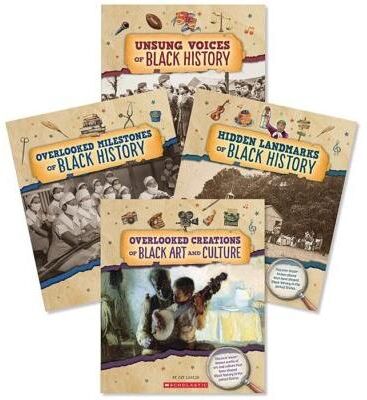
From the Archives: Black History and Culture Value PackThis brand-new series is rooted in a profound commitment to shedding light on some of the important -- and often lesser-known -- aspects of Black history. From the Archives features landmarks, events, people, and artistic endeavors that have played...27,99 $*Shipping: 0,00 $Secure redirect to the provider
-
C. F. Iggulden Darien: Empire of Salt Book I (Empire of Salt, 1)Description. Condition: BRAND NEW. Format: Paperback. Discover your new favourite fantasy series the epic and spellbinding first instalment in Empire of Salt. 'One of the best fantasy novels I've read' 5***** READER REVIEW. ______. The city of Darien lies at the heart of a dying empire.. Twelve families race for a throne soon to be made vacant - by murder or civil war. Into this fevered, hungry city come six strangers:. An orphan and an old swordsman.. Title. Darien: Empire of Salt Book I (Empire of Salt, 1). Delivery. Content. Reviews9,99 £*Shipping: 2,99 £Secure redirect to the provider
-
Why was the Tsarist Empire an empire?
The Tsarist Empire was an empire because it was a vast and multi-ethnic state ruled by an autocratic monarch, the Tsar. It encompassed a diverse range of territories, including present-day Russia, Ukraine, Belarus, and parts of Poland, Finland, and the Caucasus. The Tsarist Empire also had a strong centralized government and a powerful military, which allowed it to expand and maintain control over its vast territories. Additionally, the empire had a hierarchical social structure with the Tsar at the top, and it exerted influence and control over the various ethnic and cultural groups within its borders. **
-
How was the history lesson about the Ottoman Empire?
The history lesson about the Ottoman Empire was fascinating and informative. We learned about the empire's rise to power, its expansion, and its impact on the region. The lesson also covered key events, such as the conquest of Constantinople and the empire's decline. Overall, it provided a comprehensive understanding of the Ottoman Empire's significance in history. **
-
Why is the Chinese Empire called the Empire?
The Chinese Empire is called an empire because it was a vast and powerful state that was ruled by an emperor. The emperor held absolute authority over the territory and its people, making it a centralized and hierarchical political system. The Chinese Empire also had a well-defined bureaucracy, a strong military, and a system of governance that extended over a large geographical area, further solidifying its status as an empire. **
-
Was the Roman Empire like the German Empire?
The Roman Empire and the German Empire were different in many ways. The Roman Empire was an ancient civilization that existed from around 27 BC to 476 AD, while the German Empire was a modern nation-state that existed from 1871 to 1918. The Roman Empire was known for its vast territorial expansion and diverse cultural influences, while the German Empire was known for its industrialization and militarization. Additionally, the Roman Empire was a republic before becoming an empire, while the German Empire was a monarchy. Overall, the two empires had different historical contexts, political structures, and societal impacts. **
* All prices are inclusive of VAT and, if applicable, plus shipping costs. The offer information is based on the details provided by the respective shop and is updated through automated processes. Real-time updates do not occur, so deviations can occur in individual cases. ** Note: Parts of this content were created by AI.