Buy greatpoland.eu ?
We are moving the project
greatpoland.eu .
Are you interested in purchasing the domain
greatpoland.eu ?
domain@kv-gmbh.de · 0541-91531010
Buy greatpoland.eu ?
How have vertebrates evolved?
Vertebrates have evolved over millions of years through a process of natural selection and genetic mutations. They have adapted to various environments by developing specialized traits such as limbs for land movement, wings for flight, and fins for swimming. Vertebrates have also diversified into different species with unique characteristics to better survive and thrive in their respective habitats. Overall, the evolution of vertebrates has been a complex and dynamic process that has led to the incredible diversity of species we see today. **
What are classes of vertebrates?
Vertebrates are animals with a backbone or spinal column. There are five main classes of vertebrates: mammals, birds, reptiles, amphibians, and fish. Each class has unique characteristics and adaptations that help them thrive in their respective environments. These classes are further divided into different orders, families, and species based on specific traits and evolutionary history. **

Similar search terms for Vertebrates
Top-Angebote
Products related to Vertebrates:
-
Daniel Coyle Collection 3 Books Set Talent Code, Culture Code, Culture PlaybookDescription:. Condition: BRAND NEW. Format: Paperback. The Talent Code: Greatness isn't born. It's grown. In The Talent Code, award-winning journalist Daniel Coyle draws on cutting-edge research to reveal that, far from being some abstract mystical power fixed at birth, ability really can be created and nurtured.In the process, he considers talent at work in venues as diverse as a music school in Dallas and a tennis academy near Moscow to demonstrate how the wiring of our brains can be transformed by the way we approach particular tasks. He explains what is really going on when apparently unremarkable people suddenly make a major leap forward. He reveals why some teaching methods are so much more effective than others. Above all, he shows how all of us can achieve our full potential if we set about training our brains in the right way..... The Culture Code: The Secrets of Highly Successful Groups. The Culture Code reveals the secrets of some of the best teams in the world - from Pixar to Google to US Navy SEALs - explaining the three skills such groups have mastered in order to generate trust and a willingness to collaborate. Combining cutting-edge science, on-the-ground insight and practical ideas for action, it offers a roadmap for creating an environment where innovation flourishes, problems get solved, and expectations are exceeded..... The Culture Playbook: 60 Highly Effective Actions to Help Your Group Succeed.... What is great culture made of? How do you get more of it, or turn around a group that needs improving? In The Culture Playbook, Daniel Coyle delivers a field-tested guide for building strong, cohesive, high-performing groups.Coyle, author of the New York Times bestselling The Culture Code, has spent the last six years studying and consulting with some of the most successful groups on the planet - including Pixar, Navy SEALS Team 6 and others. Here, he distils his findings into 60 concise, actionable, scientifically proven tips for building safety, generating trust, and establishing purpose - plus a set of conversation-igniting exercises to help you assess and improve your current culture.The result is a book that will sharpen the skills of any leader and strengthen the cohesion of any team - because it demonstrates that great culture is not controlled by fate or luck; it's controlled by you..... Title. Daniel Coyle Collection 3 Books Set Talent Code, Culture Code,Culture Playbook. Delivery. Content. Reviews30,99 £*Shipping: 2,99 £Secure redirect to the provider
-
Excession (Culture) - A Culture Series Novel by Iain M. Banks - Fiction - PaperbackProduct Details. Title: Excession (Culture) by Iain M. Banks. Condition: BRAND NEW. Format: Paperback. ISBN: 9780356521671 Overview:. Excession is a landmark entry in Iain M. Banks’s expansive Culture saga, celebrated for turning a sweeping space opera into a sharp meditation on power, trust, and the limits of utopia. In this standalone-feeling epic within the Culture universe, a mysterious black-sphere object—an Excession—appears on the frontier of a post-scarcity civilization, triggering an extraordinary contest of wits among diplomats, star-faring minds, and wily human operatives. Banks threads together high-stakes diplomacy, dazzling space battles, and intimate character moments with an almost cinematic tempo. Genar-Hofoen, a capable diplomat from Special Circumstances, navigates fragile alliances while an old flame and the enigmatic Ulver Seich complicate every move. The Excession challenges not only the Culture’s external enemies but the ideology that underpins a society where needs are met and choices are abundant. Fans of cerebral SF and dynamic ensemble storytelling will relish Banks’s wit, moral complexity, and audacious imagination in this quintessential Culture novel. This paperback edition makes a cornerstone of modern science fiction accessible to newcomers and satisfying to long-time readers alike, inviting you to revisit a world where intelligence—human or artificial—outthinks the impossible. What Makes This Novel Special:. Excession stands out even within the Culture canon for its deft balancing of large-scale, panoramic storytelling with deeply personal stakes. The titular artifact acts as a narrative catalyst that accelerates debates about intervention, autonomy, and collective responsibility. Banks deliberately foregrounds the Minds—the sentient starships and habitats that underpin Culture life—exploring how vast intellects negotiate restraint, risk, and moral responsibility when faced with a seemingly insolvable puzzle. The result is a novel that rewards patient readers with layered political maneuvering, witty courtroom-style exchanges, and heart-pounding action that never loses sight of character arcs. It’s a portrait of a society so advanced that questions of power become philosophical puzzles as much as geopolitical maneuvers. For readers who crave intelligent speculative fiction with thematic depth, Excession delivers both the thought-provoking ideas and the gripping, page-turning propulsion that redefine what a space opera can be. About the Author:. Iain M. Banks (1954–2013) is widely regarded as one of the most influential figures in contemporary science fiction. Writing under the name Iain M. Banks for his SF novels, he created the Culture series—vast, humanistic adventures set in a post-scarcity future where AI Minds govern starships and human passion meets galactic scale. Banks’s career began with The Wasp Factory (1984) and gained international acclaim with Consider Phlebas (1987), the first Culture novel. His work...99,99 £*Shipping: 0,00 £Secure redirect to the provider
-
Gastronomy of Italy by Anna Del Conte - Non Fiction - HardcoverDescription:. Condition: BRAND NEW. Format: Hardcover. Dimensions: 18.6 x 3.6 x 27.6 cm. Anna Del Conte's definite work, Gastronomy of Italy defines the country's regions, ingredients, dishes and techniques for a new generation and leaves no stone unturned in its exploration of Italian cuisine. This revised and fully updated edition, illustrated with new photography by renowned food photographer Laura Edwards, includes over 200 recipes of the great dishes from every major region of Italy. Variations on the classics pasta, polenta, gnocchi, risotto and pizza sit alongside Anna's recipes for versions of Italian favourites such as peperonata, lamb fricassée and osso buco. With specially commissioned photography, ingredients and techniques along with maps of the regions, Gastronomy of Italy is a truly unique and invaluable book.. Title. Gastronomy of Italy. Delivery. Content. Reviews99,99 £*Shipping: 0,00 £Secure redirect to the provider


-
What are the two oldest groups of vertebrates that evolved from the early vertebrates?
The two oldest groups of vertebrates that evolved from early vertebrates are the jawless fish, such as lampreys and hagfish, and the cartilaginous fish, including sharks, rays, and skates. These groups are considered some of the most ancient vertebrates and have been around for hundreds of millions of years. Jawless fish are characterized by their lack of true jaws, while cartilaginous fish have skeletons made of cartilage instead of bone. **
-
What is a question about vertebrates?
One question about vertebrates could be: How do the skeletal structures of vertebrates, such as humans, fish, and birds, differ in terms of adaptations for movement and support? **
-
What is the evolution of vertebrates?
The evolution of vertebrates is a complex process that spans hundreds of millions of years. It is believed that vertebrates evolved from a group of ancient invertebrate chordates, with the first vertebrates appearing around 500 million years ago. Over time, vertebrates diversified and evolved into a wide range of species, including fish, amphibians, reptiles, birds, and mammals. This evolution was marked by key innovations such as the development of jaws, limbs, and the ability to live on land. Today, vertebrates are the most diverse group of animals on Earth, with over 65,000 species. **
-
Which are the oldest groups of vertebrates?
The oldest groups of vertebrates are jawless fish, which include hagfish and lampreys. These ancient fish have been around for hundreds of millions of years and are considered some of the most primitive vertebrates. They lack true jaws and have a cartilaginous skeleton, distinguishing them from more advanced vertebrates like bony fish, amphibians, reptiles, birds, and mammals. Despite their simple anatomy, jawless fish have managed to survive and adapt to various environments over time. **


How did the evolution of vertebrates unfold?
The evolution of vertebrates unfolded over millions of years through a series of key events. It is believed that vertebrates evolved from early chordates, which were simple, fish-like organisms with a notochord. Over time, vertebrates developed more complex features such as jaws, limbs, and a bony skeleton. This allowed them to adapt to various environments and eventually gave rise to the diverse array of vertebrates we see today, including fish, amphibians, reptiles, birds, and mammals. **
Are there vertebrates that do not sleep?
Yes, there are some vertebrates that do not sleep in the traditional sense. For example, certain species of fish, such as some types of sharks, do not have a sleep-wake cycle like mammals and birds. Instead, they have periods of rest where they may reduce their activity but do not enter a true sleep state. Additionally, some species of birds, like the frigatebird, are known to be able to sleep while flying, allowing them to rest without fully shutting down their brains like other animals do during sleep. **
Top-Angebote
Products related to Vertebrates:
-
From the Archives: Black History and Culture Value PackThis brand-new series is rooted in a profound commitment to shedding light on some of the important -- and often lesser-known -- aspects of Black history. From the Archives features landmarks, events, people, and artistic endeavors that have played...27,99 $*Shipping: 0,00 $Secure redirect to the provider
-
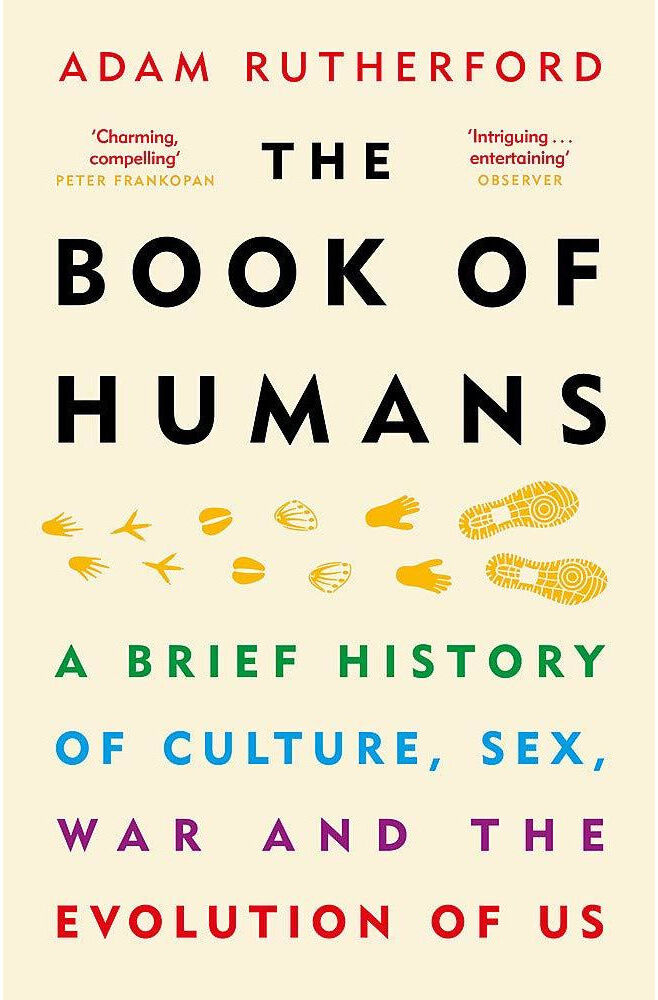
Orion The Book of Humans by Adam Rutherford – A Brief History of Culture, Sex, War & EvolutionWHAT MAKES US HUMAN? Waging war? Sex for pleasure? Creating art? Mastery of fire? In this thrilling tour of the animal kingdom, Adam Rutherford tells the story of how we became the unique creatures we are today. Illuminated by the latest scientific discoveries, THE BOOK OF HUMANS is a dazzling compendium of what unequivocally fixes us as animals, and reveals how we are extraordinary among them.4,98 £*Shipping: 1,99 £Secure redirect to the provider
-
Daniel Coyle Collection 3 Books Set Talent Code, Culture Code, Culture PlaybookDescription:. Condition: BRAND NEW. Format: Paperback. The Talent Code: Greatness isn't born. It's grown. In The Talent Code, award-winning journalist Daniel Coyle draws on cutting-edge research to reveal that, far from being some abstract mystical power fixed at birth, ability really can be created and nurtured.In the process, he considers talent at work in venues as diverse as a music school in Dallas and a tennis academy near Moscow to demonstrate how the wiring of our brains can be transformed by the way we approach particular tasks. He explains what is really going on when apparently unremarkable people suddenly make a major leap forward. He reveals why some teaching methods are so much more effective than others. Above all, he shows how all of us can achieve our full potential if we set about training our brains in the right way..... The Culture Code: The Secrets of Highly Successful Groups. The Culture Code reveals the secrets of some of the best teams in the world - from Pixar to Google to US Navy SEALs - explaining the three skills such groups have mastered in order to generate trust and a willingness to collaborate. Combining cutting-edge science, on-the-ground insight and practical ideas for action, it offers a roadmap for creating an environment where innovation flourishes, problems get solved, and expectations are exceeded..... The Culture Playbook: 60 Highly Effective Actions to Help Your Group Succeed.... What is great culture made of? How do you get more of it, or turn around a group that needs improving? In The Culture Playbook, Daniel Coyle delivers a field-tested guide for building strong, cohesive, high-performing groups.Coyle, author of the New York Times bestselling The Culture Code, has spent the last six years studying and consulting with some of the most successful groups on the planet - including Pixar, Navy SEALS Team 6 and others. Here, he distils his findings into 60 concise, actionable, scientifically proven tips for building safety, generating trust, and establishing purpose - plus a set of conversation-igniting exercises to help you assess and improve your current culture.The result is a book that will sharpen the skills of any leader and strengthen the cohesion of any team - because it demonstrates that great culture is not controlled by fate or luck; it's controlled by you..... Title. Daniel Coyle Collection 3 Books Set Talent Code, Culture Code,Culture Playbook. Delivery. Content. Reviews30,99 £*Shipping: 2,99 £Secure redirect to the provider
-
How have vertebrates evolved?
Vertebrates have evolved over millions of years through a process of natural selection and genetic mutations. They have adapted to various environments by developing specialized traits such as limbs for land movement, wings for flight, and fins for swimming. Vertebrates have also diversified into different species with unique characteristics to better survive and thrive in their respective habitats. Overall, the evolution of vertebrates has been a complex and dynamic process that has led to the incredible diversity of species we see today. **
-
What are classes of vertebrates?
Vertebrates are animals with a backbone or spinal column. There are five main classes of vertebrates: mammals, birds, reptiles, amphibians, and fish. Each class has unique characteristics and adaptations that help them thrive in their respective environments. These classes are further divided into different orders, families, and species based on specific traits and evolutionary history. **
-
What are the two oldest groups of vertebrates that evolved from the early vertebrates?
The two oldest groups of vertebrates that evolved from early vertebrates are the jawless fish, such as lampreys and hagfish, and the cartilaginous fish, including sharks, rays, and skates. These groups are considered some of the most ancient vertebrates and have been around for hundreds of millions of years. Jawless fish are characterized by their lack of true jaws, while cartilaginous fish have skeletons made of cartilage instead of bone. **
-
What is a question about vertebrates?
One question about vertebrates could be: How do the skeletal structures of vertebrates, such as humans, fish, and birds, differ in terms of adaptations for movement and support? **
Similar search terms for Vertebrates
-
Excession (Culture) - A Culture Series Novel by Iain M. Banks - Fiction - PaperbackProduct Details. Title: Excession (Culture) by Iain M. Banks. Condition: BRAND NEW. Format: Paperback. ISBN: 9780356521671 Overview:. Excession is a landmark entry in Iain M. Banks’s expansive Culture saga, celebrated for turning a sweeping space opera into a sharp meditation on power, trust, and the limits of utopia. In this standalone-feeling epic within the Culture universe, a mysterious black-sphere object—an Excession—appears on the frontier of a post-scarcity civilization, triggering an extraordinary contest of wits among diplomats, star-faring minds, and wily human operatives. Banks threads together high-stakes diplomacy, dazzling space battles, and intimate character moments with an almost cinematic tempo. Genar-Hofoen, a capable diplomat from Special Circumstances, navigates fragile alliances while an old flame and the enigmatic Ulver Seich complicate every move. The Excession challenges not only the Culture’s external enemies but the ideology that underpins a society where needs are met and choices are abundant. Fans of cerebral SF and dynamic ensemble storytelling will relish Banks’s wit, moral complexity, and audacious imagination in this quintessential Culture novel. This paperback edition makes a cornerstone of modern science fiction accessible to newcomers and satisfying to long-time readers alike, inviting you to revisit a world where intelligence—human or artificial—outthinks the impossible. What Makes This Novel Special:. Excession stands out even within the Culture canon for its deft balancing of large-scale, panoramic storytelling with deeply personal stakes. The titular artifact acts as a narrative catalyst that accelerates debates about intervention, autonomy, and collective responsibility. Banks deliberately foregrounds the Minds—the sentient starships and habitats that underpin Culture life—exploring how vast intellects negotiate restraint, risk, and moral responsibility when faced with a seemingly insolvable puzzle. The result is a novel that rewards patient readers with layered political maneuvering, witty courtroom-style exchanges, and heart-pounding action that never loses sight of character arcs. It’s a portrait of a society so advanced that questions of power become philosophical puzzles as much as geopolitical maneuvers. For readers who crave intelligent speculative fiction with thematic depth, Excession delivers both the thought-provoking ideas and the gripping, page-turning propulsion that redefine what a space opera can be. About the Author:. Iain M. Banks (1954–2013) is widely regarded as one of the most influential figures in contemporary science fiction. Writing under the name Iain M. Banks for his SF novels, he created the Culture series—vast, humanistic adventures set in a post-scarcity future where AI Minds govern starships and human passion meets galactic scale. Banks’s career began with The Wasp Factory (1984) and gained international acclaim with Consider Phlebas (1987), the first Culture novel. His work...99,99 £*Shipping: 0,00 £Secure redirect to the provider
-
Gastronomy of Italy by Anna Del Conte - Non Fiction - HardcoverDescription:. Condition: BRAND NEW. Format: Hardcover. Dimensions: 18.6 x 3.6 x 27.6 cm. Anna Del Conte's definite work, Gastronomy of Italy defines the country's regions, ingredients, dishes and techniques for a new generation and leaves no stone unturned in its exploration of Italian cuisine. This revised and fully updated edition, illustrated with new photography by renowned food photographer Laura Edwards, includes over 200 recipes of the great dishes from every major region of Italy. Variations on the classics pasta, polenta, gnocchi, risotto and pizza sit alongside Anna's recipes for versions of Italian favourites such as peperonata, lamb fricassée and osso buco. With specially commissioned photography, ingredients and techniques along with maps of the regions, Gastronomy of Italy is a truly unique and invaluable book.. Title. Gastronomy of Italy. Delivery. Content. Reviews99,99 £*Shipping: 0,00 £Secure redirect to the provider
-
Uplifted Finds Ice Cream Scoop & Technical Gastronomy Calibration Logic blackInaugurate a powerful ConfectionSanctuary energy for your digital environment with the ultimate 2026 boutiqueintegrated culinary solution. The Stainless Steel Ice Cream Scoop is the premier choice for creating a TechnicalModern or StudioLuxe...67,97 $*Shipping: 0,00 $Secure redirect to the provider
-
Daniel Coyle The Culture Playbook, The Talent Code, The Culture Code 3 Books SetDescription:. Condition: BRAND NEW. Format: Paperback. The Culture Playbook. The Talent Code. The Culture Code. Title. The Culture Playbook, The Talent Code, The Culture Code 3 Books Set. Delivery. Content. Reviews29,99 £*Shipping: 2,99 £Secure redirect to the provider
-
What is the evolution of vertebrates?
The evolution of vertebrates is a complex process that spans hundreds of millions of years. It is believed that vertebrates evolved from a group of ancient invertebrate chordates, with the first vertebrates appearing around 500 million years ago. Over time, vertebrates diversified and evolved into a wide range of species, including fish, amphibians, reptiles, birds, and mammals. This evolution was marked by key innovations such as the development of jaws, limbs, and the ability to live on land. Today, vertebrates are the most diverse group of animals on Earth, with over 65,000 species. **
-
Which are the oldest groups of vertebrates?
The oldest groups of vertebrates are jawless fish, which include hagfish and lampreys. These ancient fish have been around for hundreds of millions of years and are considered some of the most primitive vertebrates. They lack true jaws and have a cartilaginous skeleton, distinguishing them from more advanced vertebrates like bony fish, amphibians, reptiles, birds, and mammals. Despite their simple anatomy, jawless fish have managed to survive and adapt to various environments over time. **
-
How did the evolution of vertebrates unfold?
The evolution of vertebrates unfolded over millions of years through a series of key events. It is believed that vertebrates evolved from early chordates, which were simple, fish-like organisms with a notochord. Over time, vertebrates developed more complex features such as jaws, limbs, and a bony skeleton. This allowed them to adapt to various environments and eventually gave rise to the diverse array of vertebrates we see today, including fish, amphibians, reptiles, birds, and mammals. **
-
Are there vertebrates that do not sleep?
Yes, there are some vertebrates that do not sleep in the traditional sense. For example, certain species of fish, such as some types of sharks, do not have a sleep-wake cycle like mammals and birds. Instead, they have periods of rest where they may reduce their activity but do not enter a true sleep state. Additionally, some species of birds, like the frigatebird, are known to be able to sleep while flying, allowing them to rest without fully shutting down their brains like other animals do during sleep. **
* All prices are inclusive of VAT and, if applicable, plus shipping costs. The offer information is based on the details provided by the respective shop and is updated through automated processes. Real-time updates do not occur, so deviations can occur in individual cases. ** Note: Parts of this content were created by AI.