Buy greatpoland.eu ?
We are moving the project
greatpoland.eu .
Are you interested in purchasing the domain
greatpoland.eu ?
domain@kv-gmbh.de · 0541-91531010
Buy greatpoland.eu ?
Did Nero burn down Rome?
There is no definitive evidence that proves Nero intentionally burned down Rome. While it is widely believed that Nero did not start the fire, he did take advantage of the situation to clear land for his grandiose building projects. Some historians argue that Nero may have even helped organize relief efforts for the victims of the fire. However, the popular narrative of Nero fiddling while Rome burned has persisted in popular culture. **
Who was Emperor Nero II?
Emperor Nero II, also known as Nero Caesar, was the adopted son and heir of the Roman Emperor Claudius. He became Emperor of Rome in 54 AD at the age of 16, following the death of Claudius. Nero is often remembered for his extravagant lifestyle, persecution of Christians, and the Great Fire of Rome. He ruled until 68 AD when he was forced to commit suicide after being declared a public enemy by the Senate. **


Similar search terms for Vermentino-Nero-Terenzuola-2024
Top-Angebote
Products related to Vermentino-Nero-Terenzuola-2024:
-
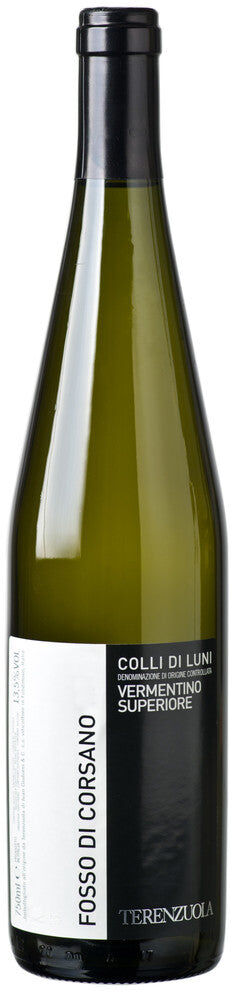
Vermentino Colli di Luni 'Fosso di Corsano' Terenzuola 2025The Vermentino Colli di Luni “Fosso di Corsano” by Terenzuola is born in a borderland, that is Lunigiana, which blurs the boundaries between Liguria and Tuscany. It is a wine with which the winery dares, emphasizing a minerality that is a distinctive trait of the tasting, both on the nose and on the palate, outlining an idea of Vermentino that looks to the future with the desire to become a great wine. A courage that pays off, considering the great recognition received at the critical level. A label to try, to connect with an interesting reality, one of those that make the world of wine in perpetual evolution. “Fosso di Corsano” is a Vermentino Colli di Luni that comes from plots located in the municipality of Fosdinovo, at an altitude between 200 and 350 meters above sea level. The vines grow using the guyot system, in schist soils rich in skeleton or predominantly sandy. The harvest is done by hand, between the last weeks of September and the first of October, and is divided by the ripeness of the Vermentino grapes in the different plots. The grapes are gently pressed, and the must obtained undergoes a brief cold maceration; then fermentation begins, in steel tanks, at low temperatures. The wine remains to age on the lees for 6-7 months in steel. The “Fosso di Corsano” Vermentino Colli di Luni signed by the Terenzuola winery presents itself visually with a bright straw yellow color. Generous on the nose, where the mineral wave is predominant compared to other olfactory notes, where fruity nuances, hints of aromatic herbs, and iodized effluvia can be traced. On the palate, it is medium-bodied, with a round and enveloping sip characterized by excellent freshness and a savory taste imprint that recalls the olfactory profile. A bottle that the winery defines as “of the future,” with which the new geometries of winemaking between Liguria and Tuscany are traced.20,00 £*Shipping: 48,00 £Secure redirect to the provider
-
Vermentino Sequerciani 2024The Vermentino from Sequerciani is a Tuscan white made exclusively from Vermentino grapes. It is produced by immediately separating the skins from the must to achieve a wine characterized by delicate aromas and flavors, along with a beautiful acidity. The result is a Vermentino with character, a strong personality, sunny and Mediterranean. An artisanal wine with notes of white fruit, honey, and salt, perfectly reflecting its terroir.The Vermentino wine is the classic white from the Tuscan coastline. The Sequerciani estate is located in the hilly inland of the Etruscan Coast. The vineyards cover an area of 14 hectares and are part of a vast estate of about 170 hectares, which also includes olive groves and ancient grain crops. The environment, characterized by still wild and unspoiled nature, inspired the choice to apply the rules of organic and biodynamic farming. The focus on sustainability has led to the use of geothermal energy and the creation of a winery where human intervention is minimized and the winemaking processes take place in the most natural way.possible, using mainly terracotta and ceramic amphorae for aging. The result of this philosophy is the production of wines with an expressive face, direct and straightforward, that retain a strong varietal imprint.The white Vermentino from Sequerciani is born from spontaneous fermentation with indigenous yeasts, conducted with a maceration on the skins for a few days of a very small percentage of grapes (pied de cuve). The wine rests for a few months in large concrete tanks and is bottled without filtration. In the glass, it presents a straw yellow color, with brilliant golden reflections. On the nose, it opens with intense aromas of ripe white fruit and honey, hints of aromatic herbs from the Mediterranean scrub, and nuances of wildflowers. On the palate, it flows rich and broad, with a harmonious and expressive sip, leading to a fresh and saline finish.19,00 £*Shipping: 48,00 £Secure redirect to the provider
-
Vermentino 'Filemone' La Fralluca 2024The Fralluca Vermentino ‘Filemone’ represents a Tuscan expression of Vermentino with a lively and very pleasant personality, crafted on the Mediterranean coast of the Suvereto area, in the province of Livorno. The name derives from the legend of Philemon and Baucis, an episode from classical mythology passed down by Ovid in the eighth book of the Metamorphoses. Philemon and Baucis were a humble elderly couple who were the only ones in Phrygia to offer hospitality to Zeus and Hermes, who were traveling through the region in human form. Zeus then unleashed his wrath upon the Phrygians, sparing only the hut of Philemon and Baucis, which was transformed into a majestic temple. The god then asked the couple to make a wish, and the two asked only to become priests of his temple and to be able to die together. When the time came, the couple was transformed into trees joined at the trunk: Philemon into an oak and Baucis into a linden. The ‘Filemone’ La Fralluca Vermentino comes from only grapes of the same variety grown in soils located at an altitude of 120 meters above sea level and made up of typical alberese soils, medium-textured with abundant presence of skeleton and limestone. The exposure is southwest and after manual harvesting, the bunches are gently pressed whole. This is followed by static decantation of the must and then alcoholic fermentation in stainless steel tanks at controlled temperature, the same wine containers where the maturation phase of about 5 months takes place on the fine lees with periodic bâtonnage.white berry variety grown in soils located at an altitude of 120 meters above sea level and made up of typical alberese soils, medium-textured with abundant presence of skeleton and limestone. The exposure is southwest and after manual harvesting, the bunches are gently pressed whole. This is followed by static decantation of the must and then alcoholic fermentation in stainless steel tanks at controlled temperature, the same wine containers where the maturation phase of about 5 months takes place on the fine lees with periodic bâtonnage. The Vermentino ‘Filemone’ from the La Fralluca winery is a light straw yellow color. The nose, elegant and enveloping, expresses perceptions of citrus, white-fleshed fruit, and aromatic herbs. Vibrant freshness and sharp minerality on the palate, where the progression becomes persistent and very pleasant.16,00 £*Shipping: 48,00 £Secure redirect to the provider
-
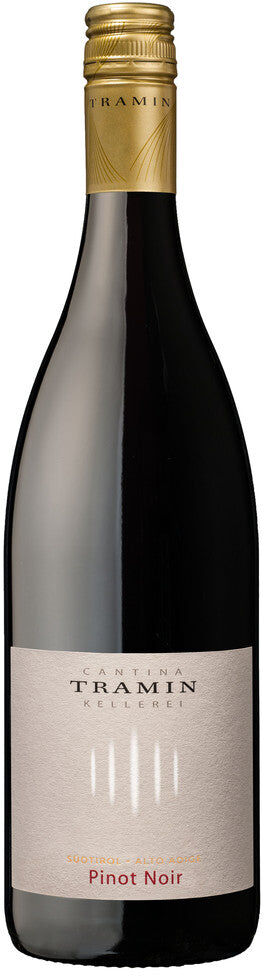
Pinot Nero Tramin 2024The Pinot Nero from the Tramin winery represents “the other half of the sky” of Alto Adige. Not just a land of whites, this area also delivers excellent results in the vinification of red grape varieties, which express the distinctive finesse of their origin. The Pinot Nero from Tramin expresses all the typical class of the variety, as well as its backbone that recalls the earth and the forest. This version is both varietal and territorial. The Tramin winery is located in the Termeno area and is based on a vineyard area of 260 hectares, owned by a group of 300 affiliated winegrowers. The involved vineyards are located in the municipalities of Egna, Ora, and Montagna. Tramin Pinot Nero is made from 100% grapes of the same variety. It comes from vineyards situated in a hilly area with an altitude ranging from 350 to 450 meters above sea level, characterized by a calcareous and gravelly soil, with abundant clay presence. The harvest is carried out manually using small crates. The alcoholic fermentation takes place inside French oak barriques and inside large barrels, as well as during maturation. The total duration of aging lasts at least 6 months. The Pinot Nero Tramin presents itself with a ruby red color, enhanced by garnet hues. The aroma plays on notes reminiscent of raspberry, berries, and earth. On the palate, it proves to be balanced and endowed with great finesse. The crunchiness of the fruit and the silky tannin are perceived, integrated into a full and composed body. It is characterized by a verticality of freshness, which enriches the sip with drinkability. Ideal to complete the picture of a perfect South Tyrolean dinner, of which this typical red represents the essence.15,00 £*Shipping: 48,00 £Secure redirect to the provider


-
What was Hitler's command to Nero?
Hitler commanded Nero to destroy Rome if he failed to win the war. Hitler believed that if he could not have Rome, then no one should. This extreme order demonstrated Hitler's ruthless and destructive mindset, showing his willingness to sacrifice even historical and cultural landmarks for his own ambitions. **
-
What was Emperor Nero known for?
Emperor Nero, who ruled Rome from AD 54 to 68, is known for his tyrannical rule and extravagant lifestyle. He famously persecuted Christians and was responsible for the Great Fire of Rome in AD 64, which some historians believe he may have started himself to clear space for a new palace. Nero was also known for his artistic ambitions, as he fancied himself a talented musician and actor, often performing in public despite criticism of his abilities. Ultimately, Nero's reign ended in turmoil, with a revolt leading to his suicide in AD 68. **
-
Did Emperor Nero burn down Rome?
There is historical debate about whether Emperor Nero actually burned down Rome. Some sources suggest that Nero may have been responsible for the fire in order to clear space for his grand building projects, while others argue that he was not involved and even worked to provide relief for the victims. The exact truth may never be known, but it is clear that the fire had significant political and social implications for Nero's reign. **
-
Did Nero set Rome on fire?
Historians debate whether Nero set Rome on fire or not. Some believe that Nero did not start the fire and instead worked to help the citizens affected by the disaster. Others argue that Nero may have had motives to set the fire in order to clear space for his grand building projects. The true cause of the fire remains uncertain, but Nero's reputation as a tyrant and his actions following the fire have led to the belief that he may have been involved. **

Is it worth buying the Nero Custom?
The decision to buy the Nero Custom depends on your personal preferences and priorities. The Nero Custom is a high-performance vehicle with sleek design and impressive speed, making it a desirable choice for those who enjoy luxury and speed in their cars. However, it comes with a high price tag and may not offer significant advantages over other vehicles in its class. If you value style, speed, and exclusivity, the Nero Custom could be worth the investment. **
Was Emperor Nero as megalomaniacal as Hitler?
It is difficult to directly compare the megalomania of Emperor Nero and Hitler as they lived in different time periods and had different contexts for their actions. Emperor Nero was known for his extravagant lifestyle and cruel treatment of his political enemies, while Hitler's megalomania was expressed through his desire for world domination and the implementation of the Holocaust. Both leaders exhibited extreme narcissism and a thirst for power, but their specific actions and impact on history were distinct. Ultimately, it is important to recognize the individual complexities of their reigns and the specific historical contexts in which they operated. **
Top-Angebote
Products related to Vermentino-Nero-Terenzuola-2024:
-
Vermentino Nero Terenzuola 2024Lunigiana is a borderland that divides Liguria from Toscana and is enclosed between the Mar Ligure, Appennino, and Alpi Apuane; it is an area where viticulture is practiced with the usual terracing, and where a certain skill is required to produce characterful wines. Just like the Vermentino Nero from the Terenzuola winery, the result of a late harvest that allows the grapes of this Tuscan native to present themselves at the time of picking rich in scents and aromas, giving life to a bottle that impresses with its young and spontaneous nature. This red wine is created by the Terenzuola winery from a blend where, alongside Vermentino Nero, an indigenous grape of Lunigiana that makes up 85% of the final blend, we also find a small percentage of other red grape varieties. The grapes grow in vineyards located at an altitude ranging from 100 to 350 meters above sea level, characterized by a schistous soil. After the harvest, carried out manually during the month of October, the grapes are gently pressed and ferment in barrique open; then they will continue their evolution maturing for six months in cement tanks, until the moment of bottling. The Vermentino Nero produced by the Terenzuola winery presents itself to the visual examination with a color reminiscent of purple red. The olfactory bouquet is orchestrated around fresh fruity and floral notes, which from the very first whiffs invite drinking. On the palate, it is slim and agile, with a thin sip that flows elegantly, also thanks to a pleasant freshness. A decidedly particular red wine, which due to its dynamism and elegance lends itself to accompany even traditional Tuscan fish dishes: you will be pleasantly surprised.16,00 £*Shipping: 48,00 £Secure redirect to the provider
-
Vermentino Colli di Luni 'Fosso di Corsano' Terenzuola 2025The Vermentino Colli di Luni “Fosso di Corsano” by Terenzuola is born in a borderland, that is Lunigiana, which blurs the boundaries between Liguria and Tuscany. It is a wine with which the winery dares, emphasizing a minerality that is a distinctive trait of the tasting, both on the nose and on the palate, outlining an idea of Vermentino that looks to the future with the desire to become a great wine. A courage that pays off, considering the great recognition received at the critical level. A label to try, to connect with an interesting reality, one of those that make the world of wine in perpetual evolution. “Fosso di Corsano” is a Vermentino Colli di Luni that comes from plots located in the municipality of Fosdinovo, at an altitude between 200 and 350 meters above sea level. The vines grow using the guyot system, in schist soils rich in skeleton or predominantly sandy. The harvest is done by hand, between the last weeks of September and the first of October, and is divided by the ripeness of the Vermentino grapes in the different plots. The grapes are gently pressed, and the must obtained undergoes a brief cold maceration; then fermentation begins, in steel tanks, at low temperatures. The wine remains to age on the lees for 6-7 months in steel. The “Fosso di Corsano” Vermentino Colli di Luni signed by the Terenzuola winery presents itself visually with a bright straw yellow color. Generous on the nose, where the mineral wave is predominant compared to other olfactory notes, where fruity nuances, hints of aromatic herbs, and iodized effluvia can be traced. On the palate, it is medium-bodied, with a round and enveloping sip characterized by excellent freshness and a savory taste imprint that recalls the olfactory profile. A bottle that the winery defines as “of the future,” with which the new geometries of winemaking between Liguria and Tuscany are traced.20,00 £*Shipping: 48,00 £Secure redirect to the provider
-
Vermentino Sequerciani 2024The Vermentino from Sequerciani is a Tuscan white made exclusively from Vermentino grapes. It is produced by immediately separating the skins from the must to achieve a wine characterized by delicate aromas and flavors, along with a beautiful acidity. The result is a Vermentino with character, a strong personality, sunny and Mediterranean. An artisanal wine with notes of white fruit, honey, and salt, perfectly reflecting its terroir.The Vermentino wine is the classic white from the Tuscan coastline. The Sequerciani estate is located in the hilly inland of the Etruscan Coast. The vineyards cover an area of 14 hectares and are part of a vast estate of about 170 hectares, which also includes olive groves and ancient grain crops. The environment, characterized by still wild and unspoiled nature, inspired the choice to apply the rules of organic and biodynamic farming. The focus on sustainability has led to the use of geothermal energy and the creation of a winery where human intervention is minimized and the winemaking processes take place in the most natural way.possible, using mainly terracotta and ceramic amphorae for aging. The result of this philosophy is the production of wines with an expressive face, direct and straightforward, that retain a strong varietal imprint.The white Vermentino from Sequerciani is born from spontaneous fermentation with indigenous yeasts, conducted with a maceration on the skins for a few days of a very small percentage of grapes (pied de cuve). The wine rests for a few months in large concrete tanks and is bottled without filtration. In the glass, it presents a straw yellow color, with brilliant golden reflections. On the nose, it opens with intense aromas of ripe white fruit and honey, hints of aromatic herbs from the Mediterranean scrub, and nuances of wildflowers. On the palate, it flows rich and broad, with a harmonious and expressive sip, leading to a fresh and saline finish.19,00 £*Shipping: 48,00 £Secure redirect to the provider
-
Did Nero burn down Rome?
There is no definitive evidence that proves Nero intentionally burned down Rome. While it is widely believed that Nero did not start the fire, he did take advantage of the situation to clear land for his grandiose building projects. Some historians argue that Nero may have even helped organize relief efforts for the victims of the fire. However, the popular narrative of Nero fiddling while Rome burned has persisted in popular culture. **
-
Who was Emperor Nero II?
Emperor Nero II, also known as Nero Caesar, was the adopted son and heir of the Roman Emperor Claudius. He became Emperor of Rome in 54 AD at the age of 16, following the death of Claudius. Nero is often remembered for his extravagant lifestyle, persecution of Christians, and the Great Fire of Rome. He ruled until 68 AD when he was forced to commit suicide after being declared a public enemy by the Senate. **
-
What was Hitler's command to Nero?
Hitler commanded Nero to destroy Rome if he failed to win the war. Hitler believed that if he could not have Rome, then no one should. This extreme order demonstrated Hitler's ruthless and destructive mindset, showing his willingness to sacrifice even historical and cultural landmarks for his own ambitions. **
-
What was Emperor Nero known for?
Emperor Nero, who ruled Rome from AD 54 to 68, is known for his tyrannical rule and extravagant lifestyle. He famously persecuted Christians and was responsible for the Great Fire of Rome in AD 64, which some historians believe he may have started himself to clear space for a new palace. Nero was also known for his artistic ambitions, as he fancied himself a talented musician and actor, often performing in public despite criticism of his abilities. Ultimately, Nero's reign ended in turmoil, with a revolt leading to his suicide in AD 68. **
Similar search terms for Vermentino-Nero-Terenzuola-2024
-
Vermentino 'Filemone' La Fralluca 2024The Fralluca Vermentino ‘Filemone’ represents a Tuscan expression of Vermentino with a lively and very pleasant personality, crafted on the Mediterranean coast of the Suvereto area, in the province of Livorno. The name derives from the legend of Philemon and Baucis, an episode from classical mythology passed down by Ovid in the eighth book of the Metamorphoses. Philemon and Baucis were a humble elderly couple who were the only ones in Phrygia to offer hospitality to Zeus and Hermes, who were traveling through the region in human form. Zeus then unleashed his wrath upon the Phrygians, sparing only the hut of Philemon and Baucis, which was transformed into a majestic temple. The god then asked the couple to make a wish, and the two asked only to become priests of his temple and to be able to die together. When the time came, the couple was transformed into trees joined at the trunk: Philemon into an oak and Baucis into a linden. The ‘Filemone’ La Fralluca Vermentino comes from only grapes of the same variety grown in soils located at an altitude of 120 meters above sea level and made up of typical alberese soils, medium-textured with abundant presence of skeleton and limestone. The exposure is southwest and after manual harvesting, the bunches are gently pressed whole. This is followed by static decantation of the must and then alcoholic fermentation in stainless steel tanks at controlled temperature, the same wine containers where the maturation phase of about 5 months takes place on the fine lees with periodic bâtonnage.white berry variety grown in soils located at an altitude of 120 meters above sea level and made up of typical alberese soils, medium-textured with abundant presence of skeleton and limestone. The exposure is southwest and after manual harvesting, the bunches are gently pressed whole. This is followed by static decantation of the must and then alcoholic fermentation in stainless steel tanks at controlled temperature, the same wine containers where the maturation phase of about 5 months takes place on the fine lees with periodic bâtonnage. The Vermentino ‘Filemone’ from the La Fralluca winery is a light straw yellow color. The nose, elegant and enveloping, expresses perceptions of citrus, white-fleshed fruit, and aromatic herbs. Vibrant freshness and sharp minerality on the palate, where the progression becomes persistent and very pleasant.16,00 £*Shipping: 48,00 £Secure redirect to the provider
-
Pinot Nero Tramin 2024The Pinot Nero from the Tramin winery represents “the other half of the sky” of Alto Adige. Not just a land of whites, this area also delivers excellent results in the vinification of red grape varieties, which express the distinctive finesse of their origin. The Pinot Nero from Tramin expresses all the typical class of the variety, as well as its backbone that recalls the earth and the forest. This version is both varietal and territorial. The Tramin winery is located in the Termeno area and is based on a vineyard area of 260 hectares, owned by a group of 300 affiliated winegrowers. The involved vineyards are located in the municipalities of Egna, Ora, and Montagna. Tramin Pinot Nero is made from 100% grapes of the same variety. It comes from vineyards situated in a hilly area with an altitude ranging from 350 to 450 meters above sea level, characterized by a calcareous and gravelly soil, with abundant clay presence. The harvest is carried out manually using small crates. The alcoholic fermentation takes place inside French oak barriques and inside large barrels, as well as during maturation. The total duration of aging lasts at least 6 months. The Pinot Nero Tramin presents itself with a ruby red color, enhanced by garnet hues. The aroma plays on notes reminiscent of raspberry, berries, and earth. On the palate, it proves to be balanced and endowed with great finesse. The crunchiness of the fruit and the silky tannin are perceived, integrated into a full and composed body. It is characterized by a verticality of freshness, which enriches the sip with drinkability. Ideal to complete the picture of a perfect South Tyrolean dinner, of which this typical red represents the essence.15,00 £*Shipping: 48,00 £Secure redirect to the provider
-
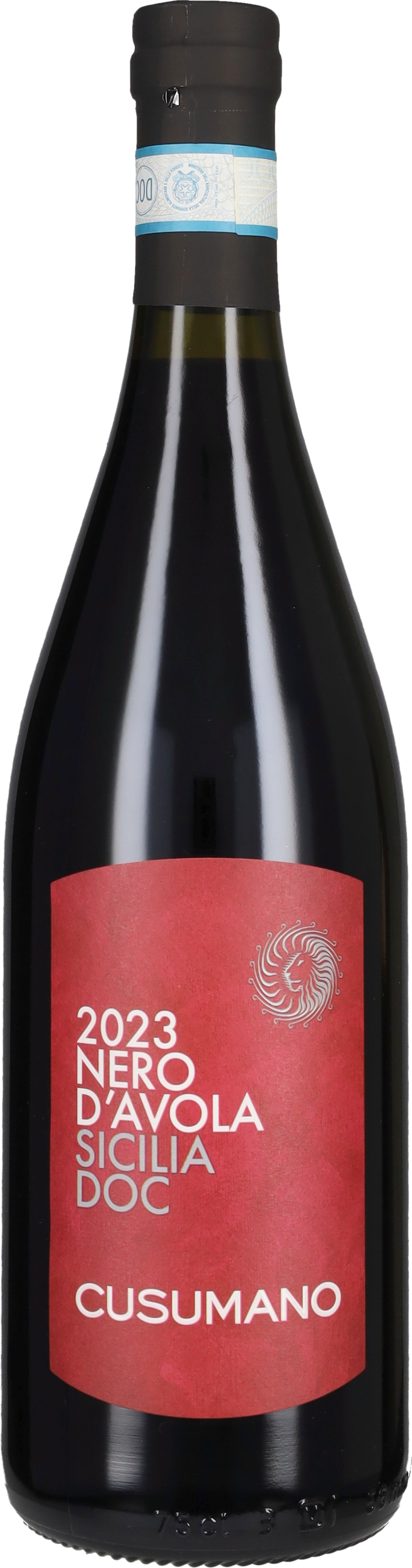
Nero d'Avola Cusumano 2024Nero d'Avola is one of the most representative and typical wines of the entire Sicilian terroir, which has contributed, in recent decades, to shining a light on the Sicilian wine renaissance. Cusumano, a reality deeply rooted in the territory, boasts even four estates scattered in different parts of the island, and is very attentive to faithfully portraying the main characteristics of this important indigenous grape variety. A bottle with fruity aromas, in which the drink flows pleasantly, offering a stimulating experience. A sip of the truest Sicily, directly in your glass. This Nero d'Avola is made from the homonymous grapes, used in purity by the Cusumano winery. The vines of this variety, trained using the espalier system, are cultivated in vineyards located near Butera, in the province of Caltanissetta, facing south and southeast. The grapes, harvested during the first decade of September, are destemmed and then cold macerated in the must for two days at a temperature of 5 degrees. The process then continues with the alcoholic fermentation, in steel containers where malolactic fermentation also takes place. The production process ends with aging, in which the wine rests on the fine lees for 5 months in steel. The red wine Nero d'Avola presents itself to the eye with a typically ruby hue, characterized by slight violet reflections at the rim. The nose is dominated by enveloping fruity aromas, which, in the finish, also reveal soft spicier notes. On the palate, it is light-bodied, broad, and enveloping, with a sip marked by a fresh and flavorful vein. Cusumano never misses a beat, showcasing its skill in presenting artisanal wines, despite the large size of the winery. A red that is difficult, if not impossible, to say no to!9,00 £*Shipping: 48,00 £Secure redirect to the provider
-
Pinot Nero Macea 2024and minimal use of sulfur dioxide if not zero and great manual labor in the vineyard are the main ingredients for this Tuscan pinot, fermented in used barriques and aged in steel, which is becoming a stronghold of a new tradition now widely spreading throughout the Tuscan Apennines. The Pinot Nero from the Macea winery expresses its essence with elegance, starting from the dark ruby but light appearance, of clear transparency, and then continuing with a swirling aroma of roses and fresh flowers, framed by sensations of oriental spices, slightly ripe cherries, and balsamic and mineral puffs. On the palate, it surprises with finesse, despite clearly maintaining its predominantly rural spirit: fresh, well-savored, and with sumptuous fruit juiciness, surrounded by light tannins, tells how this indomitable grape variety has found a new territory in which to develop aiming for excellence. and minimal use of sulfur dioxide if not zero and great manual labor in the vineyard are the main ingredients for this Tuscan pinot, fermented in used barriques and aged in steel, which is becoming a stronghold of a new tradition now widely spreading throughout the Tuscan Apennines. The Pinot Nero from the Macea winery expresses its essence with elegance, starting from the dark ruby but light appearance, of clear transparency, and then continuing with a swirling aroma of roses and fresh flowers, framed by sensations of oriental spices, slightly ripe cherries, and balsamic and mineral puffs. On the palate, it surprises with finesse, despite clearly maintaining its predominantly rural spirit: fresh, well-savored, and with sumptuous fruit juiciness, surrounded by light tannins, tells how this indomitable grape variety has found a new territory in which to develop aiming for excellence.38,00 £*Shipping: 48,00 £Secure redirect to the provider
-
Did Emperor Nero burn down Rome?
There is historical debate about whether Emperor Nero actually burned down Rome. Some sources suggest that Nero may have been responsible for the fire in order to clear space for his grand building projects, while others argue that he was not involved and even worked to provide relief for the victims. The exact truth may never be known, but it is clear that the fire had significant political and social implications for Nero's reign. **
-
Did Nero set Rome on fire?
Historians debate whether Nero set Rome on fire or not. Some believe that Nero did not start the fire and instead worked to help the citizens affected by the disaster. Others argue that Nero may have had motives to set the fire in order to clear space for his grand building projects. The true cause of the fire remains uncertain, but Nero's reputation as a tyrant and his actions following the fire have led to the belief that he may have been involved. **
-
Is it worth buying the Nero Custom?
The decision to buy the Nero Custom depends on your personal preferences and priorities. The Nero Custom is a high-performance vehicle with sleek design and impressive speed, making it a desirable choice for those who enjoy luxury and speed in their cars. However, it comes with a high price tag and may not offer significant advantages over other vehicles in its class. If you value style, speed, and exclusivity, the Nero Custom could be worth the investment. **
-
Was Emperor Nero as megalomaniacal as Hitler?
It is difficult to directly compare the megalomania of Emperor Nero and Hitler as they lived in different time periods and had different contexts for their actions. Emperor Nero was known for his extravagant lifestyle and cruel treatment of his political enemies, while Hitler's megalomania was expressed through his desire for world domination and the implementation of the Holocaust. Both leaders exhibited extreme narcissism and a thirst for power, but their specific actions and impact on history were distinct. Ultimately, it is important to recognize the individual complexities of their reigns and the specific historical contexts in which they operated. **
* All prices are inclusive of VAT and, if applicable, plus shipping costs. The offer information is based on the details provided by the respective shop and is updated through automated processes. Real-time updates do not occur, so deviations can occur in individual cases. ** Note: Parts of this content were created by AI.