Buy greatpoland.eu ?
We are moving the project
greatpoland.eu .
Are you interested in purchasing the domain
greatpoland.eu ?
domain@kv-gmbh.de · 0541-91531010
Buy greatpoland.eu ?
Where can one get a Ratti 714?
Ratti 714 is a type of mango that is primarily found in the Indian subcontinent. It is commonly available in local fruit markets, grocery stores, and specialty fruit vendors in India, particularly during the mango season which typically runs from March to July. Additionally, Ratti 714 mangoes may also be available for purchase online through various fruit vendors and e-commerce platforms that specialize in selling exotic fruits. **
What traditions, customs, and festivals are there in Hungary?
Hungary has a rich cultural heritage with many traditions, customs, and festivals. One of the most well-known traditions is the celebration of Easter, which includes painting eggs and the custom of sprinkling water on women as a sign of fertility. Another important festival is the Budapest Spring Festival, which features a wide range of cultural events including music, dance, and theater performances. The Hungarian National Day, celebrated on August 20th, is also a significant event, with fireworks, concerts, and other festivities taking place across the country. Additionally, traditional Hungarian folk music and dance are an integral part of the country's cultural identity, with many festivals and events dedicated to showcasing these art forms. **
Similar search terms for Ratti-Renato-Barolo-Rocche
Top-Angebote
Products related to Ratti-Renato-Barolo-Rocche:
-
Barolo 'Rocche di Castelletto' Cascina Chicco 2021The Barolo ‘Rocche di Castelletto’ from the Piedmont estate Cascina Chicco is configured as a powerful and deep expression of the municipality of Monforte d’Alba, an area where the Additional Geographical Mention ‘Castelletto’ is located, from which the grapes intended for this label come. The adventure of Cascina Chicco with Nebbiolo for Barolo began in 2006, the year in which the Faccenda family, owners of the estate, purchased 8 hectares of land in the Ginestra and Castelleto crus, located in the municipality of Monforte d’Alba. The challenge has proven successful and today Barolo is an important name within the winery's selection. The ‘Rocche di Castelletto’ Cascina Chicco Barolo is produced with only Nebbiolo grapes grown on clay-limestone soils within the MGA of Castelletto, in the municipality of Monforte d’Alba. Here, the altitude is about 400 meters above sea level while the exposure is southwest and west. The harvest is carried out entirely by hand with careful selection of the bunches, which are then fermented in small stainless steel tanks with 15 days of alcoholic fermentation in contact with the skins, accompanied by periodic pump-overs. The maceration on the skins continues even after fermentation, for a total period of 40-45 days, at the end of which the racking takes place and the subsequent aging of about 30-36 months in large Slavonian oak barrels of 20, 25, and 50 hectoliters. This is followed by a further long rest in the bottle before the final release on the market. The Barolo ‘Rocche di Castelletto’ by Cascina Chicco is a bright ruby red color with a garnet edge. The olfactory panorama is elegant, described by sensations of raspberry, licorice, and dried flowers that blend with hints of various spices and a striking mineral vein. The sip is structured and intense, with the lively fresh-salty component that joins the dense tannic weave in a finish of prolonged persistence.29,00 £*Shipping: 48,00 £Secure redirect to the provider
-
Scavino Paolo Barolo Riserva 'Rocche dell'Annunziata' Paolo Scavino 2019Paolo Scavino's Barolo Riserva 'Rocche dell'Annunziata' was born in Castiglione Falletto in the province of Cuneo, the heart of Piedmont's famous Langhe. The winery was founded in 1921 by Lorenzo Scavino and his son Paolo, who decided to add wine production to the already existing cultivation and breeding. In 1950, at the age of 10, Paolo's son Enrico joined the family business at a very young age, absorbing the passion and devotion for the work of this wonderful and promising land. After 60 years of experience, he decided to invest in the exclusive cultivation of the Nebbiolo vine, which in the Langhe expresses its best potential. Today his daughters Enrica and Elisa are the proud fourth generation at work, a volcano of novelties and projects for the future. The vineyards of Paolo Scavino's Barolo Riserva "Rocche dell'Annunziata" extend in the prestigious and historical "grand cru" of La Morra and were planted around 1990. The altitude reaches about 385 metres above sea level and the exposure is south/south-east, optimal, because the rows receive constant sunlight, for perfectly ripened grapes. The soil is composed of sandstone in the deepest layer, while the most superficial one is composed of whitish sand with an interlude of limestone; the climate is continental with hot, sultry summers and cold winters, often affected by snow and frost. Harvesting is carried out manually; in the cellar, the must is aged in wood for more than a year and stays in the bottle for a year. To the eye, the colour of Paolo Scavino's Barolo Riserva "Rocche dell'Annunziata" is an intense ruby red with brilliant reflections. The bouquet of aromas is reminiscent of ripe red-fleshed fruit, flowery notes of rose petals and violets in combination with Mediterranean herbs and tobacco; on the palate it is full-bodied, soft and elegant with well-integrated tannin. Perfect with red meat dishes typical of the Piedmontese tradition, local game and first courses with elaborate sauces. An excellent ambassador of the Langhe and ideal for special occasions or family celebrations to enjoy the authenticity of the Nebbiolo grape variety and its most hidden potential.233,00 £*Shipping: 48,00 £Secure redirect to the provider
-
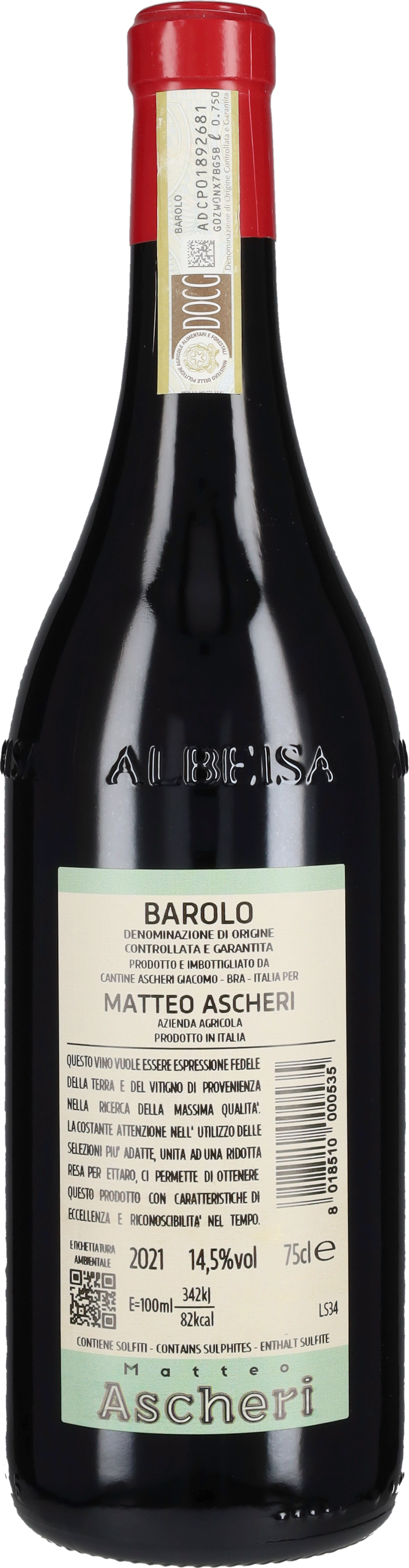
Barolo Ascheri 2021The Barolo from the historic Piedmontese estate Ascheri is a label of high prestige that originates from a production approach halfway between tradition and modernity. The bond between the Ascheri family and Barolo has ancient origins dating back to the early 19th century when the family began winemaking production in the homonymous locality of Ascheri, located in the municipality of La Morra. Over the centuries, the winery has undergone a progressive expansion of the vineyard estate and modernization of industry technologies, while still maintaining that connection with the territory that has always characterized the Ascheri family. Ascheri Barolo is produced solely from Nebbiolo grapes sourced from various vineyards scattered throughout the area, mostly planted on limestone soils at altitudes ranging from 280 to 370 meters above sea level. Harvest typically takes place in October and is followed by a traditional red vinification with alcoholic fermentation in contact with the skins for approximately 15 days at a temperature of 28°C. The subsequent aging period extends for 20 months, with 60% taking place in used oak barrels and the remaining 40% in new barrels. This is followed by a further extended period of bottle aging before final commercialization. Ascheri's Barolo is an intense garnet red in color. The broad and refined olfactory profile is composed of varied aromas of dried flowers, wild berries, sweet spices, and leather, enhanced by evocative undertones of the forest floor. On the palate, it reveals harmony, complexity, and excellent balance, as well as good structure and an elegant tannic texture. It is a Barolo capable of combining power and gustatory dynamism, to be enjoyed in its youth after adequate aeration or to be stored for many years.43,00 £*Shipping: 48,00 £Secure redirect to the provider


-
What are the traditions and culture in Kosovo?
Kosovo has a rich cultural heritage influenced by its history and diverse population. The traditions in Kosovo are deeply rooted in its Albanian, Serbian, and Turkish heritage, and include music, dance, and cuisine. The country also has a strong tradition of storytelling, poetry, and folk art. Additionally, Kosovo is known for its religious diversity, with a mix of Muslim, Orthodox Christian, and Catholic influences contributing to its cultural landscape. Overall, the traditions and culture in Kosovo reflect the country's complex history and the resilience of its people. **
-
Are there any special festivals and traditions in Schleswig-Holstein?
Yes, Schleswig-Holstein has several special festivals and traditions. One of the most famous is the Kiel Week, which is the largest sailing event in the world and includes a variety of cultural and entertainment activities. Another popular tradition is the Schleswig-Holstein Music Festival, which features classical music performances in various locations throughout the region. Additionally, there are traditional events like the Husum Harbour Days and the Wacken Open Air heavy metal music festival that attract visitors from all over the world. **
-
What traditions and customs are there in Turkish culture?
Turkish culture is rich in traditions and customs that have been passed down through generations. One important tradition is the Turkish tea culture, where people gather to socialize and enjoy strong, black tea served in small glasses. Another tradition is the Turkish bath, or hamam, which is a communal bathing experience that has been a part of Turkish culture for centuries. Additionally, Turkish cuisine is known for its diverse flavors and use of fresh ingredients, and sharing meals with family and friends is an important custom in Turkish culture. Finally, hospitality is a key aspect of Turkish culture, with guests being treated with great respect and generosity. **
-
How do you personally like Russian culture and its traditions?
As an AI, I do not have personal preferences or feelings. However, I can provide information on Russian culture and traditions. Russian culture is rich and diverse, with a long history of art, literature, music, and dance. Traditional Russian cuisine, such as borscht and blini, is also popular worldwide. Russian traditions, like Maslenitsa and Orthodox Christmas, are celebrated with great enthusiasm and bring people together in a spirit of unity and joy. Overall, Russian culture and traditions are fascinating and offer a unique glimpse into the country's heritage. **

How do you personally like the Russian culture and its traditions?
As an AI language model, I don't have personal experiences or preferences. However, I can tell you that Russian culture and traditions are rich and diverse, with a strong emphasis on literature, music, dance, and visual arts. The traditional Russian cuisine, such as borscht and blini, is also widely enjoyed. The Russian people are known for their hospitality and warmth, and their traditions, such as Maslenitsa and New Year celebrations, are vibrant and colorful. Overall, Russian culture and traditions are fascinating and have a lot to offer. **
What are electricity and high culture history?
Electricity history refers to the development and use of electricity as a form of energy, including the discovery of electricity, the invention of electric devices, and the establishment of electrical systems. High culture history, on the other hand, refers to the history of cultural and artistic achievements that are considered to be of high quality and sophistication, such as classical music, literature, fine arts, and theater. Both electricity and high culture history have evolved over time, shaping the way we live and appreciate the world around us. **
Top-Angebote
Products related to Ratti-Renato-Barolo-Rocche:
-
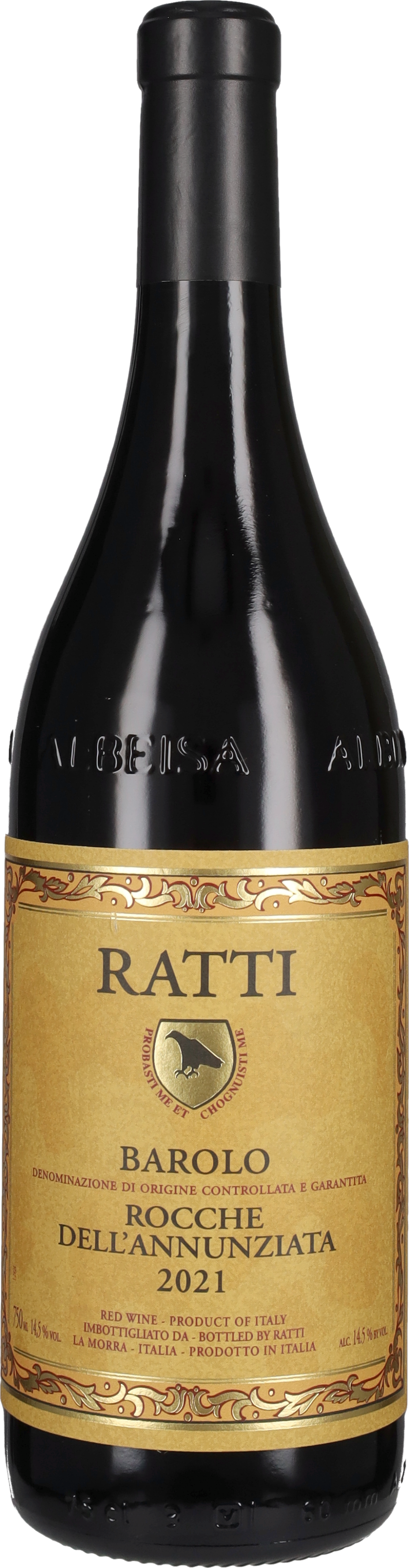
Ratti Renato Barolo 'Rocche dell'Annunziata' Renato Ratti 2021The Barolo “Rocche dell’Annunziata” from the Renato Ratti winery could easily be included in the vocabulary of synonyms for quality, history, and tradition. A true institution and a point of reference for one of the most important wine regions, not only in Italy but in the whole world. The name on the label refers to the prestigious subzone within the municipality of La Morra, more precisely “Le Rocche dell’Annunziata” represents a true cru among the most prestigious and sought-after in the entire Barolo production area. Harvested in late October, the Barolo “Rocche dell’Annunziata” by Renato Ratti, after a careful and rigorous selection of the best fruits, begins its journey inside the recently renovated winery. Here, alcoholic fermentation begins in steel, followed in November by malolactic fermentation in wooden barrels. The final aging is structured as follows: 12 months in French barriques and an further period of one year in large Slavonian oak barrels of 25 hectoliters. The Barolo from the Renato Ratti winery “Rocche dell’Annunziata” with its brilliant ruby color in the glass immediately conveys all its potential ready to unleash every aroma as soon as it is brought to the nose. A vibrant licorice presents itself at the first breath alongside a fine and delicate violet and a berry fruit that immediately recalls blackberry and blueberry. Mint and a hint of cinnamon complete this complex and layered olfactory mosaic. Brought to the mouth, the intensity and fullness of the sip are such that chewing becomes almost compulsive. Muscular and powerful, the encounter on the palate with this Barolo is like a quick reunion with an old friend where neither wants to say goodbye to the other.86,00 £*Shipping: 48,00 £Secure redirect to the provider
-
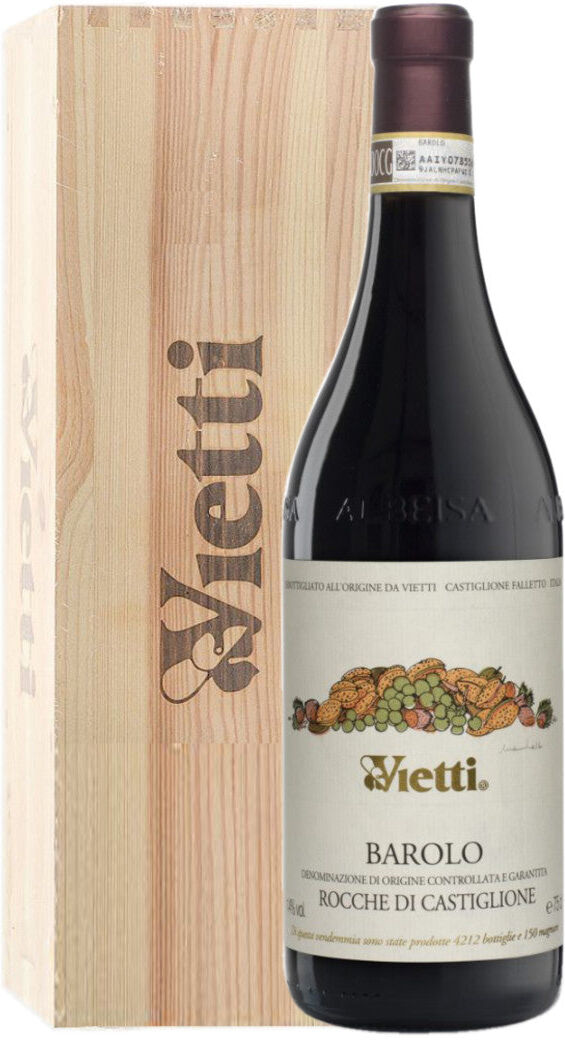
Barolo 'Rocche di Castiglione' Magnum Vietti 2019The Barolo “Rocche di Castiglione” is one of those wines that almost always appears on the imaginary list of great enthusiasts: a bottle of great prestige and a collector's item, especially in the Magnum format. Thanks to Vietti, a winery capable of producing bottles of incredible quality, which capture the interested gaze of collectors scattered around the world. A red that impresses with its dense tannins, a testament to a product that can easily age for the next 20 years, reserving always pleasant surprises, and for the overall bouquet of aromas, difficult to describe in words alone: style cannot always be told, but sometimes, just like in this case, it must simply be savored, or, especially in the case of the Magnum format, left to age in the cellar for decades.This Barolo “Rocche di Castiglione” is made from the pure grapes of one of the most important red grape varieties in the entire national ampelographic panorama, the Nebbiolo. The vines of this variety grow within some of the most suitable parcels of the entire denomination, located within the Rocche di Castiglione. The vineyards, whose maximum age exceeds seventy years, are exposed to the southeast, and the vines grow using the guyot training system. The grapes, once harvested and brought to the winemaking facilities of Vietti, ferment for about 4 weeks in steel containers, remaining in contact with the skins. Malolactic fermentation takes place in wood, where the aging continues for 30 months, after which the wine is finally ready to be bottled and marketed.The Vietti “Rocche di Castiglione” Magnum is a Barolo that, to the eye, announces itself with a ruby red color, crossed by reflections tending towards light garnet at the rim. Fantastic on the nose, from which emerges all the beauty of the varietal, where rose, fruit, and sweet spices blend into an enveloping sensation of great elegance. On the palate, it has excellent body, round, with a dense tannic structure, which impresses the palate with truly admirable power; it finishes with551,00 £*Shipping: 48,00 £Secure redirect to the provider
-
Barolo 'Rocche di Castelletto' Cascina Chicco 2021The Barolo ‘Rocche di Castelletto’ from the Piedmont estate Cascina Chicco is configured as a powerful and deep expression of the municipality of Monforte d’Alba, an area where the Additional Geographical Mention ‘Castelletto’ is located, from which the grapes intended for this label come. The adventure of Cascina Chicco with Nebbiolo for Barolo began in 2006, the year in which the Faccenda family, owners of the estate, purchased 8 hectares of land in the Ginestra and Castelleto crus, located in the municipality of Monforte d’Alba. The challenge has proven successful and today Barolo is an important name within the winery's selection. The ‘Rocche di Castelletto’ Cascina Chicco Barolo is produced with only Nebbiolo grapes grown on clay-limestone soils within the MGA of Castelletto, in the municipality of Monforte d’Alba. Here, the altitude is about 400 meters above sea level while the exposure is southwest and west. The harvest is carried out entirely by hand with careful selection of the bunches, which are then fermented in small stainless steel tanks with 15 days of alcoholic fermentation in contact with the skins, accompanied by periodic pump-overs. The maceration on the skins continues even after fermentation, for a total period of 40-45 days, at the end of which the racking takes place and the subsequent aging of about 30-36 months in large Slavonian oak barrels of 20, 25, and 50 hectoliters. This is followed by a further long rest in the bottle before the final release on the market. The Barolo ‘Rocche di Castelletto’ by Cascina Chicco is a bright ruby red color with a garnet edge. The olfactory panorama is elegant, described by sensations of raspberry, licorice, and dried flowers that blend with hints of various spices and a striking mineral vein. The sip is structured and intense, with the lively fresh-salty component that joins the dense tannic weave in a finish of prolonged persistence.29,00 £*Shipping: 48,00 £Secure redirect to the provider
-
Where can one get a Ratti 714?
Ratti 714 is a type of mango that is primarily found in the Indian subcontinent. It is commonly available in local fruit markets, grocery stores, and specialty fruit vendors in India, particularly during the mango season which typically runs from March to July. Additionally, Ratti 714 mangoes may also be available for purchase online through various fruit vendors and e-commerce platforms that specialize in selling exotic fruits. **
-
What traditions, customs, and festivals are there in Hungary?
Hungary has a rich cultural heritage with many traditions, customs, and festivals. One of the most well-known traditions is the celebration of Easter, which includes painting eggs and the custom of sprinkling water on women as a sign of fertility. Another important festival is the Budapest Spring Festival, which features a wide range of cultural events including music, dance, and theater performances. The Hungarian National Day, celebrated on August 20th, is also a significant event, with fireworks, concerts, and other festivities taking place across the country. Additionally, traditional Hungarian folk music and dance are an integral part of the country's cultural identity, with many festivals and events dedicated to showcasing these art forms. **
-
What are the traditions and culture in Kosovo?
Kosovo has a rich cultural heritage influenced by its history and diverse population. The traditions in Kosovo are deeply rooted in its Albanian, Serbian, and Turkish heritage, and include music, dance, and cuisine. The country also has a strong tradition of storytelling, poetry, and folk art. Additionally, Kosovo is known for its religious diversity, with a mix of Muslim, Orthodox Christian, and Catholic influences contributing to its cultural landscape. Overall, the traditions and culture in Kosovo reflect the country's complex history and the resilience of its people. **
-
Are there any special festivals and traditions in Schleswig-Holstein?
Yes, Schleswig-Holstein has several special festivals and traditions. One of the most famous is the Kiel Week, which is the largest sailing event in the world and includes a variety of cultural and entertainment activities. Another popular tradition is the Schleswig-Holstein Music Festival, which features classical music performances in various locations throughout the region. Additionally, there are traditional events like the Husum Harbour Days and the Wacken Open Air heavy metal music festival that attract visitors from all over the world. **
Similar search terms for Ratti-Renato-Barolo-Rocche
-
Scavino Paolo Barolo Riserva 'Rocche dell'Annunziata' Paolo Scavino 2019Paolo Scavino's Barolo Riserva 'Rocche dell'Annunziata' was born in Castiglione Falletto in the province of Cuneo, the heart of Piedmont's famous Langhe. The winery was founded in 1921 by Lorenzo Scavino and his son Paolo, who decided to add wine production to the already existing cultivation and breeding. In 1950, at the age of 10, Paolo's son Enrico joined the family business at a very young age, absorbing the passion and devotion for the work of this wonderful and promising land. After 60 years of experience, he decided to invest in the exclusive cultivation of the Nebbiolo vine, which in the Langhe expresses its best potential. Today his daughters Enrica and Elisa are the proud fourth generation at work, a volcano of novelties and projects for the future. The vineyards of Paolo Scavino's Barolo Riserva "Rocche dell'Annunziata" extend in the prestigious and historical "grand cru" of La Morra and were planted around 1990. The altitude reaches about 385 metres above sea level and the exposure is south/south-east, optimal, because the rows receive constant sunlight, for perfectly ripened grapes. The soil is composed of sandstone in the deepest layer, while the most superficial one is composed of whitish sand with an interlude of limestone; the climate is continental with hot, sultry summers and cold winters, often affected by snow and frost. Harvesting is carried out manually; in the cellar, the must is aged in wood for more than a year and stays in the bottle for a year. To the eye, the colour of Paolo Scavino's Barolo Riserva "Rocche dell'Annunziata" is an intense ruby red with brilliant reflections. The bouquet of aromas is reminiscent of ripe red-fleshed fruit, flowery notes of rose petals and violets in combination with Mediterranean herbs and tobacco; on the palate it is full-bodied, soft and elegant with well-integrated tannin. Perfect with red meat dishes typical of the Piedmontese tradition, local game and first courses with elaborate sauces. An excellent ambassador of the Langhe and ideal for special occasions or family celebrations to enjoy the authenticity of the Nebbiolo grape variety and its most hidden potential.233,00 £*Shipping: 48,00 £Secure redirect to the provider
-
Barolo Ascheri 2021The Barolo from the historic Piedmontese estate Ascheri is a label of high prestige that originates from a production approach halfway between tradition and modernity. The bond between the Ascheri family and Barolo has ancient origins dating back to the early 19th century when the family began winemaking production in the homonymous locality of Ascheri, located in the municipality of La Morra. Over the centuries, the winery has undergone a progressive expansion of the vineyard estate and modernization of industry technologies, while still maintaining that connection with the territory that has always characterized the Ascheri family. Ascheri Barolo is produced solely from Nebbiolo grapes sourced from various vineyards scattered throughout the area, mostly planted on limestone soils at altitudes ranging from 280 to 370 meters above sea level. Harvest typically takes place in October and is followed by a traditional red vinification with alcoholic fermentation in contact with the skins for approximately 15 days at a temperature of 28°C. The subsequent aging period extends for 20 months, with 60% taking place in used oak barrels and the remaining 40% in new barrels. This is followed by a further extended period of bottle aging before final commercialization. Ascheri's Barolo is an intense garnet red in color. The broad and refined olfactory profile is composed of varied aromas of dried flowers, wild berries, sweet spices, and leather, enhanced by evocative undertones of the forest floor. On the palate, it reveals harmony, complexity, and excellent balance, as well as good structure and an elegant tannic texture. It is a Barolo capable of combining power and gustatory dynamism, to be enjoyed in its youth after adequate aeration or to be stored for many years.43,00 £*Shipping: 48,00 £Secure redirect to the provider
-
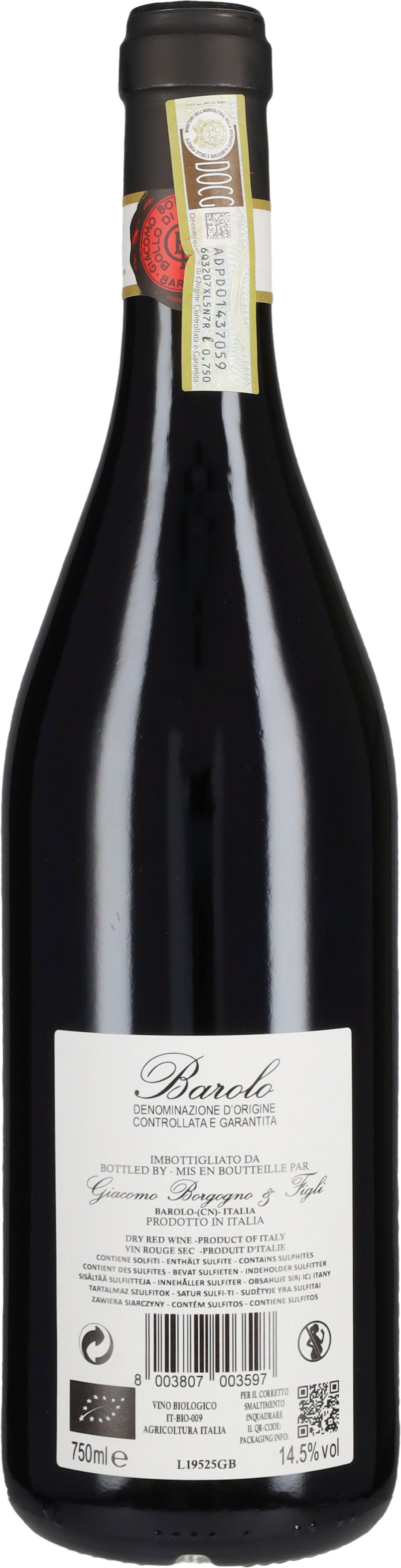
Barolo Borgogno 2022The Barolo Borgogno is a wine that embodies the most classic tradition of the type. It is indeed a red that combines Nebbiolo grapes grown in different crus, among which Liste, Cannubi, and Fossati stand out, to give an overview of the territory, telling us about the typical power of true Barolo. A label that is therefore strongly identity-driven, which, thanks to a long aging process, presents itself with an impactful personality, both on the nose and in the mouth. To be reserved for the most formal occasions, those in which the wine served at the table must have its own importance. This Barolo is made by the Borgogno winery starting from pure Nebbiolo grapes, grown in vineyards exposed to the south and southeast. The vineyards are characterized by a soil mainly composed of calcareous-clay marl, and the vines grow using the guyot system. The manual harvest takes place between the end of September and the beginning of October, and the must obtained from the soft pressing of the grapes ferments spontaneously, without the addition of yeasts, in cement tanks for 12 days, with temperatures ranging from 22 degrees to reach up to 29 degrees. After the racking, malolactic fermentation begins. Finally, the wine is transferred without filtration into 4500-liter Slavonian oak barrels, where it remains to age for 4 years. It then undergoes an additional maturation of 6 months directly in the bottle. The Borgogno Barolo presents itself to the eye with a color that tends towards garnet red. Rich and layered on the nose, which announces earthy touches and floral hints of classic violet, then enriched with fruity notes and spicy aromas. It enters the palate with a broad and enveloping sip, equipped with an excellent structure and a tannic sip, which contributes to characterizing the wine as muscular. A bottle of excellent craftsmanship, with which the winery, from harvest to harvest, manages to assert itself in the main Italian and international sector guides.57,00 £*Shipping: 48,00 £Secure redirect to the provider
-
Barolo Ceretto 2021This Barolo by the Ceretto winery is the label that best synthesises the historical tradition of the great wines of the Langhe and the style of one of the territory's most famous and prestigious brands. It is, in fact, a wine made according to the most ancient custom, that is, with a blend of grapes from different vineyards, cultivated in various cru of the estate, with different altitude, exposure and soil composition characteristics that make them perfectly complementary. This choice makes it possible to produce a harmonious Barolo every year, characterised by an excellent balance of taste and rich aromatic complexity. This Barolo Ceretto is the fruit of the experience of one of Piedmont's great wine families. The winery has been cultivating vineyards in the Langhe for almost a century and produces a range of high quality labels. Always attentive to the environment, it manages a vast property divided into many plots, under organic and biodynamic agriculture. The grapes come from a careful selection of the best bunches, harvested in the parcels cultivated in the communes of La Morra, Barolo and Serralunga. Fermentation takes place in temperature-controlled steel tanks, with a long maceration on the skins and a delicate extraction. Refinement involves a one-year stay in French oak tonneaux, a year in large oak casks and finally a long period in the bottle before release for sale. Ceretto's Barolo is this winery's iconic label, perfect for getting to know the quality level of the production and a propaedeutic to the subsequent discovery of the peculiar characteristics of the individual crus. In the glass, it is ruby red in colour with garnet reflections. The nose expresses a bouquet characterised by elegant aromas of small red fruits, raspberry, currant, wild strawberry, morello cherry, floral nuances of violet, dried flowers and hints of spice. On the palate it is intense and structured, with ripe tannins and complex, persistent aromas, leading towards a long, pleasantly refreshing finish.54,00 £*Shipping: 48,00 £Secure redirect to the provider
-
What traditions and customs are there in Turkish culture?
Turkish culture is rich in traditions and customs that have been passed down through generations. One important tradition is the Turkish tea culture, where people gather to socialize and enjoy strong, black tea served in small glasses. Another tradition is the Turkish bath, or hamam, which is a communal bathing experience that has been a part of Turkish culture for centuries. Additionally, Turkish cuisine is known for its diverse flavors and use of fresh ingredients, and sharing meals with family and friends is an important custom in Turkish culture. Finally, hospitality is a key aspect of Turkish culture, with guests being treated with great respect and generosity. **
-
How do you personally like Russian culture and its traditions?
As an AI, I do not have personal preferences or feelings. However, I can provide information on Russian culture and traditions. Russian culture is rich and diverse, with a long history of art, literature, music, and dance. Traditional Russian cuisine, such as borscht and blini, is also popular worldwide. Russian traditions, like Maslenitsa and Orthodox Christmas, are celebrated with great enthusiasm and bring people together in a spirit of unity and joy. Overall, Russian culture and traditions are fascinating and offer a unique glimpse into the country's heritage. **
-
How do you personally like the Russian culture and its traditions?
As an AI language model, I don't have personal experiences or preferences. However, I can tell you that Russian culture and traditions are rich and diverse, with a strong emphasis on literature, music, dance, and visual arts. The traditional Russian cuisine, such as borscht and blini, is also widely enjoyed. The Russian people are known for their hospitality and warmth, and their traditions, such as Maslenitsa and New Year celebrations, are vibrant and colorful. Overall, Russian culture and traditions are fascinating and have a lot to offer. **
-
What are electricity and high culture history?
Electricity history refers to the development and use of electricity as a form of energy, including the discovery of electricity, the invention of electric devices, and the establishment of electrical systems. High culture history, on the other hand, refers to the history of cultural and artistic achievements that are considered to be of high quality and sophistication, such as classical music, literature, fine arts, and theater. Both electricity and high culture history have evolved over time, shaping the way we live and appreciate the world around us. **
* All prices are inclusive of VAT and, if applicable, plus shipping costs. The offer information is based on the details provided by the respective shop and is updated through automated processes. Real-time updates do not occur, so deviations can occur in individual cases. ** Note: Parts of this content were created by AI.