Buy greatpoland.eu ?
We are moving the project
greatpoland.eu .
Are you interested in purchasing the domain
greatpoland.eu ?
domain@kv-gmbh.de · 0541-91531010
Buy greatpoland.eu ?
Why are intelligence agencies called intelligence services?
Intelligence agencies are called intelligence services because their primary function is to gather, analyze, and disseminate intelligence information. This information is used to support national security and decision-making processes. The term "intelligence" refers to the collection and analysis of information related to potential threats, security risks, and other relevant issues. Therefore, these agencies are referred to as intelligence services to emphasize their role in providing critical information to support the security and interests of a nation. **
How does emotional intelligence relate to intelligence?
Emotional intelligence is the ability to understand and manage one's own emotions, as well as understand and influence the emotions of others. It is often considered a separate form of intelligence from traditional cognitive intelligence, such as problem-solving and logical reasoning. However, emotional intelligence can complement and enhance cognitive intelligence by helping individuals navigate social interactions, manage stress, and make better decisions. In this way, emotional intelligence is a valuable aspect of overall intelligence that can contribute to success in both personal and professional settings. **


Similar search terms for Intelligence
Top-Angebote
Products related to Intelligence:
-
William Collins A Brief History of Intelligence: How Brain Evolution Shapes the Future of AI - Non Fiction - PaperbackTitle:. A Brief History of Intelligence: Why the Evolution of the Brain Holds the Key to the Future of AI Overview:. A Brief History of Intelligence invites readers into a sweeping, accessible tour of how intelligence has evolved—from the earliest neural circuits to the sophisticated AI systems of today. The book blends neuroscience, cognitive science, and technology studies to show how brain architecture shapes learning, memory, perception, and problem solving, and why those patterns matter for machines that think. By tracing key milestones in neural development and computational breakthroughs, the narrative reveals where human intelligence converges with, diverges from, or accelerates beyond artificial intelligence. Real-world examples illuminate abstract ideas—from memory formation in the hippocampus to the design choices behind modern learning algorithms—so the concepts are tangible even for non-specialists. It challenges readers to consider what “intelligence” really means in a world of chatbots, autonomous systems, and data-driven decision making. Whether you’re a student of computer science, a professional shaping AI strategy, a teacher guiding curious minds, or a reader seeking clarity about our future, this book offers accessible insight, ethical reflection, and practical takeaways. The voice is thoughtful, balanced, and engaging, inviting readers to think deeply about how the brain’s evolution informs the path ahead for AI. What Makes This Book Stand Out:. This is not a dry survey of facts. It stands out by weaving a cohesive narrative that links biology and computation, showing how the brain’s evolution has sculpted learning biases, attention, and generalization—traits that AI systems strive to emulate. The author draws on interdisciplinary perspectives—neuroscience, psychology, computer science, and ethics—to portray intelligence as a continuum between human minds and machines. Vivid examples anchor complex ideas: why synaptic pruning shapes early learning, how reinforcement learning echoes trial-and-error in biology, and what those parallels mean for responsible AI design. The book remains current with contemporary debates about model safety, transparency, and societal impact, while remaining accessible to readers without a technical background. Clear explanations, memorable metaphors, and practical takeaways ensure you leave with a nuanced appreciation of what makes AI appear intelligent—and where human cognition still leads the way. A thoughtful bridge between curiosity and professional insight, it’s ideal for readers who want depth without jargon and relevance beyond the classroom. Who This Book Is Perfect For:. Ideal for curious minds who want to understand both how brains work and how machines learn. This book suits students in neuroscience, computer science, or philosophy; tech professionals seeking a high-level, non-technical understanding of AI; educators and policymakers exploring the ethics of automation; and book lovers...10,99 £*Shipping: 2,99 £Secure redirect to the provider
-
Max Bennett, Shireen Stephen A Brief History Of Intelligence & 4-Week Memory Challenge 5 Books Collection Set - Non Fiction - PaperbackTitles in This Set:. A Brief History of Intelligence. The 4-Week Memory Challenge. Smart Guide for Awesome Memory. The Ultimate Brain-Boosting Toolkit. Train Your Brain: Ultimate Memory Hacks Condition: BRAND NEW. Format: Paperback Overview:. Delve into a thoughtfully curated 5-book set that blends science, practical memory training, and brain-teasing puzzles to form a complete cognitive toolkit. A Brief History of Intelligence traces the brain’s 4-billion-year journey through five evolutionary breakthroughs, revealing how milestones in neural architecture echo today’s AI advances. The 4-Week Memory Challenge offers a simple, day-by-day plan to sharpen recall, focus, and mental agility in just one month. The Ultimate Brain-Boosting Toolkit brings together more than 450 puzzles spanning logic, language, math, and spatial reasoning, designed for family fun and lifelong learning. Smart Guide for Awesome Memory delivers practical strategies for study, language learning, and everyday recall. Train Your Brain: Ultimate Memory Hacks compiles quick, high-impact exercises to keep your mind nimble as you age. Together, these five titles create a seamless reading-and-practice journey: learn the theory, apply it, then test your skills with engaging challenges. What Makes This Collection Special:. United by a common mission to decode cognition, this set guides readers from big-picture brain science to hands-on memory exercises. The lineup emphasizes progression: understand how intelligence evolved, then translate that insight into practical techniques, then apply through hundreds of puzzles. The cross-genre mix makes it ideal for curious teens and adults, families seeking screen-free activities, students wanting revision tools, and gift buyers looking for something that educates while entertaining. The memory-focused volumes complement the historical core, offering tangible methods to boost study efficiency, recall, and everyday cognition. The bundle also delivers value through a cohesive reading path, ensuring a consistent learning journey from page one to the last brain game. Books Included in This Collection:. A Brief History of Intelligence. A Brief History of Intelligence guides readers through the brain’s 4-billion-year evolution, tracing five pivotal breakthroughs that expanded learning, problem-solving, and adaptation. It highlights surprising links to AI, from early neural ideas to Go-playing algorithms, and even rethinks where emotions and common sense come from. Accessible yet thought-provoking, this is a sweeping primer on mind and machine that invites curiosity.. The 4-Week Memory Challenge. The 4-Week Memory Challenge offers a practical, day-by-day plan to sharpen memory and mental focus in just one month. Each week builds habits, spaced reviews, and mnemonic techniques that quickly translate into sharper recall at work, study, or exams. It’s suitable for beginners and seasoned memory enthusiasts alike, with simple steps you can tailor to your...21,99 £*Shipping: 2,99 £Secure redirect to the provider
-
Emotional Intelligence: 25th Anniversary Edition by Daniel GolemanDescription. A 25th anniversary edition of the number one, multi-million copy international bestseller that taught us how emotional intelligence is more important than IQ - 'a revolutionary, paradigm-shattering idea' (Harvard Business Review). Featuring a new introduction from the author. Does IQ define our destiny? In his groundbreaking bestseller, Daniel Goleman argues that our view of human intelligence is far too narrow. It is not our IQ, but our emotional intelligence that plays a major role in thought, decision-making and individual success. Self-awareness, impulse control, persistence, motivation, empathy and social deftness: all are qualities that mark people who excel, whose relationships flourish, who can navigate difficult conversations, who become stars in the workplace.. Title. Emotional Intelligence: 25th Anniversary Edition by Daniel Goleman. Delivery. Content. Reviews99,99 £*Shipping: 0,00 £Secure redirect to the provider
-
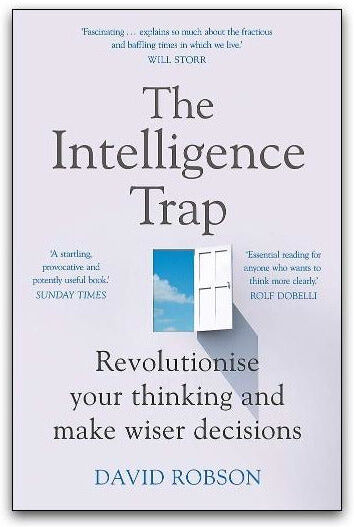
HODDER PUBLISHING David Robson, The Intelligence Trap, Psychology BooksDavid Robson, The Intelligence Trap, Psychology Books How was a brilliant physics professor tricked into carrying 2kg of cocaine across the Argentinian border? Why do doctors misdiagnose 10 to 15% of their patients? Why do Nobel Prize winners spread fake news? We assume that smarter people are less prone to error. But greater education and expertise can often amplify our mistakes while rendering us blind to our biases. This is the 'intelligence trap'. Drawing on the latest behavioural science and historical examples from Socrates to Benjamin Franklin, David Robson demonstrates how to apply our intelligence more wisely; identify bias and enhance our 'rationality quotient'; read and regulate our emotions; fine-tune our intuition; navigate ambiguity and uncertainty; and think more flexibly about seemingly intractable problems. The twenty-first century presents us with complex problems that demand a wiser way of thinking. Whether you are a NASA scientist or a school student, The Intelligence Trap offers a new cognitive toolkit to realise your full potential.1,99 £*Shipping: 1,99 £Secure redirect to the provider


-
What is more important: Intelligence or emotional intelligence?
Both intelligence and emotional intelligence are important in their own ways. Intelligence helps in problem-solving, critical thinking, and decision-making, while emotional intelligence helps in understanding and managing emotions, building relationships, and empathizing with others. Both types of intelligence are valuable and can complement each other to lead to overall success and well-being. Ultimately, a balance of both types of intelligence is ideal for navigating various aspects of life effectively. **
-
Are you of normal intelligence or above average intelligence?
As an AI language model, I do not possess intelligence in the same way that humans do. My responses are generated based on patterns in data and information provided to me. I am designed to assist with a wide range of tasks and provide helpful information to the best of my abilities. **
-
Can one lose high intelligence or above-average intelligence?
Intelligence is a complex trait that is influenced by both genetic and environmental factors. While it is possible for certain conditions or injuries to impact cognitive function, such as traumatic brain injury or neurodegenerative diseases, it is generally not common for someone to lose high intelligence or above-average intelligence. However, factors such as lack of mental stimulation, poor health, or substance abuse can potentially impact cognitive abilities over time. It is important to maintain a healthy lifestyle and engage in activities that stimulate the mind to preserve cognitive function. **
-
Is intelligence inherited?
Intelligence is a complex trait that is influenced by a combination of genetic and environmental factors. While some studies suggest that there is a genetic component to intelligence, it is not solely inherited. Environmental factors such as education, nutrition, and upbringing also play a significant role in shaping a person's intelligence. Therefore, while genetics may contribute to a person's potential for intelligence, it is not the sole determining factor. **


Is intelligence attractive?
Intelligence can be attractive to many people as it is often associated with qualities such as problem-solving skills, critical thinking, and the ability to engage in stimulating conversations. However, attractiveness is subjective and varies from person to person. Some individuals may prioritize other qualities over intelligence when it comes to what they find attractive in a partner. Ultimately, intelligence can be a desirable trait, but it is not the sole factor in determining attractiveness. **
Is intelligence decreasing?
There is no definitive answer to whether intelligence is decreasing overall. Some studies suggest that average IQ scores have been increasing over time, a phenomenon known as the Flynn effect. However, other research indicates that certain cognitive abilities may be declining due to factors such as environmental pollution, lifestyle changes, and decreased physical activity. It is important to consider multiple factors and perspectives when evaluating trends in intelligence levels. **
Top-Angebote
Products related to Intelligence:
-
Uplifted Finds Titan Flow Wireless 3.2L Intelligence Station Titan Flow Wireless 3.2L Intelligence StationAchieve total liberation from poweroutlet proximity with the TitanFlow Wireless Station, a highperformance hydration module engineered with dualmode intelligentsensor logic. This professionalgrade fountain features a 4000mAh highcapacity battery...389,97 $*Shipping: 0,00 $Secure redirect to the provider
-
William Collins A Brief History of Intelligence: How Brain Evolution Shapes the Future of AI - Non Fiction - PaperbackTitle:. A Brief History of Intelligence: Why the Evolution of the Brain Holds the Key to the Future of AI Overview:. A Brief History of Intelligence invites readers into a sweeping, accessible tour of how intelligence has evolved—from the earliest neural circuits to the sophisticated AI systems of today. The book blends neuroscience, cognitive science, and technology studies to show how brain architecture shapes learning, memory, perception, and problem solving, and why those patterns matter for machines that think. By tracing key milestones in neural development and computational breakthroughs, the narrative reveals where human intelligence converges with, diverges from, or accelerates beyond artificial intelligence. Real-world examples illuminate abstract ideas—from memory formation in the hippocampus to the design choices behind modern learning algorithms—so the concepts are tangible even for non-specialists. It challenges readers to consider what “intelligence” really means in a world of chatbots, autonomous systems, and data-driven decision making. Whether you’re a student of computer science, a professional shaping AI strategy, a teacher guiding curious minds, or a reader seeking clarity about our future, this book offers accessible insight, ethical reflection, and practical takeaways. The voice is thoughtful, balanced, and engaging, inviting readers to think deeply about how the brain’s evolution informs the path ahead for AI. What Makes This Book Stand Out:. This is not a dry survey of facts. It stands out by weaving a cohesive narrative that links biology and computation, showing how the brain’s evolution has sculpted learning biases, attention, and generalization—traits that AI systems strive to emulate. The author draws on interdisciplinary perspectives—neuroscience, psychology, computer science, and ethics—to portray intelligence as a continuum between human minds and machines. Vivid examples anchor complex ideas: why synaptic pruning shapes early learning, how reinforcement learning echoes trial-and-error in biology, and what those parallels mean for responsible AI design. The book remains current with contemporary debates about model safety, transparency, and societal impact, while remaining accessible to readers without a technical background. Clear explanations, memorable metaphors, and practical takeaways ensure you leave with a nuanced appreciation of what makes AI appear intelligent—and where human cognition still leads the way. A thoughtful bridge between curiosity and professional insight, it’s ideal for readers who want depth without jargon and relevance beyond the classroom. Who This Book Is Perfect For:. Ideal for curious minds who want to understand both how brains work and how machines learn. This book suits students in neuroscience, computer science, or philosophy; tech professionals seeking a high-level, non-technical understanding of AI; educators and policymakers exploring the ethics of automation; and book lovers...10,99 £*Shipping: 2,99 £Secure redirect to the provider
-
Max Bennett, Shireen Stephen A Brief History Of Intelligence & 4-Week Memory Challenge 5 Books Collection Set - Non Fiction - PaperbackTitles in This Set:. A Brief History of Intelligence. The 4-Week Memory Challenge. Smart Guide for Awesome Memory. The Ultimate Brain-Boosting Toolkit. Train Your Brain: Ultimate Memory Hacks Condition: BRAND NEW. Format: Paperback Overview:. Delve into a thoughtfully curated 5-book set that blends science, practical memory training, and brain-teasing puzzles to form a complete cognitive toolkit. A Brief History of Intelligence traces the brain’s 4-billion-year journey through five evolutionary breakthroughs, revealing how milestones in neural architecture echo today’s AI advances. The 4-Week Memory Challenge offers a simple, day-by-day plan to sharpen recall, focus, and mental agility in just one month. The Ultimate Brain-Boosting Toolkit brings together more than 450 puzzles spanning logic, language, math, and spatial reasoning, designed for family fun and lifelong learning. Smart Guide for Awesome Memory delivers practical strategies for study, language learning, and everyday recall. Train Your Brain: Ultimate Memory Hacks compiles quick, high-impact exercises to keep your mind nimble as you age. Together, these five titles create a seamless reading-and-practice journey: learn the theory, apply it, then test your skills with engaging challenges. What Makes This Collection Special:. United by a common mission to decode cognition, this set guides readers from big-picture brain science to hands-on memory exercises. The lineup emphasizes progression: understand how intelligence evolved, then translate that insight into practical techniques, then apply through hundreds of puzzles. The cross-genre mix makes it ideal for curious teens and adults, families seeking screen-free activities, students wanting revision tools, and gift buyers looking for something that educates while entertaining. The memory-focused volumes complement the historical core, offering tangible methods to boost study efficiency, recall, and everyday cognition. The bundle also delivers value through a cohesive reading path, ensuring a consistent learning journey from page one to the last brain game. Books Included in This Collection:. A Brief History of Intelligence. A Brief History of Intelligence guides readers through the brain’s 4-billion-year evolution, tracing five pivotal breakthroughs that expanded learning, problem-solving, and adaptation. It highlights surprising links to AI, from early neural ideas to Go-playing algorithms, and even rethinks where emotions and common sense come from. Accessible yet thought-provoking, this is a sweeping primer on mind and machine that invites curiosity.. The 4-Week Memory Challenge. The 4-Week Memory Challenge offers a practical, day-by-day plan to sharpen memory and mental focus in just one month. Each week builds habits, spaced reviews, and mnemonic techniques that quickly translate into sharper recall at work, study, or exams. It’s suitable for beginners and seasoned memory enthusiasts alike, with simple steps you can tailor to your...21,99 £*Shipping: 2,99 £Secure redirect to the provider
-
Why are intelligence agencies called intelligence services?
Intelligence agencies are called intelligence services because their primary function is to gather, analyze, and disseminate intelligence information. This information is used to support national security and decision-making processes. The term "intelligence" refers to the collection and analysis of information related to potential threats, security risks, and other relevant issues. Therefore, these agencies are referred to as intelligence services to emphasize their role in providing critical information to support the security and interests of a nation. **
-
How does emotional intelligence relate to intelligence?
Emotional intelligence is the ability to understand and manage one's own emotions, as well as understand and influence the emotions of others. It is often considered a separate form of intelligence from traditional cognitive intelligence, such as problem-solving and logical reasoning. However, emotional intelligence can complement and enhance cognitive intelligence by helping individuals navigate social interactions, manage stress, and make better decisions. In this way, emotional intelligence is a valuable aspect of overall intelligence that can contribute to success in both personal and professional settings. **
-
What is more important: Intelligence or emotional intelligence?
Both intelligence and emotional intelligence are important in their own ways. Intelligence helps in problem-solving, critical thinking, and decision-making, while emotional intelligence helps in understanding and managing emotions, building relationships, and empathizing with others. Both types of intelligence are valuable and can complement each other to lead to overall success and well-being. Ultimately, a balance of both types of intelligence is ideal for navigating various aspects of life effectively. **
-
Are you of normal intelligence or above average intelligence?
As an AI language model, I do not possess intelligence in the same way that humans do. My responses are generated based on patterns in data and information provided to me. I am designed to assist with a wide range of tasks and provide helpful information to the best of my abilities. **
Similar search terms for Intelligence
-
Emotional Intelligence: 25th Anniversary Edition by Daniel GolemanDescription. A 25th anniversary edition of the number one, multi-million copy international bestseller that taught us how emotional intelligence is more important than IQ - 'a revolutionary, paradigm-shattering idea' (Harvard Business Review). Featuring a new introduction from the author. Does IQ define our destiny? In his groundbreaking bestseller, Daniel Goleman argues that our view of human intelligence is far too narrow. It is not our IQ, but our emotional intelligence that plays a major role in thought, decision-making and individual success. Self-awareness, impulse control, persistence, motivation, empathy and social deftness: all are qualities that mark people who excel, whose relationships flourish, who can navigate difficult conversations, who become stars in the workplace.. Title. Emotional Intelligence: 25th Anniversary Edition by Daniel Goleman. Delivery. Content. Reviews99,99 £*Shipping: 0,00 £Secure redirect to the provider
-
HODDER PUBLISHING David Robson, The Intelligence Trap, Psychology BooksDavid Robson, The Intelligence Trap, Psychology Books How was a brilliant physics professor tricked into carrying 2kg of cocaine across the Argentinian border? Why do doctors misdiagnose 10 to 15% of their patients? Why do Nobel Prize winners spread fake news? We assume that smarter people are less prone to error. But greater education and expertise can often amplify our mistakes while rendering us blind to our biases. This is the 'intelligence trap'. Drawing on the latest behavioural science and historical examples from Socrates to Benjamin Franklin, David Robson demonstrates how to apply our intelligence more wisely; identify bias and enhance our 'rationality quotient'; read and regulate our emotions; fine-tune our intuition; navigate ambiguity and uncertainty; and think more flexibly about seemingly intractable problems. The twenty-first century presents us with complex problems that demand a wiser way of thinking. Whether you are a NASA scientist or a school student, The Intelligence Trap offers a new cognitive toolkit to realise your full potential.1,99 £*Shipping: 1,99 £Secure redirect to the provider
-
The Intelligence Trap by David Robson - Non Fiction - PaperbackTitle:. The Intelligence Trap: Revolutionise your Thinking and Make Wiser Decisions Condition: BRAND NEW. Format: Paperback. ISBN: 9781473669857 Overview:. We assume smarter equals better thinking. Yet the truth, as this illuminating guide argues, is more nuanced: sharper minds can misread data, overlook bias, and fall prey to the very blind spots they’ve trained themselves to spot. The Intelligence Trap delves into how high intelligence, education, and expertise can amplify error when we’re confident we’re being rational. Through a blend of behavioural science, compelling real-world cases, and historical anecdotes—from Socrates to Benjamin Franklin, and even a modern NASA context—the book reveals a practical toolkit for thinking more clearly in a messy, uncertain world. David Robson lays out concrete strategies to identify cognitive traps, regulate emotions, refine intuition, and cultivate a more flexible, adaptive mindset. Whether you’re a student grappling with exams, a professional navigating risk, or simply a curious reader hungry for sharper judgment, this paperback offers a readable, evidence-based path to applying intelligence wisely. It’s not about dumbing down thinking; it’s about upgrading the way we think under pressure, ambiguity, and complexity in the twenty-first century. What Makes This Book Stand Out:. This book stands out by turning the familiar brag of “being smart” into a practical advantage. Robson blends psychology, neuroscience, and history to show how our brains can misfire even when we’re right about many things. The Intelligence Trap doesn’t preach a one-size-fits-all method; it equips readers with a cognitive toolkit—pragmatic checks, temperament-aware decision processes, and a bias-aware framework—that can be applied at work, at school, and in everyday life. The narrative moves briskly from eye-opening experiments to actionable guidance, inviting readers to test ideas on themselves and their colleagues. The result is a compelling fusion of rigor and accessibility: a propulsive read that educates without feeling abstract, and a reference you’ll return to whenever you face confusing, high-stakes choices. It’s a timely push toward wiser decisions in a world where information is abundant and certainty is scarce. Who This Book Is Perfect For:. This book is ideal for curious readers who want smarter, more reliable decision-making in ordinary and high-stakes situations. It suits students and educators seeking clearer thinking strategies, professionals facing complex problems, scientists and engineers who value evidence-based reasoning, and general readers who enjoy lively, thought-provoking explorations of how the mind works. It also makes a thoughtful gift for BookTok fans and readers who relish psychology, neuroscience, and practical self-improvement. If you’re keen to understand why intelligent people still make costly mistakes—and how to guard against those mistakes—the Intelligence Trap is a perfect companion for your...99,99 £*Shipping: 0,00 £Secure redirect to the provider
-
Can one lose high intelligence or above-average intelligence?
Intelligence is a complex trait that is influenced by both genetic and environmental factors. While it is possible for certain conditions or injuries to impact cognitive function, such as traumatic brain injury or neurodegenerative diseases, it is generally not common for someone to lose high intelligence or above-average intelligence. However, factors such as lack of mental stimulation, poor health, or substance abuse can potentially impact cognitive abilities over time. It is important to maintain a healthy lifestyle and engage in activities that stimulate the mind to preserve cognitive function. **
-
Is intelligence inherited?
Intelligence is a complex trait that is influenced by a combination of genetic and environmental factors. While some studies suggest that there is a genetic component to intelligence, it is not solely inherited. Environmental factors such as education, nutrition, and upbringing also play a significant role in shaping a person's intelligence. Therefore, while genetics may contribute to a person's potential for intelligence, it is not the sole determining factor. **
-
Is intelligence attractive?
Intelligence can be attractive to many people as it is often associated with qualities such as problem-solving skills, critical thinking, and the ability to engage in stimulating conversations. However, attractiveness is subjective and varies from person to person. Some individuals may prioritize other qualities over intelligence when it comes to what they find attractive in a partner. Ultimately, intelligence can be a desirable trait, but it is not the sole factor in determining attractiveness. **
-
Is intelligence decreasing?
There is no definitive answer to whether intelligence is decreasing overall. Some studies suggest that average IQ scores have been increasing over time, a phenomenon known as the Flynn effect. However, other research indicates that certain cognitive abilities may be declining due to factors such as environmental pollution, lifestyle changes, and decreased physical activity. It is important to consider multiple factors and perspectives when evaluating trends in intelligence levels. **
* All prices are inclusive of VAT and, if applicable, plus shipping costs. The offer information is based on the details provided by the respective shop and is updated through automated processes. Real-time updates do not occur, so deviations can occur in individual cases. ** Note: Parts of this content were created by AI.