Buy greatpoland.eu ?
We are moving the project
greatpoland.eu .
Are you interested in purchasing the domain
greatpoland.eu ?
domain@kv-gmbh.de · 0541-91531010
Buy greatpoland.eu ?
What traditions, customs, and festivals are there in Hungary?
Hungary has a rich cultural heritage with many traditions, customs, and festivals. One of the most well-known traditions is the celebration of Easter, which includes painting eggs and the custom of sprinkling water on women as a sign of fertility. Another important festival is the Budapest Spring Festival, which features a wide range of cultural events including music, dance, and theater performances. The Hungarian National Day, celebrated on August 20th, is also a significant event, with fireworks, concerts, and other festivities taking place across the country. Additionally, traditional Hungarian folk music and dance are an integral part of the country's cultural identity, with many festivals and events dedicated to showcasing these art forms. **
What are the traditions and culture in Kosovo?
Kosovo has a rich cultural heritage influenced by its history and diverse population. The traditions in Kosovo are deeply rooted in its Albanian, Serbian, and Turkish heritage, and include music, dance, and cuisine. The country also has a strong tradition of storytelling, poetry, and folk art. Additionally, Kosovo is known for its religious diversity, with a mix of Muslim, Orthodox Christian, and Catholic influences contributing to its cultural landscape. Overall, the traditions and culture in Kosovo reflect the country's complex history and the resilience of its people. **


Similar search terms for Fiano-Riserva-Campanaro-Feudi
Top-Angebote
Products related to Fiano-Riserva-Campanaro-Feudi:
-
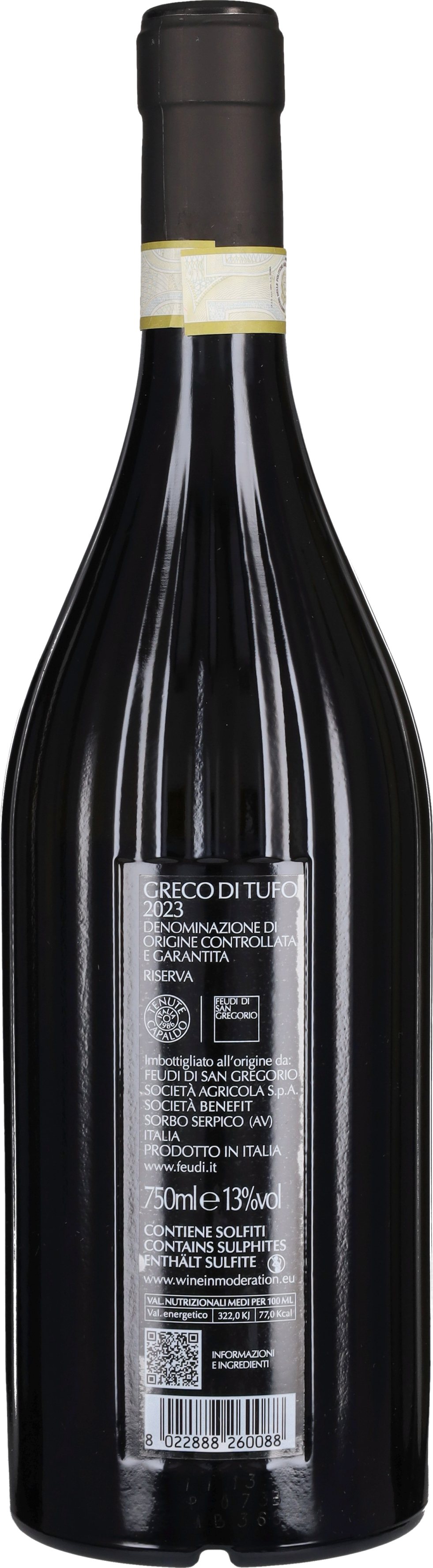
Greco di Tufo Riserva 'Cutizzi' Feudi di San Gregorio 2024The Greco di Tufo Riserva “Cutizzi” by Feudi di San Gregorio is a intense and deep white that well expresses the best characteristics of Greco in the vocated lands of Irpinia. It is a wine of good structure, with rich, broad, and complex aromas, supported by a vibrant and tense freshness, which gives the sip great taste balance. This ancient grape variety of Greek origin has been present for millennia in Campania and has found in the Avellinese volcanic soils and a cool continental climate that enhance its characteristics of elegance and finesse.The “Cutizzi” Riserva Greco di Tufo belongs to the Selezioni line of the Feudi di San Gregorio winery, a range of wines that aims to express the best traits of the fortunate combination between grape variety and terroir. It is born from the fundamental idea of using only the best Greco grapes grown in the vineyards of Santa Paolina, on soils with a prized chalky matrix that express grapes of great finesse and elegance. Fermentation takes place in steel tanks, at a controlled temperature of 16/18 °C. The wine then rests, still in steel on its own yeasts, for about 4/5 months, with periodic bâtonnage. It completes its aging with a few months in the bottle before being put on sale.The “Cutizzi” Riserva Feudi di San Gregorio is the classic example of how the fortunate combination of a great indigenous grape variety and a territory can give rise to top-level excellence. It is a characterful white, destined for those who love structure, depth, expressive freshness, and also the qualities of evolution over time and aging. The color is light yellow with golden reflections. On the nose, it is characterized by intense aromas, with notes of ripe fruit, and nuances of Mediterranean scrub herbs. On the palate, it is broad and rich, with dense and juicy aromas, crossed by a lively citrus freshness that gives dynamism and lift to the sip.15,00 £*Shipping: 48,00 £Secure redirect to the provider
-
Fiano 'Faino' Nomades 2023The Italian-Greek company Nomades presents Fiano 'Faino', a white wine produced in Campania that stands out for its complex and refined character. The Nomades project was initiated with the aim of highlighting the identity of some of the indigenous grape varieties of the producers' home territories, Campania and Greece. The choice of the name recalls the itinerant nature of the project, while in terms of communication, the two have opted for a modern logo, with the word 'Nomades' characterised by a raised 'O' from the base line, a symbol of evasion and breaking from the mould. In contrast, the appellation 'Faino' derives from the expression the producer's grandfather used to call the Fiano grape.Fiano Nomades 'Faino' originates from pure Fiano grapes grown in the Irpinia area following a sustainable agronomic approach. Here, the grapes benefit from thealtitude of 550 metres above sea level, the significant temperature variations between day and night, the clay matrix of the soils and their volcanic origin. After harvesting, the grapes are transferred to the cellar, where they first undergo a 24-hour cold pre-fermentation maceration and then a soft pressing. The must thus obtained then undergoes alcoholic fermentation at a controlled temperature partly in stainless steel tanks and partly in second and third passage French oak barriques. In the same containers, the wine matures for several months on the fine lees with regular batonnage.The 'Faino' Fiano di Nomades is straw yellow in colour with greenish hues. The nose has inviting and complex hints of apricot, lime blossom, honey and candied citrus fruits, enhanced by vegetal hints of sage and moss and strong mineral accents. Very savoury and fresh on the palate, characterised by great body and a long, refined persistence.27,00 £*Shipping: 48,00 £Secure redirect to the provider
-
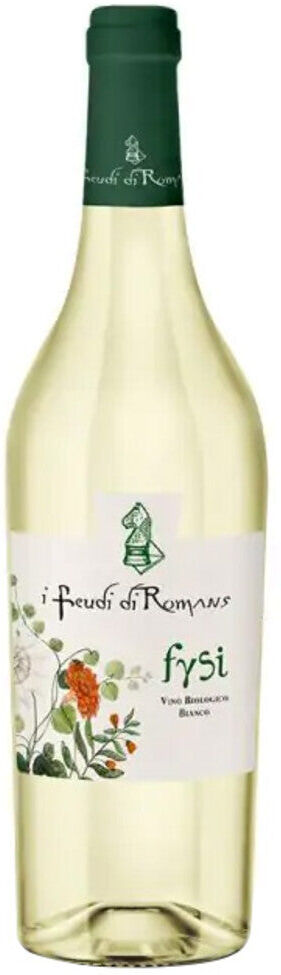
Fysi' Feudi di Romans 2025The ‘Fysi’ is a white wine with an accessible taste and a genuine soul produced by the Friulian winery Feudi di Romans from a blend of resistant PIWI varieties cultivated under certified organic farming. This bottle, released for the first time with the 2020 vintage, is the result of a project focused on environmental sustainability that relies on the use of PIWI grape varieties, genetic hybrids selected for their extraordinary resistance to the main vine diseases, such as powdery mildew and downy mildew. This allows for a drastic reduction in the number of phytosanitary treatments and therefore a more eco-sustainable approach to viticulture. Feudi di Romans ‘Fysi’ consists of a blend of the PIWI varieties Sauvignon Kretos (50%), Sauvignon Rytos (35%), and Soreli (15%), the first two derived from crosses between Sauvignon Blanc and other genetic hybrids, while the Soreli is born from the combination of Friulano and the hybrid Kozma 20-3. The plants are grown under certified organic farming on alluvial soils rich in gravel veins and sand. Following the harvest, the bunches undergo a short cold pre-fermentation maceration, followed by the soft pressing of the grapes. The must obtained is then directed into stainless steel tanks for controlled temperature alcoholic fermentation, at the end of which the wine rests on the fine lees still in steel for a few months with frequent batonnage to keep the solid particles suspended. Bottling and final marketing follow. The white ‘Fysi’ from the Feudi di Romans estate shows a straw yellow color with greenish reflections. On the nose, one can perceive hints of white flowers, citrus peel, and tropical fruit while the taste stands out for its lively freshness that leads to a persistent aromatic finish.11,00 £*Shipping: 48,00 £Secure redirect to the provider


-
Are there any special festivals and traditions in Schleswig-Holstein?
Yes, Schleswig-Holstein has several special festivals and traditions. One of the most famous is the Kiel Week, which is the largest sailing event in the world and includes a variety of cultural and entertainment activities. Another popular tradition is the Schleswig-Holstein Music Festival, which features classical music performances in various locations throughout the region. Additionally, there are traditional events like the Husum Harbour Days and the Wacken Open Air heavy metal music festival that attract visitors from all over the world. **
-
What traditions and customs are there in Turkish culture?
Turkish culture is rich in traditions and customs that have been passed down through generations. One important tradition is the Turkish tea culture, where people gather to socialize and enjoy strong, black tea served in small glasses. Another tradition is the Turkish bath, or hamam, which is a communal bathing experience that has been a part of Turkish culture for centuries. Additionally, Turkish cuisine is known for its diverse flavors and use of fresh ingredients, and sharing meals with family and friends is an important custom in Turkish culture. Finally, hospitality is a key aspect of Turkish culture, with guests being treated with great respect and generosity. **
-
How do you personally like Russian culture and its traditions?
As an AI, I do not have personal preferences or feelings. However, I can provide information on Russian culture and traditions. Russian culture is rich and diverse, with a long history of art, literature, music, and dance. Traditional Russian cuisine, such as borscht and blini, is also popular worldwide. Russian traditions, like Maslenitsa and Orthodox Christmas, are celebrated with great enthusiasm and bring people together in a spirit of unity and joy. Overall, Russian culture and traditions are fascinating and offer a unique glimpse into the country's heritage. **
-
How do you personally like the Russian culture and its traditions?
As an AI language model, I don't have personal experiences or preferences. However, I can tell you that Russian culture and traditions are rich and diverse, with a strong emphasis on literature, music, dance, and visual arts. The traditional Russian cuisine, such as borscht and blini, is also widely enjoyed. The Russian people are known for their hospitality and warmth, and their traditions, such as Maslenitsa and New Year celebrations, are vibrant and colorful. Overall, Russian culture and traditions are fascinating and have a lot to offer. **


What are electricity and high culture history?
Electricity history refers to the development and use of electricity as a form of energy, including the discovery of electricity, the invention of electric devices, and the establishment of electrical systems. High culture history, on the other hand, refers to the history of cultural and artistic achievements that are considered to be of high quality and sophistication, such as classical music, literature, fine arts, and theater. Both electricity and high culture history have evolved over time, shaping the way we live and appreciate the world around us. **
What is the difference between low culture and high culture in history?
Low culture refers to the cultural activities and products that are considered to be more common, popular, and easily accessible to the general public. This can include things like popular music, television shows, and mass-produced literature. On the other hand, high culture refers to the cultural activities and products that are considered to be more refined, sophisticated, and often associated with the elite or educated classes. This can include things like classical music, fine art, and literature that is considered to be more intellectually challenging. The distinction between low and high culture has been a source of debate and has evolved over time, but it generally reflects the social and class divisions within a society. **
Top-Angebote
Products related to Fiano-Riserva-Campanaro-Feudi:
-
Fiano Riserva 'Campanaro' Feudi di San Gregorio 2023Campanaro is a white wine from Campania characterised by its freshness and savouriness, qualities that make it easy to drink and ideal for accompanying delicious first and second courses, especially those based on fish. The Feudi di San Gregorio winery, which in 30 years has become a true benchmark for winemaking throughout southern Italy, has surpassed itself with this bottle, which combines the structure and aromas of Fiano and Greco in a blend that is not only good to taste but also beautiful to look at. For Feudi di San Gregorio, creating a wine is a true work of art, which cannot ignore the aesthetic aspect of what is presented before the eyes.This Campanaro is a wine that comes from the skilful blend of two strongly territorial white grape varieties, Fiano and Greco. These are two varieties that find an ideal habitat in the Campania region, and which the Feudi di San Gregorio winery cultivates with the utmost care and attention in its vineyards. Once harvested and brought to the winery, the grapes ferment in steel tanks and then age for six months in large barrels, after which the wine is ready to be bottled and sold.Campanaro wine reveals itself to the eye with a straw yellow colour, crossed by light golden flashes. The aromas that envelop the nose are intense and varied, with aromas of white-fleshed fruit veering towards sweet spices. On the palate, it is full-bodied and harmonious, with a velvety mouthfeel characterised by a refreshing, mineral flavour. This white wine represents a significant achievement in terms of quality for the Feudi di San Gregorio winery, transporting us with grace and elegance, sip after sip, to the wonderful terroir of Irpinia.21,00 £*Shipping: 48,00 £Secure redirect to the provider
-
Fiano di Avellino 'Pietracalda' Feudi di San Gregorio 2024“Pietracalda” Riserva is a Fiano di Avellino that roots itself in the depths of Irpinia, in Campania. The producing winery is Feudi di San Gregorio, located in the area of Sorbo Serpico. This territory is a colorful mosaic of colors and scents that nature knows how to offer, just as it is the configuration, a harmonious alternation of hills, mountains, plains, and numerous waterways. This Fiano is a straightforward wine that, in its drinkability, clearly and faithfully reflects a unique and wonderful terroir, made of flowers, plants, sun, sea, wind, and earth. This is Irpinia, which, as Feudi di San Gregorio always emphasizes, has its own identity that distinguishes it from the rest of the Campanian territory.The Fiano di Avellino “Pietracalda” Riserva is part of the Selezioni line of Feudi di San Gregorio, the result of the most careful selection of grapes that allows for the maximum qualitative enhancement of the territory-wine binomial. After the careful and precise harvest, the Fiano grapes are pressed, and the obtained must is transferred to steel tanks, where alcoholic fermentation takes place. Once this is completed, phase that transforms the must into wine, followed by 4-5 months of rest in steel in the presence of its own yeasts, periodically put back in suspension through a liquid stirring technique called batonnage.This Fiano from Feudi di San Gregorio stands out for its pleasantness, both in aroma and taste. Notes of fresh fruit, candied citrus, and yellow flowers are clearly perceived on the nose. On the palate, it reveals its varietal identity and delights the taste with softness balanced by saltiness and freshness. The “Pietracalda” is a wine of sun and wind; it is a wine of hills and sea, of scents and freshness. In short, an authentic expression of Irpinia.15,00 £*Shipping: 48,00 £Secure redirect to the provider
-
Greco di Tufo Riserva 'Cutizzi' Feudi di San Gregorio 2024The Greco di Tufo Riserva “Cutizzi” by Feudi di San Gregorio is a intense and deep white that well expresses the best characteristics of Greco in the vocated lands of Irpinia. It is a wine of good structure, with rich, broad, and complex aromas, supported by a vibrant and tense freshness, which gives the sip great taste balance. This ancient grape variety of Greek origin has been present for millennia in Campania and has found in the Avellinese volcanic soils and a cool continental climate that enhance its characteristics of elegance and finesse.The “Cutizzi” Riserva Greco di Tufo belongs to the Selezioni line of the Feudi di San Gregorio winery, a range of wines that aims to express the best traits of the fortunate combination between grape variety and terroir. It is born from the fundamental idea of using only the best Greco grapes grown in the vineyards of Santa Paolina, on soils with a prized chalky matrix that express grapes of great finesse and elegance. Fermentation takes place in steel tanks, at a controlled temperature of 16/18 °C. The wine then rests, still in steel on its own yeasts, for about 4/5 months, with periodic bâtonnage. It completes its aging with a few months in the bottle before being put on sale.The “Cutizzi” Riserva Feudi di San Gregorio is the classic example of how the fortunate combination of a great indigenous grape variety and a territory can give rise to top-level excellence. It is a characterful white, destined for those who love structure, depth, expressive freshness, and also the qualities of evolution over time and aging. The color is light yellow with golden reflections. On the nose, it is characterized by intense aromas, with notes of ripe fruit, and nuances of Mediterranean scrub herbs. On the palate, it is broad and rich, with dense and juicy aromas, crossed by a lively citrus freshness that gives dynamism and lift to the sip.15,00 £*Shipping: 48,00 £Secure redirect to the provider
-
What traditions, customs, and festivals are there in Hungary?
Hungary has a rich cultural heritage with many traditions, customs, and festivals. One of the most well-known traditions is the celebration of Easter, which includes painting eggs and the custom of sprinkling water on women as a sign of fertility. Another important festival is the Budapest Spring Festival, which features a wide range of cultural events including music, dance, and theater performances. The Hungarian National Day, celebrated on August 20th, is also a significant event, with fireworks, concerts, and other festivities taking place across the country. Additionally, traditional Hungarian folk music and dance are an integral part of the country's cultural identity, with many festivals and events dedicated to showcasing these art forms. **
-
What are the traditions and culture in Kosovo?
Kosovo has a rich cultural heritage influenced by its history and diverse population. The traditions in Kosovo are deeply rooted in its Albanian, Serbian, and Turkish heritage, and include music, dance, and cuisine. The country also has a strong tradition of storytelling, poetry, and folk art. Additionally, Kosovo is known for its religious diversity, with a mix of Muslim, Orthodox Christian, and Catholic influences contributing to its cultural landscape. Overall, the traditions and culture in Kosovo reflect the country's complex history and the resilience of its people. **
-
Are there any special festivals and traditions in Schleswig-Holstein?
Yes, Schleswig-Holstein has several special festivals and traditions. One of the most famous is the Kiel Week, which is the largest sailing event in the world and includes a variety of cultural and entertainment activities. Another popular tradition is the Schleswig-Holstein Music Festival, which features classical music performances in various locations throughout the region. Additionally, there are traditional events like the Husum Harbour Days and the Wacken Open Air heavy metal music festival that attract visitors from all over the world. **
-
What traditions and customs are there in Turkish culture?
Turkish culture is rich in traditions and customs that have been passed down through generations. One important tradition is the Turkish tea culture, where people gather to socialize and enjoy strong, black tea served in small glasses. Another tradition is the Turkish bath, or hamam, which is a communal bathing experience that has been a part of Turkish culture for centuries. Additionally, Turkish cuisine is known for its diverse flavors and use of fresh ingredients, and sharing meals with family and friends is an important custom in Turkish culture. Finally, hospitality is a key aspect of Turkish culture, with guests being treated with great respect and generosity. **
Similar search terms for Fiano-Riserva-Campanaro-Feudi
-
Fiano 'Faino' Nomades 2023The Italian-Greek company Nomades presents Fiano 'Faino', a white wine produced in Campania that stands out for its complex and refined character. The Nomades project was initiated with the aim of highlighting the identity of some of the indigenous grape varieties of the producers' home territories, Campania and Greece. The choice of the name recalls the itinerant nature of the project, while in terms of communication, the two have opted for a modern logo, with the word 'Nomades' characterised by a raised 'O' from the base line, a symbol of evasion and breaking from the mould. In contrast, the appellation 'Faino' derives from the expression the producer's grandfather used to call the Fiano grape.Fiano Nomades 'Faino' originates from pure Fiano grapes grown in the Irpinia area following a sustainable agronomic approach. Here, the grapes benefit from thealtitude of 550 metres above sea level, the significant temperature variations between day and night, the clay matrix of the soils and their volcanic origin. After harvesting, the grapes are transferred to the cellar, where they first undergo a 24-hour cold pre-fermentation maceration and then a soft pressing. The must thus obtained then undergoes alcoholic fermentation at a controlled temperature partly in stainless steel tanks and partly in second and third passage French oak barriques. In the same containers, the wine matures for several months on the fine lees with regular batonnage.The 'Faino' Fiano di Nomades is straw yellow in colour with greenish hues. The nose has inviting and complex hints of apricot, lime blossom, honey and candied citrus fruits, enhanced by vegetal hints of sage and moss and strong mineral accents. Very savoury and fresh on the palate, characterised by great body and a long, refined persistence.27,00 £*Shipping: 48,00 £Secure redirect to the provider
-
Fysi' Feudi di Romans 2025The ‘Fysi’ is a white wine with an accessible taste and a genuine soul produced by the Friulian winery Feudi di Romans from a blend of resistant PIWI varieties cultivated under certified organic farming. This bottle, released for the first time with the 2020 vintage, is the result of a project focused on environmental sustainability that relies on the use of PIWI grape varieties, genetic hybrids selected for their extraordinary resistance to the main vine diseases, such as powdery mildew and downy mildew. This allows for a drastic reduction in the number of phytosanitary treatments and therefore a more eco-sustainable approach to viticulture. Feudi di Romans ‘Fysi’ consists of a blend of the PIWI varieties Sauvignon Kretos (50%), Sauvignon Rytos (35%), and Soreli (15%), the first two derived from crosses between Sauvignon Blanc and other genetic hybrids, while the Soreli is born from the combination of Friulano and the hybrid Kozma 20-3. The plants are grown under certified organic farming on alluvial soils rich in gravel veins and sand. Following the harvest, the bunches undergo a short cold pre-fermentation maceration, followed by the soft pressing of the grapes. The must obtained is then directed into stainless steel tanks for controlled temperature alcoholic fermentation, at the end of which the wine rests on the fine lees still in steel for a few months with frequent batonnage to keep the solid particles suspended. Bottling and final marketing follow. The white ‘Fysi’ from the Feudi di Romans estate shows a straw yellow color with greenish reflections. On the nose, one can perceive hints of white flowers, citrus peel, and tropical fruit while the taste stands out for its lively freshness that leads to a persistent aromatic finish.11,00 £*Shipping: 48,00 £Secure redirect to the provider
-
Chardonnay Feudi di Romans 2024Questo Chardonnay è un vino davvero invitante, che appena assaggiato trascina con la propria piacevolezza in una beva quasi istintiva. Sarà per merito del bouquet olfattivo, accennato con eleganza, o del sorso fresco, fatto sta che quest’etichetta firmata Feudi di Romans mette d’accordo tutti gli appassionati. Inoltre, quasi come se non bastasse, stiamo parlando di una bottiglia che, come per quasi tutti i vini della cantina, si presenta con un prezzo finale a dir poco conveniente, incentivo ulteriore ad assaggiarlo. Lo Chardonnay Feudi di Romans ha origine da quei vigneti di proprietà della cantina che costeggiano lo snodarsi del fiume Isonzo, corso d’acqua più simbolico e storico di tutto il Friuli. Qui il terroir si caratterizza per un sottosuolo composto prevalentemente da ciottoli, ghiaia e sabbia. La pressatura degli acini in fase di vinificazione è soffice, e il mosto che si ottiene da questa operazione delicata inizia a fermentare in vasche d’acciaio per 12 giorni, a una temperatura che viene tenuta costantemente sotto controllo. L’affinamento finale poi si svolge sempre in acciaio per qualche mese, periodo in cui il vino ha il giusto tempo per stabilizzarsi e maturare in attesa dell’imbottigliamento. Il vino bianco Chardonnay di Feudi di Romans si annuncia alla vista con una tonalità color paglierino, attraversata da lampi che tendono più al dorato. Leggero e sottile l’insieme dei profumi che si propaga al naso, dove la frutta, che assume forme e sfumature diverse, si muove in compagnia di tocchi floreali e cenni più minerali. In bocca è di corpo lieve, moderato, con un sorso di ottima fattura, orchestrato intorno a gusti freschi e sapidi che rendono la beva scorrevole. Un’etichetta che rende l’ora dell’aperitivo un avvenimento da aspettare con una certa impazienza.11,00 £*Shipping: 48,00 £Secure redirect to the provider
-
How do you personally like Russian culture and its traditions?
As an AI, I do not have personal preferences or feelings. However, I can provide information on Russian culture and traditions. Russian culture is rich and diverse, with a long history of art, literature, music, and dance. Traditional Russian cuisine, such as borscht and blini, is also popular worldwide. Russian traditions, like Maslenitsa and Orthodox Christmas, are celebrated with great enthusiasm and bring people together in a spirit of unity and joy. Overall, Russian culture and traditions are fascinating and offer a unique glimpse into the country's heritage. **
-
How do you personally like the Russian culture and its traditions?
As an AI language model, I don't have personal experiences or preferences. However, I can tell you that Russian culture and traditions are rich and diverse, with a strong emphasis on literature, music, dance, and visual arts. The traditional Russian cuisine, such as borscht and blini, is also widely enjoyed. The Russian people are known for their hospitality and warmth, and their traditions, such as Maslenitsa and New Year celebrations, are vibrant and colorful. Overall, Russian culture and traditions are fascinating and have a lot to offer. **
-
What are electricity and high culture history?
Electricity history refers to the development and use of electricity as a form of energy, including the discovery of electricity, the invention of electric devices, and the establishment of electrical systems. High culture history, on the other hand, refers to the history of cultural and artistic achievements that are considered to be of high quality and sophistication, such as classical music, literature, fine arts, and theater. Both electricity and high culture history have evolved over time, shaping the way we live and appreciate the world around us. **
-
What is the difference between low culture and high culture in history?
Low culture refers to the cultural activities and products that are considered to be more common, popular, and easily accessible to the general public. This can include things like popular music, television shows, and mass-produced literature. On the other hand, high culture refers to the cultural activities and products that are considered to be more refined, sophisticated, and often associated with the elite or educated classes. This can include things like classical music, fine art, and literature that is considered to be more intellectually challenging. The distinction between low and high culture has been a source of debate and has evolved over time, but it generally reflects the social and class divisions within a society. **
* All prices are inclusive of VAT and, if applicable, plus shipping costs. The offer information is based on the details provided by the respective shop and is updated through automated processes. Real-time updates do not occur, so deviations can occur in individual cases. ** Note: Parts of this content were created by AI.