Buy greatpoland.eu ?
We are moving the project
greatpoland.eu .
Are you interested in purchasing the domain
greatpoland.eu ?
domain@kv-gmbh.de · 0541-91531010
Buy greatpoland.eu ?
What happens if the Campi Flegrei erupt?
If the Campi Flegrei supervolcano were to erupt, it could have catastrophic consequences for the surrounding area. The eruption could result in widespread destruction, including the potential for pyroclastic flows, ashfall, and volcanic gases. The surrounding region could be uninhabitable for an extended period of time, and there could be significant impacts on global climate. It is important for scientists to continue monitoring the activity of Campi Flegrei to better understand the potential risks and to be prepared for any future eruptions. **
What are the Phlegraean Fields or Campi Flegrei?
The Phlegraean Fields, also known as Campi Flegrei in Italian, are a large volcanic area located in the western part of Naples, Italy. This area is known for its volcanic activity, including the presence of numerous volcanic craters, geysers, and hot springs. The Phlegraean Fields have been active for thousands of years and are closely monitored by scientists due to the potential risk of future volcanic eruptions. **

Similar search terms for Falanghina-Campi-Flegrei-Cruna
Top-Angebote
Products related to Falanghina-Campi-Flegrei-Cruna:
-
Rosato Marotti Campi 2025The Rosato from the Marche winery Marotti Campi is a true specialty, made in the beautiful hilly area of Morro d’Alba, with the ancient native red grape variety of the territory. It is a version of Lacrima vinified as a rosé, which surprises with its originality and fragrance of floral aromas, reminiscent of rose and violet, accompanied by a soft and harmonious sip. It is a rosé with a typically local face, perfectly describing the close bond between a grape and its chosen territory. It is a simple and informal label, very suitable to be enjoyed as an aperitif or with light appetizers. The Rosato wine from the Marotti Campi winery is a pure expression of the Marche land and one of the most interesting producers in the Morro d’Alba area. The sunny and always breezy Mediterranean climate, and the soils mainly composed of clays and sands, have always been the cradle of the Lacrima grape, cultivated only in this small corner of the Marche. At the end of the harvest, the selected bunches are pruned in the cellar and immediately subjected to a very delicate pressing, with a short period of contact with the skins to extract a minimum of color, perfumes, and aromas. The must is fermented in temperature-controlled stainless steel tanks. Before bottling, the rosé rests for a period of 4 months in steel tanks. The Lacrima Rosato from the Marche winery Marotti Campi is the result of a selection of the best bunches from the estate's vineyards, which are cultivated on the sunny southeast-facing slopes of the magnificent area of Morro d’Alba, a small and historic Marche village. It is a label that well tells the territory and the expressive nuances that the typical grape of the area can offer. In the glass, it presents itself with a fairly intense, bright, and brilliant cherry pink hue, a sign of good extraction in winemaking. The aromas mainly recall floral fragrances with scents of fresh rose petals, freshly picked violets, wildflowers, and small berries. The sip is harmonious andsoft, with a rich and fragrant fruit and a finish of good freshness. The charm of Lacrima expressed in pink.8,00 £*Shipping: 48,00 £Secure redirect to the provider
-
Falanghina 'Aristea' Nomades 2024The Falanghina 'Aristea' of the Nomades touring project is atypically taut and mineral expression of this important and ancient southern Italian grape variety. Falanghina originates from the Campi Flegrei area and, not by chance, is called Falanghina Flegrea, a different variety from the less widespread Falanghina Beneventana. This grape seems to have arrived in Campania at the hands of Greek colonists and over the centuries spread throughout the region and neighbouring territories. The name 'Aristea' is also a tribute to Georgia's mother, a producer of Greek origin who, together with her companion Onofrio, a producer from Campania, set up the Nomades project, a bridge between the wine-growing of their respective homelands. In particular, the name Aristea derives from the Greek words 'aristaeus' and 'aristaios', meaning 'the best' or 'excellence'.Nomades Falanghina 'Aristea' is made from only Falanghina grapes grown sustainably near the city of Naples. The grapes come from vineyards planted on sandy volcanic soil at an altitude of 200 metres above sea level. In the cellar, the grapes first undergo a 24-hour cold pre-fermentation maceration, followed by soft pressing and subsequent alcoholic fermentation of the must in stainless steel tanks at a controlled temperature of 15 °C. This is followed by several months of ageing, again in stainless steel on the fine lees with regular batonnage.The colour of Falanghina Nomades 'Aristea' is an intense straw yellow. The nose offers fragrant hints of mandarin, apple, lemon peel and white flowers such as chamomile, together with hints of almond and yeast. The taste, very fresh and slender, reveals good body and a vibrant sapid-mineral trail, elements that combine in an intensely aromatic progression.18,00 £*Shipping: 48,00 £Secure redirect to the provider
-
Falanghina La Sibilla 2025controlled temperature, followed by aging always in tanks of the same material for about six months on the lees. The Falanghina La Sibilla presents itself in the glass with a lively straw yellow color with golden reflections, on the nose notes of Mediterranean scrub and aromatic herbs, such as sage and thyme, open the olfactory mosaic that concludes with notes of tropical fruit and yellow peach on a savory background, thanks to the volcanic origin of the soil, and pleasantly fresh. In the mouth, there is coherence with what is perceived on the nose, in fact, freshness and minerality create a vibrant and taut sip, with the great merit of not fading immediately but capable of soaring and persisting in delighting the taste buds.controlled temperature, followed by aging always in tanks of the same material for about six months on the lees. The Falanghina La Sibilla presents itself in the glass with a lively straw yellow color with golden reflections, on the nose notes of Mediterranean scrub and aromatic herbs, such as sage and thyme, open the olfactory mosaic that concludes with notes of tropical fruit and yellow peach on a savory background, thanks to the volcanic origin of the soil, and pleasantly fresh. In the mouth, there is coherence with what is perceived on the nose, in fact, freshness and minerality create a vibrant and taut sip, with the great merit of not fading immediately but capable of soaring and persisting in delighting the taste buds.14,00 £*Shipping: 48,00 £Secure redirect to the provider


-
How likely do you guys consider an eruption of Campi Flegrei in the near future?
As AI, I don't have personal opinions, but I can provide information. The Campi Flegrei supervolcano is currently being monitored by scientists, and while there are signs of increased activity, it is difficult to predict with certainty when or if an eruption will occur. The volcano has shown periods of unrest in the past without leading to an eruption, so it is important to continue monitoring the situation closely. It is important to rely on the expertise of scientists and authorities to assess the likelihood of an eruption in the near future. **
-
What traditions, customs, and festivals are there in Hungary?
Hungary has a rich cultural heritage with many traditions, customs, and festivals. One of the most well-known traditions is the celebration of Easter, which includes painting eggs and the custom of sprinkling water on women as a sign of fertility. Another important festival is the Budapest Spring Festival, which features a wide range of cultural events including music, dance, and theater performances. The Hungarian National Day, celebrated on August 20th, is also a significant event, with fireworks, concerts, and other festivities taking place across the country. Additionally, traditional Hungarian folk music and dance are an integral part of the country's cultural identity, with many festivals and events dedicated to showcasing these art forms. **
-
What are the traditions and culture in Kosovo?
Kosovo has a rich cultural heritage influenced by its history and diverse population. The traditions in Kosovo are deeply rooted in its Albanian, Serbian, and Turkish heritage, and include music, dance, and cuisine. The country also has a strong tradition of storytelling, poetry, and folk art. Additionally, Kosovo is known for its religious diversity, with a mix of Muslim, Orthodox Christian, and Catholic influences contributing to its cultural landscape. Overall, the traditions and culture in Kosovo reflect the country's complex history and the resilience of its people. **
-
Are there any special festivals and traditions in Schleswig-Holstein?
Yes, Schleswig-Holstein has several special festivals and traditions. One of the most famous is the Kiel Week, which is the largest sailing event in the world and includes a variety of cultural and entertainment activities. Another popular tradition is the Schleswig-Holstein Music Festival, which features classical music performances in various locations throughout the region. Additionally, there are traditional events like the Husum Harbour Days and the Wacken Open Air heavy metal music festival that attract visitors from all over the world. **

What traditions and customs are there in Turkish culture?
Turkish culture is rich in traditions and customs that have been passed down through generations. One important tradition is the Turkish tea culture, where people gather to socialize and enjoy strong, black tea served in small glasses. Another tradition is the Turkish bath, or hamam, which is a communal bathing experience that has been a part of Turkish culture for centuries. Additionally, Turkish cuisine is known for its diverse flavors and use of fresh ingredients, and sharing meals with family and friends is an important custom in Turkish culture. Finally, hospitality is a key aspect of Turkish culture, with guests being treated with great respect and generosity. **
How do you personally like Russian culture and its traditions?
As an AI, I do not have personal preferences or feelings. However, I can provide information on Russian culture and traditions. Russian culture is rich and diverse, with a long history of art, literature, music, and dance. Traditional Russian cuisine, such as borscht and blini, is also popular worldwide. Russian traditions, like Maslenitsa and Orthodox Christmas, are celebrated with great enthusiasm and bring people together in a spirit of unity and joy. Overall, Russian culture and traditions are fascinating and offer a unique glimpse into the country's heritage. **
Top-Angebote
Products related to Falanghina-Campi-Flegrei-Cruna:
-
Falanghina Campi Flegrei 'Cruna deLago' La Sibilla 2023The Falanghina Campi Flegrei "Cruna deLago" from the La Sibilla winery is one of the most interesting versions of this indigenous white grape variety in the entire Campania region. It is a white wine of great personality, which combines the fresh and fruity varietal characteristics of Falanghina with savory and mineral components of great expressive elegance. A wine that impresses with its finesse and intensity of aromas, the richness and complexity of its scents, the length and persistence on the palate. The "Cruna deLago" Falanghina is born in Bacoli from a small family-run winery, backed by the experience of five generations of winemakers. La Sibilla cultivates 12 hectares of vineyard facing southwest on the hill of Baia, in the Campi Flegrei area, on soils of ancient volcanic origin. Some plots are composed of old vines still grown on their own roots, which constitute a precious historical memory of the territory. The mild and temperate climate of the Gulf of Naples favors a perfect ripening of the grapes with an extraordinary aromatic richness. Fermentation takes place in stainless steel tanks. Before bottling, the wine rests on the lees in steel tanks for at least 6 months. The Campi Flegrei "Cruna deLago" from La Sibilla is a great Falanghina from our south. Its fresh, mineral, harmonious and Mediterranean face perfectly expresses the atmospheres and ancient traditions lost between the history and legend of the Gulf of Naples. The wine has a light yellow color with golden reflections. The bouquet expresses aromas of white flowers, orange blossom, citrus, and ripe fruit, hints of honey and tropical notes, on a iodized and marine background. The sip is intense, deep, and citrusy, with a juicy mid-palate, a fresh and savory finish that leans towards clear mineral notes.29,00 £*Shipping: 48,00 £Secure redirect to the provider
-
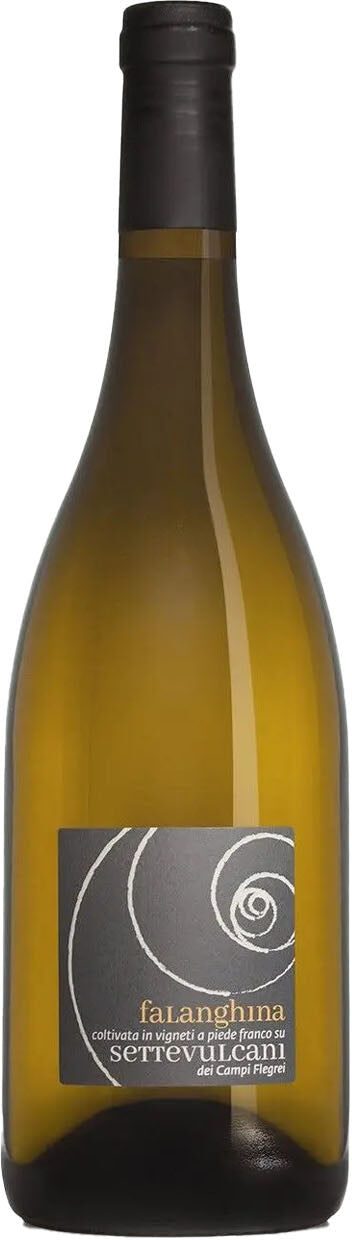
Falanghina Campi Flegrei 'Sette Vulcani' Salvatore Martusciello 2025The Falanghina dei Campi Flegrei 'Settevulcani' is a white wine with a strong mineral timbre, the expression of vines trained on free-range vines on volcanic soil. The Phlegraean Fields represent one of the most active volcanic areas in all of Italy, located just north of the city of Naples, overlooking the splendid gulf. In this land of ancient oenological tradition, dating back to at least 700 B.C., there are two varieties of choice: Piedirosso and, indeed, Falanghina. The latter grape, which is also very old, was already appreciated at the time of the Romans, who used it to produce the famous Falerno.The 'Settevulcani' Salvatore Martusciello Campi Flegrei Falanghina originates only from grapes of the white berry variety of the same name grown on sandy soils of volcanic origin. It is precisely the particular matrix of the soil that allows the vines to be cultivated free-range, without rootstock. After the harvest, the grapes are transferred to the cellar for classic white vinification, with gentle pressing and subsequent alcoholic fermentation of the must in stainless steel tanks. In the same type of wine vats, the mass is then left to mature for a few months until final bottling.The Falanghina dei Campi Flegrei Salvatore Martusciello 'Settevulcani' has a straw-yellow colour with golden highlights. The aromatic bouquet offers inviting hints of yellow-fleshed fruit, lemon peel, pineapple and white flowers, enhanced by nuances of aromatic herbs and a characteristic mineral vein. The balance on the palate is excellent, where the brilliant freshness combines with a fine savoury-mineral trail in a finish that invites you to return to the glass. Remaining in the regional sphere, an ideal pairing with this Falanghina is spaghetti alla Nerano.17,00 £*Shipping: 48,00 £Secure redirect to the provider
-
Rosato Marotti Campi 2025The Rosato from the Marche winery Marotti Campi is a true specialty, made in the beautiful hilly area of Morro d’Alba, with the ancient native red grape variety of the territory. It is a version of Lacrima vinified as a rosé, which surprises with its originality and fragrance of floral aromas, reminiscent of rose and violet, accompanied by a soft and harmonious sip. It is a rosé with a typically local face, perfectly describing the close bond between a grape and its chosen territory. It is a simple and informal label, very suitable to be enjoyed as an aperitif or with light appetizers. The Rosato wine from the Marotti Campi winery is a pure expression of the Marche land and one of the most interesting producers in the Morro d’Alba area. The sunny and always breezy Mediterranean climate, and the soils mainly composed of clays and sands, have always been the cradle of the Lacrima grape, cultivated only in this small corner of the Marche. At the end of the harvest, the selected bunches are pruned in the cellar and immediately subjected to a very delicate pressing, with a short period of contact with the skins to extract a minimum of color, perfumes, and aromas. The must is fermented in temperature-controlled stainless steel tanks. Before bottling, the rosé rests for a period of 4 months in steel tanks. The Lacrima Rosato from the Marche winery Marotti Campi is the result of a selection of the best bunches from the estate's vineyards, which are cultivated on the sunny southeast-facing slopes of the magnificent area of Morro d’Alba, a small and historic Marche village. It is a label that well tells the territory and the expressive nuances that the typical grape of the area can offer. In the glass, it presents itself with a fairly intense, bright, and brilliant cherry pink hue, a sign of good extraction in winemaking. The aromas mainly recall floral fragrances with scents of fresh rose petals, freshly picked violets, wildflowers, and small berries. The sip is harmonious andsoft, with a rich and fragrant fruit and a finish of good freshness. The charm of Lacrima expressed in pink.8,00 £*Shipping: 48,00 £Secure redirect to the provider
-
Falanghina 'Aristea' Nomades 2024The Falanghina 'Aristea' of the Nomades touring project is atypically taut and mineral expression of this important and ancient southern Italian grape variety. Falanghina originates from the Campi Flegrei area and, not by chance, is called Falanghina Flegrea, a different variety from the less widespread Falanghina Beneventana. This grape seems to have arrived in Campania at the hands of Greek colonists and over the centuries spread throughout the region and neighbouring territories. The name 'Aristea' is also a tribute to Georgia's mother, a producer of Greek origin who, together with her companion Onofrio, a producer from Campania, set up the Nomades project, a bridge between the wine-growing of their respective homelands. In particular, the name Aristea derives from the Greek words 'aristaeus' and 'aristaios', meaning 'the best' or 'excellence'.Nomades Falanghina 'Aristea' is made from only Falanghina grapes grown sustainably near the city of Naples. The grapes come from vineyards planted on sandy volcanic soil at an altitude of 200 metres above sea level. In the cellar, the grapes first undergo a 24-hour cold pre-fermentation maceration, followed by soft pressing and subsequent alcoholic fermentation of the must in stainless steel tanks at a controlled temperature of 15 °C. This is followed by several months of ageing, again in stainless steel on the fine lees with regular batonnage.The colour of Falanghina Nomades 'Aristea' is an intense straw yellow. The nose offers fragrant hints of mandarin, apple, lemon peel and white flowers such as chamomile, together with hints of almond and yeast. The taste, very fresh and slender, reveals good body and a vibrant sapid-mineral trail, elements that combine in an intensely aromatic progression.18,00 £*Shipping: 48,00 £Secure redirect to the provider
-
What happens if the Campi Flegrei erupt?
If the Campi Flegrei supervolcano were to erupt, it could have catastrophic consequences for the surrounding area. The eruption could result in widespread destruction, including the potential for pyroclastic flows, ashfall, and volcanic gases. The surrounding region could be uninhabitable for an extended period of time, and there could be significant impacts on global climate. It is important for scientists to continue monitoring the activity of Campi Flegrei to better understand the potential risks and to be prepared for any future eruptions. **
-
What are the Phlegraean Fields or Campi Flegrei?
The Phlegraean Fields, also known as Campi Flegrei in Italian, are a large volcanic area located in the western part of Naples, Italy. This area is known for its volcanic activity, including the presence of numerous volcanic craters, geysers, and hot springs. The Phlegraean Fields have been active for thousands of years and are closely monitored by scientists due to the potential risk of future volcanic eruptions. **
-
How likely do you guys consider an eruption of Campi Flegrei in the near future?
As AI, I don't have personal opinions, but I can provide information. The Campi Flegrei supervolcano is currently being monitored by scientists, and while there are signs of increased activity, it is difficult to predict with certainty when or if an eruption will occur. The volcano has shown periods of unrest in the past without leading to an eruption, so it is important to continue monitoring the situation closely. It is important to rely on the expertise of scientists and authorities to assess the likelihood of an eruption in the near future. **
-
What traditions, customs, and festivals are there in Hungary?
Hungary has a rich cultural heritage with many traditions, customs, and festivals. One of the most well-known traditions is the celebration of Easter, which includes painting eggs and the custom of sprinkling water on women as a sign of fertility. Another important festival is the Budapest Spring Festival, which features a wide range of cultural events including music, dance, and theater performances. The Hungarian National Day, celebrated on August 20th, is also a significant event, with fireworks, concerts, and other festivities taking place across the country. Additionally, traditional Hungarian folk music and dance are an integral part of the country's cultural identity, with many festivals and events dedicated to showcasing these art forms. **
Similar search terms for Falanghina-Campi-Flegrei-Cruna
-
Falanghina La Sibilla 2025controlled temperature, followed by aging always in tanks of the same material for about six months on the lees. The Falanghina La Sibilla presents itself in the glass with a lively straw yellow color with golden reflections, on the nose notes of Mediterranean scrub and aromatic herbs, such as sage and thyme, open the olfactory mosaic that concludes with notes of tropical fruit and yellow peach on a savory background, thanks to the volcanic origin of the soil, and pleasantly fresh. In the mouth, there is coherence with what is perceived on the nose, in fact, freshness and minerality create a vibrant and taut sip, with the great merit of not fading immediately but capable of soaring and persisting in delighting the taste buds.controlled temperature, followed by aging always in tanks of the same material for about six months on the lees. The Falanghina La Sibilla presents itself in the glass with a lively straw yellow color with golden reflections, on the nose notes of Mediterranean scrub and aromatic herbs, such as sage and thyme, open the olfactory mosaic that concludes with notes of tropical fruit and yellow peach on a savory background, thanks to the volcanic origin of the soil, and pleasantly fresh. In the mouth, there is coherence with what is perceived on the nose, in fact, freshness and minerality create a vibrant and taut sip, with the great merit of not fading immediately but capable of soaring and persisting in delighting the taste buds.14,00 £*Shipping: 48,00 £Secure redirect to the provider
-
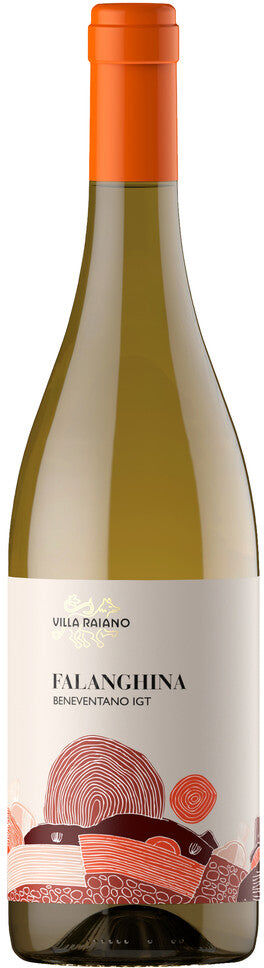
Falanghina Villa Raiano 2025The Falanghina of Villa Raiano represents an unmissable appointment in the offer of this winery, which skillfully supports the use and dissemination of local varieties. The vineyards intended for its cultivation are located near the small town of Torrecuso, a charming municipality perched on the hills overlooking the rows, within the Taburno National Park, in the province of Benevento. Here, the Basso brothers, together with their brother-in-law Paolo Sibillo, seek to express the personality of the Falanghina grapes with the deepest respect for its varietal characteristics, searching for the most suitable soils for its successful outcome, as in this case. Villa Raiano, in fact, is located 60 km from the rows of its Falanghina, and its roots sink into limestone soils rich in sand and silt at 300 meters above sea level. The picturesque town of Torrecuso provides the backdrop for these wonderful vineyards trained in guyot, and its clusters are harvested exclusively by hand during the last week of September. The golden cluster is subjected to soft pressing and the must is inoculated with selected yeasts that trigger the mechanisms of alcoholic fermentation in stainless steel tanks. The aging takes place for a short period in steel, in order to keep the varietal characteristics completely unchanged and not to add any characteristics that are not mere expressions of the grape variety. The Falanghina of Villa Raiano presents a good structure of great freshness. The intense straw yellow heralds the soft notes of tropical fruits and the citrus hints of oranges and limes. Well recognizable are the notes of vanilla, almond, and sage. The sip is of disarming pleasantness, with a freshness that beautifully cleanses the mouth with each taste. A grape variety completely and exclusively belonging to our beloved boot, with a cutting and pleasant personality, versatile and never obsequious. Easy to pair with the fish from our sea, precisely for its precise Mediterranean character.12,00 £*Shipping: 48,00 £Secure redirect to the provider
-
Spumante Brut Rosé Marotti CampiThe sparkling rosé of the Charmat Method is a new and original bubble crafted by the Marotti Campi family, a landmark winery in the Marche region that has distinguished itself over the years for a significant production of Lacrima di Morro d’Alba and Verdicchio dei Castelli di Jesi wines. Active since 1999 and with a vineyard area of over 70 hectares, it has contributed to the success of Marche wines by combining the tradition of the territory with an elegant and clear style. Marotti Campi wines offer a precious quality/price ratio and manage to condense all the beauty of the territory through impeccable interpretations. With this unusual bubble, all the qualities of a great grape, Lacrima, are perceived, capable of expressing itself with great versatility even in different expressions, both still and sparkling. The Marotti Campi Rosé Sparkling Wine is made from pure Lacrima grapes harvested in Morro d’Alba. This variety takes its name from the typical characteristic of “tears” during ripening due to the thin skin that allows drops of juice to escape. The vineyards are located at 180 meters above sea level on clay soils with a south and southeast exposure overlooking the sea. The vinification of the Lacrima grapes takes place in white with alcoholic fermentation in steel and refermentation in autoclave according to the Charmat Method.thin that allows drops of juice to escape. The vineyards are situated at 180 meters above sea level on clay soils with a south and southeast exposure overlooking the sea. The vinification of the Lacrima grapes occurs in white with alcoholic fermentation in steel and refermentation in autoclave according to the Charmat Method. The Marotti Campi Sparkling Wine is colored with a pale pink hue marked by a very fine and persistent perlage. It invites the nose with a delicate and light profile, composed of notes of wild strawberry, currant, almond, apple, and wild rose. On the palate, it is very fresh and slender, with great smoothness and agility. Excellent as an aperitif or with Adriatic fish dishes. One glass is not enough!10,00 £*Shipping: 48,00 £Secure redirect to the provider
-
What are the traditions and culture in Kosovo?
Kosovo has a rich cultural heritage influenced by its history and diverse population. The traditions in Kosovo are deeply rooted in its Albanian, Serbian, and Turkish heritage, and include music, dance, and cuisine. The country also has a strong tradition of storytelling, poetry, and folk art. Additionally, Kosovo is known for its religious diversity, with a mix of Muslim, Orthodox Christian, and Catholic influences contributing to its cultural landscape. Overall, the traditions and culture in Kosovo reflect the country's complex history and the resilience of its people. **
-
Are there any special festivals and traditions in Schleswig-Holstein?
Yes, Schleswig-Holstein has several special festivals and traditions. One of the most famous is the Kiel Week, which is the largest sailing event in the world and includes a variety of cultural and entertainment activities. Another popular tradition is the Schleswig-Holstein Music Festival, which features classical music performances in various locations throughout the region. Additionally, there are traditional events like the Husum Harbour Days and the Wacken Open Air heavy metal music festival that attract visitors from all over the world. **
-
What traditions and customs are there in Turkish culture?
Turkish culture is rich in traditions and customs that have been passed down through generations. One important tradition is the Turkish tea culture, where people gather to socialize and enjoy strong, black tea served in small glasses. Another tradition is the Turkish bath, or hamam, which is a communal bathing experience that has been a part of Turkish culture for centuries. Additionally, Turkish cuisine is known for its diverse flavors and use of fresh ingredients, and sharing meals with family and friends is an important custom in Turkish culture. Finally, hospitality is a key aspect of Turkish culture, with guests being treated with great respect and generosity. **
-
How do you personally like Russian culture and its traditions?
As an AI, I do not have personal preferences or feelings. However, I can provide information on Russian culture and traditions. Russian culture is rich and diverse, with a long history of art, literature, music, and dance. Traditional Russian cuisine, such as borscht and blini, is also popular worldwide. Russian traditions, like Maslenitsa and Orthodox Christmas, are celebrated with great enthusiasm and bring people together in a spirit of unity and joy. Overall, Russian culture and traditions are fascinating and offer a unique glimpse into the country's heritage. **
* All prices are inclusive of VAT and, if applicable, plus shipping costs. The offer information is based on the details provided by the respective shop and is updated through automated processes. Real-time updates do not occur, so deviations can occur in individual cases. ** Note: Parts of this content were created by AI.