Buy greatpoland.eu ?
We are moving the project
greatpoland.eu .
Are you interested in purchasing the domain
greatpoland.eu ?
domain@kv-gmbh.de · 0541-91531010
Buy greatpoland.eu ?
When do you use il faut and il ne faut pas?
"Il faut" is used to express what is necessary or required, while "il ne faut pas" is used to express what is not allowed or should be avoided. For example, you would use "il faut" to say "il faut étudier pour réussir" (it is necessary to study to succeed), and "il ne faut pas" to say "il ne faut pas fumer dans ce lieu" (smoking is not allowed in this place). These expressions are used to give advice, make recommendations, or set rules. **
What is the difference between il faut que and il faut?
"Il faut" is used to express a general necessity or obligation, while "il faut que" is used to introduce a specific action or event that is necessary or required. For example, "il faut manger" means "it is necessary to eat" in a general sense, while "il faut que tu manges" means "you need to eat" in a specific sense. "Il faut" is used to make a general statement about what is necessary, while "il faut que" is used to specify what needs to be done. **


Similar search terms for Bianco-Il-Baratto-Fattoria
Top-Angebote
Products related to Bianco-Il-Baratto-Fattoria:
-
Il Bianco Brancaia 2025The Tuscan wine Il Bianco presents itself, from the very first sips, as a product with a fresh and carefree soul, very satisfying on the palate. A freshness that comes from a precise choice made during vinification, where malolactic fermentation is not carried out, thus reserving a pleasant acidity for the final product. A bottle that is born from the union of four international white grape varieties, cultivated with passion and dedication within the vineyards owned by the Brancaia winery. A label to consider, not only for its virtues but also for the interesting quality-price ratio. Brancaia Il Bianco is made from a blend where, alongside Sauvignon Blanc, we find 10% Viognier. The vines of these varieties are cultivated with great care and are monitored by the watchful eye of the great Carlo Ferrini, the oenologist who assists the Brancaia estate in production. Once harvested and brought to the winery's vinification facilities, the grapes ferment spontaneously, thanks to the presence of indigenous yeasts, in steel containers; malolactic fermentation is not carried out. The aging lasts for five months and takes place for one third of the total mass of the wine in barrique, while the remaining part matures in steel. The Bianco produced by the Brancaia winery presents itself visually with a straw yellow color, characterized by greenish reflections. The nose opens with typically aromatic notes, where fruity and floral sensations alternate in a whirlwind of enveloping notes. On the palate, it is light-bodied, slender, and drinkable, with a fresh sip, characterized by a pleasant and light citrus taste. A bottle that pairs well with fish dishes, as well as with recipes based on shellfish and mollusks.13,00 £*Shipping: 48,00 £Secure redirect to the provider
-
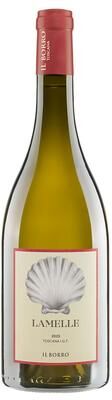
"""Il Borro""" """Il Borro Lamelle Bianco 2023 White Wine - Italy""""""Lamelle was the first white wine produced by the estate. The metamorphic origin of the soil, rich in seashell fossils, allows it to express at its best all its complexity and acidity. A white wine fresh yet structured, whose highlights are its..."30,99 $*Shipping: 0,00 $Secure redirect to the provider
-
Bianco 'Il Padrone delle Vigne' Tabarrini 2025alcoholic fermentation takes place in steel thanks to the action of indigenous yeasts. It ages for a few months in steel before being bottled. The “Padrone delle Vigne” White from Tabarrini presents itself in the glass with a straw yellow color with golden and bright reflections. The aromas recall ripe yellow-fleshed fruits such as melon, plum, and apple, but also notes of hawthorn and citrus on the finish; on the palate, the structure is full-bodied and smooth, with good sapidity and freshness that invite you to drink glass after glass. It pairs well with first courses seasoned with shellfish and mollusks; sushi and sashimi, and dishes based on seasonal vegetables; excellent also with fresh cheeses. A product to be kept in your personal cellar for every occasion: outdoor gatherings with friends or home lunches focused on lightness, to enjoy a wine that encapsulates the fruits and values of the Umbrian land and to savor tradition in the glass.alcoholic fermentation in steel thanks to the action of indigenous yeasts. It matures for a few months in steel before being bottled. The "Padrone delle Vigne" Bianco di Tabarrini presents itself in the glass with a straw yellow color with golden and brilliant reflections. The aromas recall ripe yellow-fleshed fruits such as melon, plum, and apple, but also notes of hawthorn and citrus on the finish; on the palate, the structure is full-bodied and soft, with good sapidity and freshness that invite sip after sip. It is recommended to pair with first courses seasoned with shellfish and mollusks; sushi and sashimi, and dishes based on seasonal vegetables; also excellent with fresh cheeses. A product to be kept in your personal cellar for every occasion: outdoor gatherings with friends or home lunches characterized by lightness, to enjoy a wine that encapsulates the fruits and values of the Umbrian land and to savor tradition in the glass.14,00 £*Shipping: 48,00 £Secure redirect to the provider


-
Why is it souhaite-t-il and not souhaite-s-il?
In French, the pronoun "il" (he) is combined with the verb "souhaiter" (to wish) to form the phrase "souhaite-t-il" because of the rule of verb inversion in interrogative sentences. When forming a question in French, the subject pronoun and the verb are inverted, so "souhaite-t-il" follows this rule. The "t" is added to create a liaison between the verb and the pronoun, making the pronunciation smoother. **
-
Is there a name for Martini Bianco with Cola?
Yes, the name for Martini Bianco with Cola is called a "Martini and Cola" or simply a "Martini Bianco and Cola." This is a popular mixed drink that combines the sweet and herbal flavors of Martini Bianco with the refreshing taste of cola. It is a simple and easy cocktail to make, and it is often enjoyed as a casual and refreshing beverage. **
-
How does "il faut" work in French?
"Il faut" is a common expression in French that is used to convey the idea of necessity or obligation. It is followed by an infinitive verb and is used to express what needs to be done or what is necessary in a given situation. For example, "Il faut manger" means "It is necessary to eat." This expression is used to give advice, make suggestions, or express general truths. **
-
What comes after il faudrait in French?
In French, "il faudrait" is followed by the infinitive form of a verb. This construction is used to express a suggestion or a polite request. For example, "il faudrait partir tôt" means "it would be necessary to leave early." **

What is an El, Sl, and Il?
An El, Sl, and Il are all suffixes used in the English language to form adjectives. "El" is used to form adjectives that mean "pertaining to" or "characterized by," such as in the word "musical." "Sl" is used to form adjectives that mean "tending to" or "inclined to," such as in the word "careful." "Il" is used to form adjectives that mean "having the nature of" or "capable of," such as in the word "flexible." These suffixes help to create new adjectives by modifying the meaning of the base word. **
Who are the visitors of Corvo Bianco in The Witcher 3?
In The Witcher 3, the visitors of Corvo Bianco are primarily Geralt's friends and acquaintances from his adventures. These include characters such as Triss Merigold, Yennefer, Dandelion, Zoltan Chivay, and others. They come to visit Geralt at his vineyard to catch up, seek his help, or simply enjoy some time together. The visitors add depth to the game's world and provide opportunities for meaningful interactions with the characters. **
Top-Angebote
Products related to Bianco-Il-Baratto-Fattoria:
-
Bianco 'Il Baratto' Fattoria Mani di Luna 2024Fattoria Mani di Luna presents ‘Il Baratto’, an artisanal white wine that comes from a blend of indigenous grape varieties and which, as the winery itself states, expresses a territorial character more than a varietal one. The enhancement of the terroir goes through a sincerely natural production philosophy, embracing organic and biodynamic agriculture. The name of the bottle refers to the homonymous vineyard of 45 years, steep and partially terraced, from which the grapes come.‘Il Baratto’ from the Fattoria Mani di Luna winery is made from a blend of Trebbiano Toscano, locally called Procanico, two types of Malvasia, Grechetto, and also Riesling. The original vineyard, planted in 1975, is named “Vigna Baratto”, and is located at an altitude of 200-300 meters on steep and partially terraced land, composed of sands, clays, and sandstones from ancient marine and lacustrine sediments. The harvest is done by hand and, subsequently, the bunches are pressed whole in a vertical press. The slow alcoholic fermentation takes place spontaneously in steel for 2-3 weeks, followed by 7 months of maturation on the lees fine always in steel tanks, with periodic batonnage. Bottling takes place during the waning moon, without any clarification or filtration.To the eye, the Umbrian white ‘Il Baratto’ from Fattoria Mani di Luna shows a pale straw yellow color. The olfactory spectrum is delicate and fruity, defined by hints of chamomile, jasmine, apples, wildflowers, and Mediterranean scrub, associated with light mineral and hydrocarbon nuances. A fresh, harmonious, and easy-drinking sip, of refreshing lightness. An original interpretation that pairs well with various delicate-flavored appetizers and snacks.19,00 £*Shipping: 48,00 £Secure redirect to the provider
-
Vermentino 'Il Bianco' Il Torchio 2025The Bianco from the Il Torchio winery is a pure Vermentino produced in the Colli di Luni area, in the province of La Spezia. A wine immediate, fresh, and sunny, made with a brief maceration on the skins, which gives it a good structure and aromatic complexity. It represents a typically territorial expression of this interesting white grape variety, which loves warm, dry, and windy climates. Not surprisingly, Vermentino is widespread, not only in the eastern Liguria but also in Sardinia, Corsica, and southern France under the name Rolle. The Il Torchio winery produces its Bianco with pure Vermentino grapes, which come from the company estate: 12 hectares of property collected in a single plot beautifully exposed to the southeast. The grapes are vinified in steel with the sole use of indigenous yeasts and a light maceration on the skins, on half of the mass, lasting one or two days. The wine then ages on the fine lees in steel for at least 6 months, in order to achieve a good richness and aromatic complexity. It is bottled without proceedingof clarification or filtration. The Bianco Il Torchio well represents the elegant and sunny characteristics of the Ligurian Vermentino from the Colli di Luni area. It is the quintessential white of the territory, which pairs very well with dishes from Ligurian seafood cuisine. It has a very bright and luminous straw-yellow color. The bouquet expresses delicate notes of white flowers, aromas of yellow fruit, hints of Mediterranean scrub herbs, iodine and marine nuances. On the palate, it has a good structure, with a juicy and refreshing sip, mature aromas, and a beautiful savory vein. The finish is pleasantly balsamic.18,00 £*Shipping: 48,00 £Secure redirect to the provider
-
Il Bianco Brancaia 2025The Tuscan wine Il Bianco presents itself, from the very first sips, as a product with a fresh and carefree soul, very satisfying on the palate. A freshness that comes from a precise choice made during vinification, where malolactic fermentation is not carried out, thus reserving a pleasant acidity for the final product. A bottle that is born from the union of four international white grape varieties, cultivated with passion and dedication within the vineyards owned by the Brancaia winery. A label to consider, not only for its virtues but also for the interesting quality-price ratio. Brancaia Il Bianco is made from a blend where, alongside Sauvignon Blanc, we find 10% Viognier. The vines of these varieties are cultivated with great care and are monitored by the watchful eye of the great Carlo Ferrini, the oenologist who assists the Brancaia estate in production. Once harvested and brought to the winery's vinification facilities, the grapes ferment spontaneously, thanks to the presence of indigenous yeasts, in steel containers; malolactic fermentation is not carried out. The aging lasts for five months and takes place for one third of the total mass of the wine in barrique, while the remaining part matures in steel. The Bianco produced by the Brancaia winery presents itself visually with a straw yellow color, characterized by greenish reflections. The nose opens with typically aromatic notes, where fruity and floral sensations alternate in a whirlwind of enveloping notes. On the palate, it is light-bodied, slender, and drinkable, with a fresh sip, characterized by a pleasant and light citrus taste. A bottle that pairs well with fish dishes, as well as with recipes based on shellfish and mollusks.13,00 £*Shipping: 48,00 £Secure redirect to the provider
-
"""Il Borro""" """Il Borro Lamelle Bianco 2023 White Wine - Italy""""""Lamelle was the first white wine produced by the estate. The metamorphic origin of the soil, rich in seashell fossils, allows it to express at its best all its complexity and acidity. A white wine fresh yet structured, whose highlights are its..."30,99 $*Shipping: 0,00 $Secure redirect to the provider
-
When do you use il faut and il ne faut pas?
"Il faut" is used to express what is necessary or required, while "il ne faut pas" is used to express what is not allowed or should be avoided. For example, you would use "il faut" to say "il faut étudier pour réussir" (it is necessary to study to succeed), and "il ne faut pas" to say "il ne faut pas fumer dans ce lieu" (smoking is not allowed in this place). These expressions are used to give advice, make recommendations, or set rules. **
-
What is the difference between il faut que and il faut?
"Il faut" is used to express a general necessity or obligation, while "il faut que" is used to introduce a specific action or event that is necessary or required. For example, "il faut manger" means "it is necessary to eat" in a general sense, while "il faut que tu manges" means "you need to eat" in a specific sense. "Il faut" is used to make a general statement about what is necessary, while "il faut que" is used to specify what needs to be done. **
-
Why is it souhaite-t-il and not souhaite-s-il?
In French, the pronoun "il" (he) is combined with the verb "souhaiter" (to wish) to form the phrase "souhaite-t-il" because of the rule of verb inversion in interrogative sentences. When forming a question in French, the subject pronoun and the verb are inverted, so "souhaite-t-il" follows this rule. The "t" is added to create a liaison between the verb and the pronoun, making the pronunciation smoother. **
-
Is there a name for Martini Bianco with Cola?
Yes, the name for Martini Bianco with Cola is called a "Martini and Cola" or simply a "Martini Bianco and Cola." This is a popular mixed drink that combines the sweet and herbal flavors of Martini Bianco with the refreshing taste of cola. It is a simple and easy cocktail to make, and it is often enjoyed as a casual and refreshing beverage. **
Similar search terms for Bianco-Il-Baratto-Fattoria
-
Bianco 'Il Padrone delle Vigne' Tabarrini 2025alcoholic fermentation takes place in steel thanks to the action of indigenous yeasts. It ages for a few months in steel before being bottled. The “Padrone delle Vigne” White from Tabarrini presents itself in the glass with a straw yellow color with golden and bright reflections. The aromas recall ripe yellow-fleshed fruits such as melon, plum, and apple, but also notes of hawthorn and citrus on the finish; on the palate, the structure is full-bodied and smooth, with good sapidity and freshness that invite you to drink glass after glass. It pairs well with first courses seasoned with shellfish and mollusks; sushi and sashimi, and dishes based on seasonal vegetables; excellent also with fresh cheeses. A product to be kept in your personal cellar for every occasion: outdoor gatherings with friends or home lunches focused on lightness, to enjoy a wine that encapsulates the fruits and values of the Umbrian land and to savor tradition in the glass.alcoholic fermentation in steel thanks to the action of indigenous yeasts. It matures for a few months in steel before being bottled. The "Padrone delle Vigne" Bianco di Tabarrini presents itself in the glass with a straw yellow color with golden and brilliant reflections. The aromas recall ripe yellow-fleshed fruits such as melon, plum, and apple, but also notes of hawthorn and citrus on the finish; on the palate, the structure is full-bodied and soft, with good sapidity and freshness that invite sip after sip. It is recommended to pair with first courses seasoned with shellfish and mollusks; sushi and sashimi, and dishes based on seasonal vegetables; also excellent with fresh cheeses. A product to be kept in your personal cellar for every occasion: outdoor gatherings with friends or home lunches characterized by lightness, to enjoy a wine that encapsulates the fruits and values of the Umbrian land and to savor tradition in the glass.14,00 £*Shipping: 48,00 £Secure redirect to the provider
-
Fattoria di Sammontana Chianti Superiore 'San Firenze' Fattoria Sammontana 2022The Chianti Superiore ‘San Firenze’ by Fattoria di Sammontana is a pure Sangiovese that tells the story and the winemaking tradition of the Colli Fiorentini. Since 1867, the artisanal reality of Fattoria di Sammontana has been dedicated to the production of local wines in Montelupo Fiorentino, a municipality located a few kilometers west of the Tuscan capital, near the city of Empoli. Currently, the winery is managed by the fourth generation of the Dzieduszycki family, of Polish origin, who purchased the farm in the second half of the 19th century to dedicate themselves to agricultural production, primarily that of wine and oil. Fattoria di Sammontana Chianti Superiore ‘San Firenze’ is produced with only Sangiovese grapes from a vineyard of 1.5 hectares that borders the south side of the farm. The vineyard has an average age of 25 years and is conducted according to the principles of certified organic farming and biodynamics with limited yields. The grapes are hand-picked and then destemmed and crushed in steel and concrete tanks, where the alcoholic fermentation occurs spontaneously thanks to the indigenous yeasts, accompanied by about 3 weeks of maceration on the skins. Subsequently, the mass is racked into second and third passage oak barrels for aging of 6-8 months, at the end of which the bottling is finally carried out without prior filtration. The ‘San Firenze’ Chianti Superiore by Fattoria di Sammontana is of an intense and bright ruby red color. The nose is defined by vivid and evocative hints of ripe berries, violet, and Mediterranean herbs, supported by notes of various spices and tobacco. Delicious and dynamic is the progression on the palate, with the crunchy freshness and the mature tannic structure contributing to the overall taste harmony.16,00 £*Shipping: 48,00 £Secure redirect to the provider
-
How does "il faut" work in French?
"Il faut" is a common expression in French that is used to convey the idea of necessity or obligation. It is followed by an infinitive verb and is used to express what needs to be done or what is necessary in a given situation. For example, "Il faut manger" means "It is necessary to eat." This expression is used to give advice, make suggestions, or express general truths. **
-
What comes after il faudrait in French?
In French, "il faudrait" is followed by the infinitive form of a verb. This construction is used to express a suggestion or a polite request. For example, "il faudrait partir tôt" means "it would be necessary to leave early." **
-
What is an El, Sl, and Il?
An El, Sl, and Il are all suffixes used in the English language to form adjectives. "El" is used to form adjectives that mean "pertaining to" or "characterized by," such as in the word "musical." "Sl" is used to form adjectives that mean "tending to" or "inclined to," such as in the word "careful." "Il" is used to form adjectives that mean "having the nature of" or "capable of," such as in the word "flexible." These suffixes help to create new adjectives by modifying the meaning of the base word. **
-
Who are the visitors of Corvo Bianco in The Witcher 3?
In The Witcher 3, the visitors of Corvo Bianco are primarily Geralt's friends and acquaintances from his adventures. These include characters such as Triss Merigold, Yennefer, Dandelion, Zoltan Chivay, and others. They come to visit Geralt at his vineyard to catch up, seek his help, or simply enjoy some time together. The visitors add depth to the game's world and provide opportunities for meaningful interactions with the characters. **
* All prices are inclusive of VAT and, if applicable, plus shipping costs. The offer information is based on the details provided by the respective shop and is updated through automated processes. Real-time updates do not occur, so deviations can occur in individual cases. ** Note: Parts of this content were created by AI.