Buy greatpoland.eu ?
We are moving the project
greatpoland.eu .
Are you interested in purchasing the domain
greatpoland.eu ?
domain@kv-gmbh.de · 0541-91531010
Buy greatpoland.eu ?
Cation or anion?
A cation is a positively charged ion, while an anion is a negatively charged ion. Cations are formed when an atom loses electrons, resulting in a net positive charge, while anions are formed when an atom gains electrons, resulting in a net negative charge. The charge of a cation is indicated by a superscript plus sign (+), while the charge of an anion is indicated by a superscript minus sign (-). **
Which anion is formed?
The anion formed is chloride (Cl-). When sodium chloride (NaCl) dissolves in water, it dissociates into sodium cations (Na+) and chloride anions (Cl-). The chloride anion carries a negative charge and is attracted to the positive end of the water molecule, forming a hydrated chloride ion. **

Similar search terms for Anion
Top-Angebote
Products related to Anion:
-
Timeline Refresh 2026 - Clutch Box by Zygomatic, Card Game for 2-4 Players, Ages 10+, History and Culture TriviaTest your knowledge of history, culture, and everyday events with Timeline Refresh 2026, a compact card game for family and friends. Each round challenges players to place event cards in the correct chronological position, using the timeline already on the table as their guide. Choose an event card, estimate when it happened, and add it to the timeline. If your placement is correct, the card remains in play; if not, it is removed. The first player to position all their cards correctly wins. The game's accessible rules and varied subject matter make it an engaging way to challenge your memory and learn interesting facts while playing. The clutch box format is designed for convenient storage and portability.10,59 £*Shipping: 3,95 £Secure redirect to the provider
-
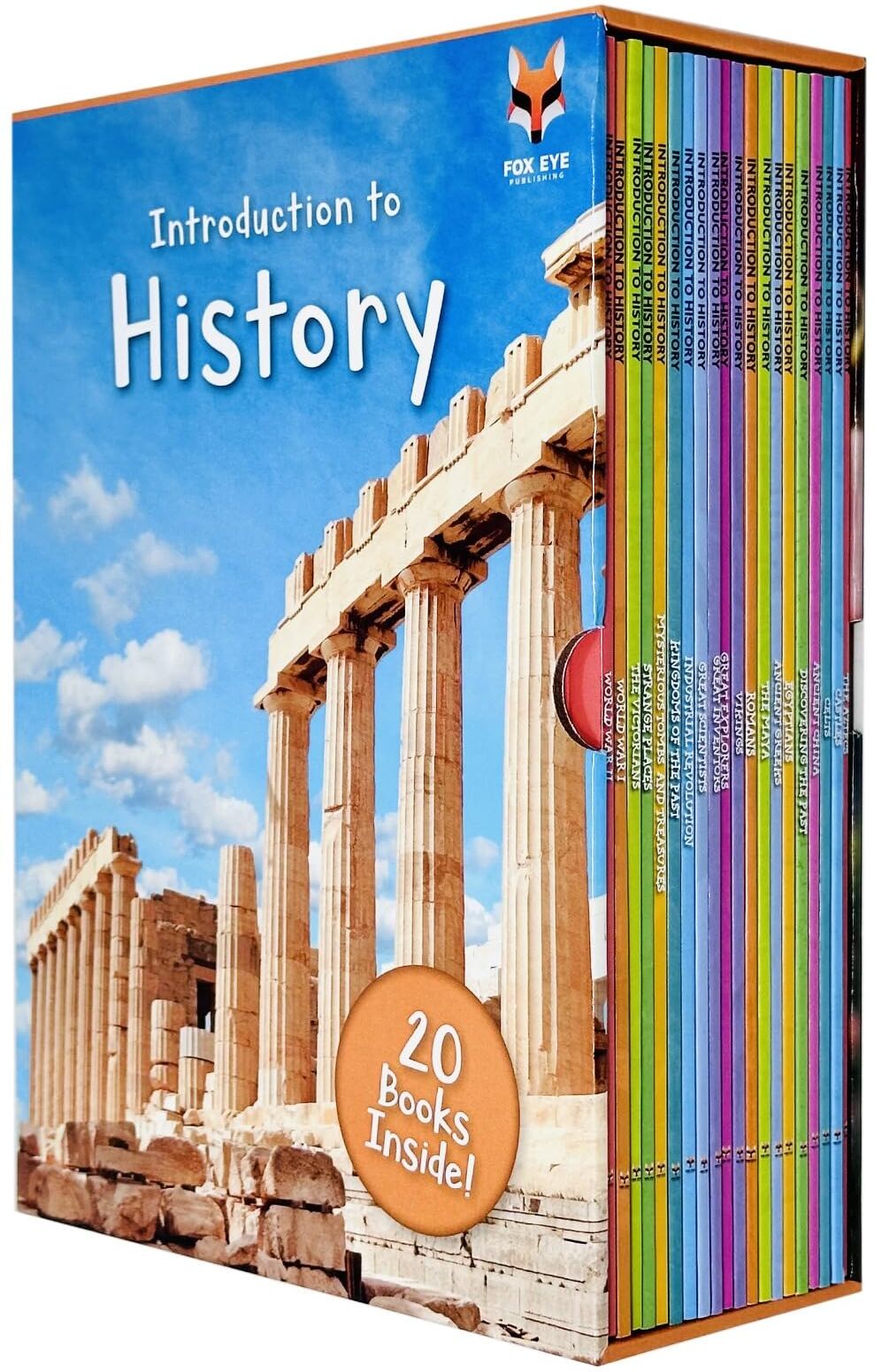
Fox Eye Publishing Introduction to History 20 Books Collection Box Set – Educational History Learning CollectionIntroduction to History 20 Books Collection Box Set (The Aztecs, Castles, Celts, Ancient China, Discovering the Past, Egyptians, Ancient Greeks, The Maya, Romans, Vikings, Great Explorers and More) Books in This Collection: Introduction to The Aztecs Introduction to Castles Introduction to Celts Introduction to Ancient China Introduction to Discovering the Past Introduction to Egyptians Introduction to Ancient Greeks Introduction to The Maya Introduction to Romans Introduction to Vikings Introduction to Great Explorers Introduction to Great Inventors Introduction to Great Scientists Introduction to Industrial Revolution Introduction to Kingdoms of the Past Introduction to Mysterious Tombs and Treasures Introduction to Strange Places Introduction to The Victorians Introduction to World War I Introduction to World War II12,99 £*Shipping: 2,99 £Secure redirect to the provider



-
What is the anion of potassium carbonate?
The anion of potassium carbonate is the carbonate ion (CO3^2-). This ion is composed of one carbon atom and three oxygen atoms, and it carries a 2- charge. When combined with a potassium cation (K+), it forms the compound potassium carbonate (K2CO3). **
-
Is the acid conjugate to the anion a weak acid if the anion is a good leaving group?
Yes, if the anion is a good leaving group, then the acid conjugate to the anion is likely to be a weak acid. This is because a good leaving group is typically stable and less likely to hold onto its proton, making the corresponding acid less likely to donate its proton. Therefore, the acid conjugate to the anion would be weak in terms of its ability to donate a proton in a chemical reaction. **
-
How do you distinguish a cation from an anion?
Cations are positively charged ions, while anions are negatively charged ions. Cations are formed when an atom loses one or more electrons, resulting in a net positive charge. Anions are formed when an atom gains one or more electrons, resulting in a net negative charge. One way to distinguish between cations and anions is to observe their behavior in a solution: cations are attracted to the negative electrode (cathode) in electrolysis, while anions are attracted to the positive electrode (anode). Additionally, cations are usually smaller in size than their parent atoms, while anions are larger. **
-
How is the reduction of the dichromate anion carried out?
The reduction of the dichromate anion is typically carried out using a reducing agent such as sulfur dioxide, iron(II) salts, or thiosulfate. These reducing agents donate electrons to the dichromate anion, causing it to be reduced to chromium(III) ions. The reaction is usually carried out in an acidic solution to provide the necessary conditions for the reduction to occur efficiently. **

How is the sodium cation connected to a chloride anion?
The sodium cation is connected to a chloride anion through ionic bonding. In this type of bonding, the sodium atom loses an electron to become a positively charged cation, while the chloride atom gains an electron to become a negatively charged anion. The opposite charges of the sodium cation and chloride anion attract each other, forming a strong bond between the two ions. This ionic bond creates a stable compound known as sodium chloride, or table salt. **
Why is there no KSO4 molecule? Why is it an anion?
There is no KSO4 molecule because potassium (K) is a metal and sulfate (SO4) is a polyatomic ion. When potassium combines with sulfate, it forms the ionic compound potassium sulfate (K2SO4), in which potassium loses an electron to become a positively charged ion (K+) and sulfate gains two electrons to become a negatively charged ion (SO4^2-). This ionic bond between the positively charged potassium ion and the negatively charged sulfate ion results in the formation of an anion rather than a molecule. **
Top-Angebote
Products related to Anion:
-
From the Archives: Black History and Culture Value PackThis brand-new series is rooted in a profound commitment to shedding light on some of the important -- and often lesser-known -- aspects of Black history. From the Archives features landmarks, events, people, and artistic endeavors that have played...27,99 $*Shipping: 0,00 $Secure redirect to the provider
-
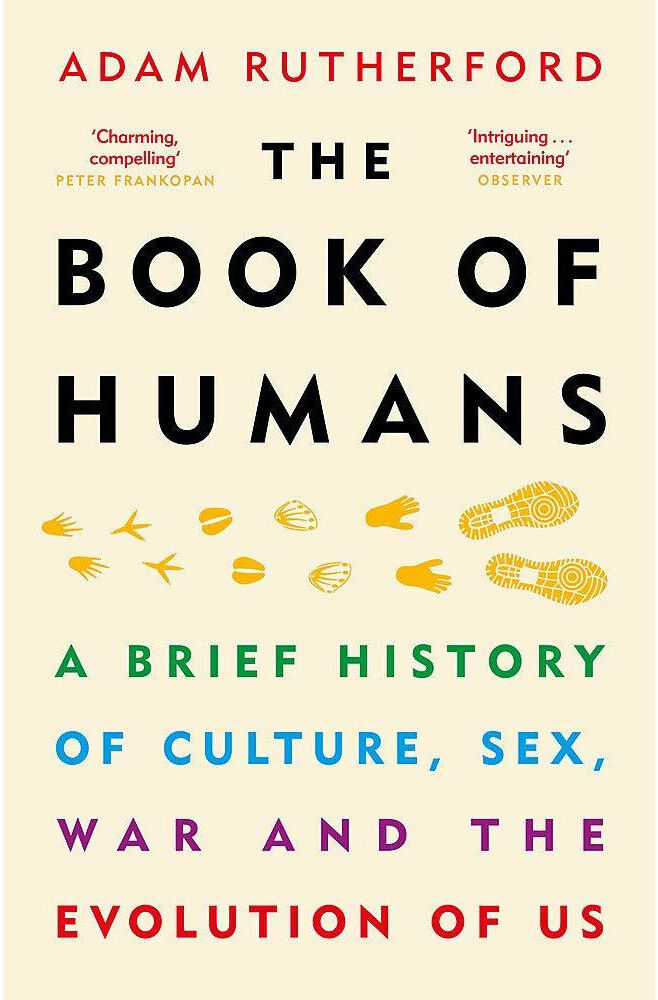
Orion The Book of Humans by Adam Rutherford – A Brief History of Culture, Sex, War & EvolutionWHAT MAKES US HUMAN? Waging war? Sex for pleasure? Creating art? Mastery of fire? In this thrilling tour of the animal kingdom, Adam Rutherford tells the story of how we became the unique creatures we are today. Illuminated by the latest scientific discoveries, THE BOOK OF HUMANS is a dazzling compendium of what unequivocally fixes us as animals, and reveals how we are extraordinary among them.4,98 £*Shipping: 1,99 £Secure redirect to the provider
-
Timeline Refresh 2026 - Clutch Box by Zygomatic, Card Game for 2-4 Players, Ages 10+, History and Culture TriviaTest your knowledge of history, culture, and everyday events with Timeline Refresh 2026, a compact card game for family and friends. Each round challenges players to place event cards in the correct chronological position, using the timeline already on the table as their guide. Choose an event card, estimate when it happened, and add it to the timeline. If your placement is correct, the card remains in play; if not, it is removed. The first player to position all their cards correctly wins. The game's accessible rules and varied subject matter make it an engaging way to challenge your memory and learn interesting facts while playing. The clutch box format is designed for convenient storage and portability.10,59 £*Shipping: 3,95 £Secure redirect to the provider
-
Cation or anion?
A cation is a positively charged ion, while an anion is a negatively charged ion. Cations are formed when an atom loses electrons, resulting in a net positive charge, while anions are formed when an atom gains electrons, resulting in a net negative charge. The charge of a cation is indicated by a superscript plus sign (+), while the charge of an anion is indicated by a superscript minus sign (-). **
-
Which anion is formed?
The anion formed is chloride (Cl-). When sodium chloride (NaCl) dissolves in water, it dissociates into sodium cations (Na+) and chloride anions (Cl-). The chloride anion carries a negative charge and is attracted to the positive end of the water molecule, forming a hydrated chloride ion. **
-
What is the anion of potassium carbonate?
The anion of potassium carbonate is the carbonate ion (CO3^2-). This ion is composed of one carbon atom and three oxygen atoms, and it carries a 2- charge. When combined with a potassium cation (K+), it forms the compound potassium carbonate (K2CO3). **
-
Is the acid conjugate to the anion a weak acid if the anion is a good leaving group?
Yes, if the anion is a good leaving group, then the acid conjugate to the anion is likely to be a weak acid. This is because a good leaving group is typically stable and less likely to hold onto its proton, making the corresponding acid less likely to donate its proton. Therefore, the acid conjugate to the anion would be weak in terms of its ability to donate a proton in a chemical reaction. **
Similar search terms for Anion
-
Fox Eye Publishing Introduction to History 20 Books Collection Box Set – Educational History Learning CollectionIntroduction to History 20 Books Collection Box Set (The Aztecs, Castles, Celts, Ancient China, Discovering the Past, Egyptians, Ancient Greeks, The Maya, Romans, Vikings, Great Explorers and More) Books in This Collection: Introduction to The Aztecs Introduction to Castles Introduction to Celts Introduction to Ancient China Introduction to Discovering the Past Introduction to Egyptians Introduction to Ancient Greeks Introduction to The Maya Introduction to Romans Introduction to Vikings Introduction to Great Explorers Introduction to Great Inventors Introduction to Great Scientists Introduction to Industrial Revolution Introduction to Kingdoms of the Past Introduction to Mysterious Tombs and Treasures Introduction to Strange Places Introduction to The Victorians Introduction to World War I Introduction to World War II12,99 £*Shipping: 2,99 £Secure redirect to the provider
-
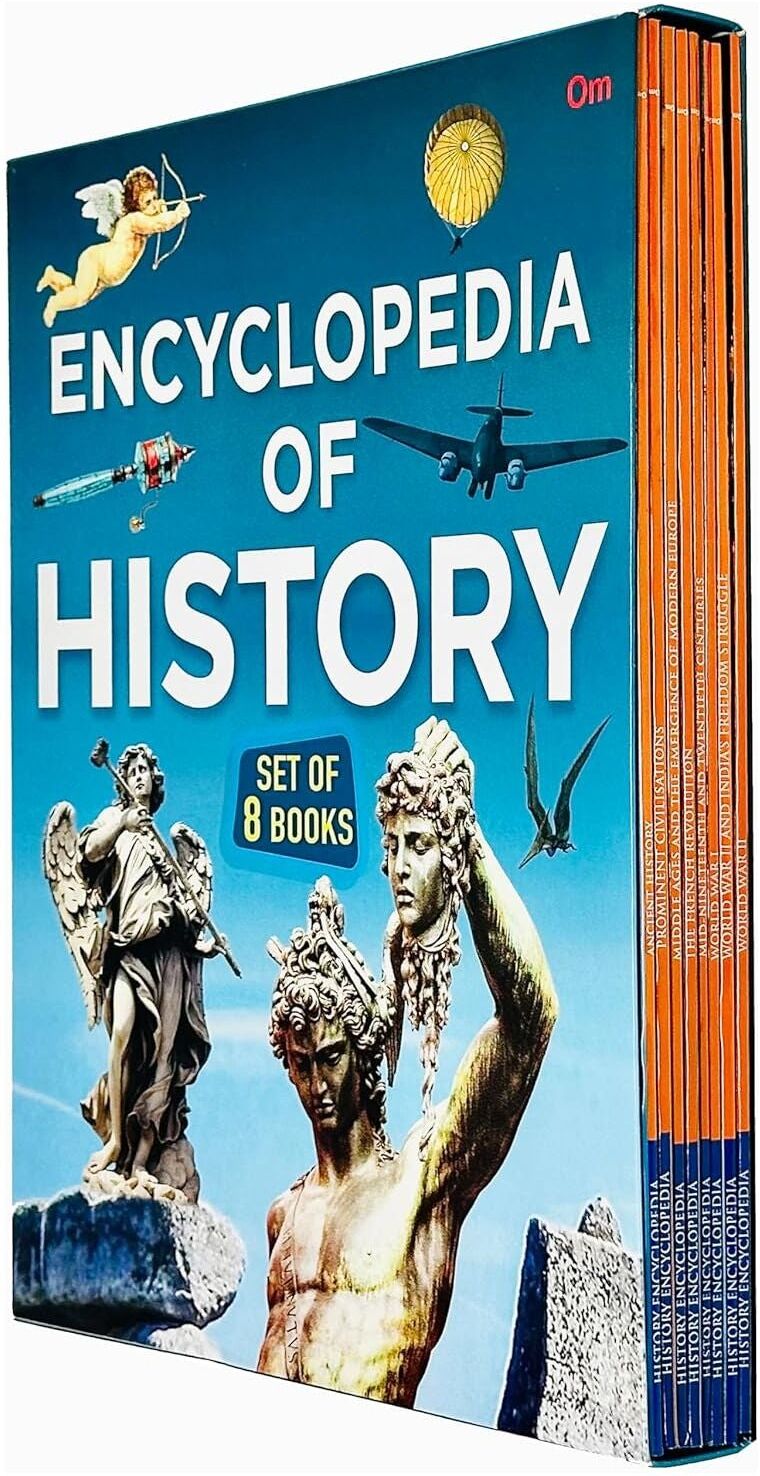
OM Books International Encyclopedia of History 8 Books Collection Set – World War History & Educational Learning CollectionEncyclopedia of History set of 8 books (World War I, World War II, World War II and Indias Freedom Struggle, Mid Nineteenth and Twentieth Centuries, The French Revolution & More): Titles in This Set: Encyclopedia: World War I Encyclopedia: World War II Encyclopedia: World War II and Indias Freedom Struggle Encyclopedia: Mid Nineteenth and Twentieth Centuries Encyclopedia: The French Revolution Encyclopedia: Middle Ages and the Emergence of Modern Europe Encyclopedia: Prominent Civilisations Encyclopedia: Ancient History Description: What made humans the way they are today? How were civilisations formed and erased? What makes up history? Get answers to all the questions and more in this history encyclopedia. Go back in time and learn all about human history, right from the time man began his journey in stone caves. Relive epic battles, learn about the rise and fall of great empires and a lot more.9,90 £*Shipping: 2,99 £Secure redirect to the provider
-
Domani Traditions Boho Distressed Jute RugOur Domani Traditions collection brings distressed traditional designs in bold modern colors for a transitional boho twist! Hand-woven jute and polyester chenille chindis add comfort and natural elements to your home.185,99 $*Shipping: 0,00 $Secure redirect to the provider
-
How do you distinguish a cation from an anion?
Cations are positively charged ions, while anions are negatively charged ions. Cations are formed when an atom loses one or more electrons, resulting in a net positive charge. Anions are formed when an atom gains one or more electrons, resulting in a net negative charge. One way to distinguish between cations and anions is to observe their behavior in a solution: cations are attracted to the negative electrode (cathode) in electrolysis, while anions are attracted to the positive electrode (anode). Additionally, cations are usually smaller in size than their parent atoms, while anions are larger. **
-
How is the reduction of the dichromate anion carried out?
The reduction of the dichromate anion is typically carried out using a reducing agent such as sulfur dioxide, iron(II) salts, or thiosulfate. These reducing agents donate electrons to the dichromate anion, causing it to be reduced to chromium(III) ions. The reaction is usually carried out in an acidic solution to provide the necessary conditions for the reduction to occur efficiently. **
-
How is the sodium cation connected to a chloride anion?
The sodium cation is connected to a chloride anion through ionic bonding. In this type of bonding, the sodium atom loses an electron to become a positively charged cation, while the chloride atom gains an electron to become a negatively charged anion. The opposite charges of the sodium cation and chloride anion attract each other, forming a strong bond between the two ions. This ionic bond creates a stable compound known as sodium chloride, or table salt. **
-
Why is there no KSO4 molecule? Why is it an anion?
There is no KSO4 molecule because potassium (K) is a metal and sulfate (SO4) is a polyatomic ion. When potassium combines with sulfate, it forms the ionic compound potassium sulfate (K2SO4), in which potassium loses an electron to become a positively charged ion (K+) and sulfate gains two electrons to become a negatively charged ion (SO4^2-). This ionic bond between the positively charged potassium ion and the negatively charged sulfate ion results in the formation of an anion rather than a molecule. **
* All prices are inclusive of VAT and, if applicable, plus shipping costs. The offer information is based on the details provided by the respective shop and is updated through automated processes. Real-time updates do not occur, so deviations can occur in individual cases. ** Note: Parts of this content were created by AI.