Buy greatpoland.eu ?
We are moving the project
greatpoland.eu .
Are you interested in purchasing the domain
greatpoland.eu ?
domain@kv-gmbh.de · 0541-91531010
Buy greatpoland.eu ?
How is color coding done in the control cabinet?
Color coding in a control cabinet is typically done by using colored wires, cables, or labels to differentiate between different components or circuits. For example, red wires may be used for power lines, black for ground, and other colors for specific signals or functions. This helps technicians easily identify and troubleshoot connections within the cabinet. Additionally, color-coded labels or markers can be used on components or terminals to further aid in organization and maintenance. **
Please provide the color coding of these motherboard cables.
The color coding of motherboard cables can vary depending on the manufacturer and model of the motherboard. However, some common color coding standards include red for power cables, black for ground cables, yellow for data cables, and blue for audio cables. It is important to consult the motherboard manual or manufacturer's website for the specific color coding of cables for your motherboard to ensure proper installation and connection. **

Similar search terms for Color-coding
Top-Angebote
Products related to Color-coding:
-
Coding for Beginners: Using Scratch by Rosie Dickins & Jonathan Melmoth - Non Fiction - Spiral-BoundTitle:. Coding for Beginners: Using Scratch Condition: BRAND NEW. Format: Spiral-bound. ISBN: 9781474975094 Overview:. Designed for curious minds in UK primary classrooms, Coding for Beginners: Using Scratch introduces children to the fundamentals of Scratch, one of the National Curriculum’s most popular coding platforms. This friendly, beginner-friendly guide breaks down core concepts—sequencing, loops, events, and simple conditionals—through engaging, hands-on projects that bring ideas to life. Step-by-step instructions guide learners as they create games, animations, and interactive stories, turning abstract thinking into tangible outcomes. Clear Scratch menu guides help young coders navigate the interface with confidence, while a kid-friendly glossary explains essential terms in accessible language. The book also includes links to websites for free downloads and practical tips to support independent practice at home or in school. Written with clarity and patience, it balances explanation with exploration, encouraging trial-and-error learning, creativity, and persistence. By the end, readers will have a toolbox of small programs they can remix, adapt, or expand, proving that coding is approachable and enjoyable. This spiral-bound edition is ideal for classroom use and home study, delivering a durable, hands-on resource that grows with young tech learners. What Makes This Book Stand Out:. What makes Coding for Beginners: Using Scratch stand out is its laser focus on practical, projects-based learning tailored to UK classrooms. The book marries a gentle, encouraging tone with precise, achievable tasks that build confidence from page one. Each project introduces a Scratch concept, then reinforces it with a real-world activity—think simple games, animated scenes, and interactive stories—that children can immediately see and share. The included Scratch menu guides and glossary demystify the software, while the risk-free, step-by-step approach invites children to experiment, test ideas, and learn through play. The addition of free-download links and helpful tips extends learning beyond the page, making it a reliable, long-term reference for budding coders and teachers alike. Who This Book Is Perfect For:. This book is ideal for KS2 students (approximately ages 7–11) who are taking their first steps into coding. It’s perfect for parents supporting home study, teachers planning introductory computing lessons, and after-school clubs looking for structured, approachable activities. Gift buyers seeking a tangible introduction to technology will find it particularly appealing for aspiring coders who enjoy hands-on, creative projects. If your child or student is curious about how games and animations are built, this guide offers a friendly, manageable pathway into computational thinking and digital literacy. Key Highlights:. Beginner-friendly Scratch guide aligned with UK primary education Step-by-step projects to create games, animations, and interactive...10,99 £*Shipping: 2,99 £Secure redirect to the provider
-
Computer Coding for Kids 3 Books Collection Set by Carol Vorderman - Non Fiction - PaperbackTitles in This Set:. Computer Coding for Kids. Computer Coding Projects For Kids. Computer Coding Games for Kids Condition: BRAND NEW. Format: Paperback. ISBN: 9789124024635 Overview:. Unlock the world of coding with a complete, hands-on trio from Carol Vorderman. This 3-book collection guides young readers from first steps in Scratch to creative, real‑world projects and engaging games, all in a friendly, approachable style. The cornerstone book, Computer Coding for Kids, introduces the fundamentals—loops, variables, strings, and Boolean logic—through beginners’ friendly challenges and longer, illustrated game-builds that readers can complete in minutes. The companion volumes expand on practical skills: Computer Coding Projects For Kids invites young coders to design a fireworks display, simulate snowfall, craft fractal art, and experiment with optical illusions—all while reinforcing essential computational thinking and problem‑solving. Finally, Computer Coding Games for Kids walks readers through building and customizing their own games, turning theory into play and encouraging experimentation. With this set, every step of the learning journey is covered in one premium, paperback collection. What Makes This Collection Special:. This collection is more than a trilogy of manuals—it’s a complete, kid‑friendly pathway into coding literacy. By starting with Scratch’s visual blocks and progressing to fully fledged projects and playable games, it mirrors how real-world skills are learned: practice, iteration, and creativity. Carol Vorderman’s clear explanations make complex concepts approachable for beginners of all ages, while the included projects and games offer rapid wins that build confidence and momentum. The three‑book format provides both structure and flexibility, so families can progress at their own pace or dip in for a weekend project. It’s a thoughtfully designed, all-in-one coding starter kit that transforms curiosity into capable, independent problem‑solvers. Books Included in This Collection:. Computer Coding for Kids. This opening volume introduces the core ideas behind programming using Scratch. Readers begin with simple, guided tasks and quickly move to longer, worked examples that demonstrate how loops, variables, and logical thinking drive interactive outcomes. The approachable tone and kid‑friendly pace help new coders experience small, repeatable successes, boosting confidence as they tackle more complex challenges. The book sets a practical foundation for the rest of the collection, pairing theory with hands‑on application to cement learning and enjoyment in equal measure. Computer Coding Projects For Kids. This middle volume shifts from concepts to construction. Readers tackle playful, tangible projects—creating a virtual firework display, simulating snowfall, and generating fractal art—each designed to reinforce core coding skills while inviting personal flair. The projects are easily adaptable, so children can personalise...21,99 £*Shipping: 2,99 £Secure redirect to the provider
-
Heather Lyons and Elizabeth Tweedale Kids Get Coding 4 Books Collection Set - Non Fiction - PaperbackDescription:. Condition: BRAND NEW. Format: Paperback. Dimensions: 13 x 3.6 x 19.8 cm. Staying Safe Online (Kids Get Coding). Staying Safe Online Learn to Program Learn to Program covers a key component in the new KS1 computing curriculum. We look at the basics of programming - what is an algorithm, basic languages and building a simple program. We then look at how simple programs can be developed to include decision making and repeat activities, and then how they can be fixed using debugging techniques.. Learn to Program (Kids Get Coding). Learn to Program covers a key component in the new KS1 computing curriculum. We look at the basics of programming - what is an algorithm, basic languages and building a simple program. We then look at how simple programs can be developed to include decision making and repeat activities, and then how they can be fixed using debugging techniques.. Our Digital World (Kids Get Coding). What are the different parts of a computer, and how do they work together? How many bytes are there in a terabyte? How do pixels create photos and how do pictures create videos? Learn all this and more, then hop online to try out your new skills on the companion website. Let's get started!. Algorithms and Bugs (Kids Get Coding). Algorithms and Bugs are key components in the new computing curriculum. We look at how algorithms are used to give computers instructions, how they are set up, how they can be changed and adapted. We also look at how computers make decisions using IF statements and how we can predict outcomes.. 9781409597810 9780750297493 9780750297509 9780750297486. Title. Staying safe online. Learn to program. Our digital world. Algorithms and bugs. Delivery. Content. Reviews99,99 £*Shipping: 0,00 £Secure redirect to the provider
-
From the Archives: Black History and Culture Value PackThis brand-new series is rooted in a profound commitment to shedding light on some of the important -- and often lesser-known -- aspects of Black history. From the Archives features landmarks, events, people, and artistic endeavors that have played...27,99 $*Shipping: 0,00 $Secure redirect to the provider



-
How is the color coding of old cables done?
The color coding of old cables is typically done using a standardized color scheme. For example, in the United States, the color coding for old cables is often as follows: black for hot/live wires, white for neutral wires, and green or bare copper for ground wires. These colors help electricians and technicians easily identify the function of each wire and ensure proper installation and maintenance of electrical systems. **
-
What is the color coding in the USB-C cable?
The color coding in a USB-C cable typically follows the USB standard, with the wires being color-coded as red for power, black or white for ground, green for data positive, and white for data negative. This color coding helps ensure that the correct wires are connected to the corresponding pins in the USB-C connector, allowing for proper power and data transfer. It is important to follow the color coding when working with USB-C cables to avoid any potential damage to devices or data transfer issues. **
-
Does color coding play a role in gender equality, and if so, what exactly?
Color coding can play a role in reinforcing gender stereotypes and perpetuating inequality. For example, assigning specific colors to genders, such as pink for girls and blue for boys, can limit children's choices and reinforce traditional gender roles. This can lead to the marginalization of individuals who do not conform to these stereotypes and restrict their opportunities for self-expression and personal development. By challenging these color-coded norms and promoting gender-neutral options, we can help create a more inclusive and equal society. **
-
How do I connect a lamp with 2 cables and a strange color coding?
To connect a lamp with 2 cables and a strange color coding, you will first need to identify the purpose of each cable. You can use a multimeter to test for continuity and determine which cable is the live wire and which is the neutral wire. Once you have identified the cables, you can connect the live wire to the brass or brown terminal on the lamp and the neutral wire to the silver or blue terminal. Make sure to follow proper safety precautions and consult a professional if you are unsure about the wiring. **


What is the difference between the coding and non-coding strand?
The coding strand, also known as the sense strand, is the DNA strand that has the same sequence as the mRNA that is transcribed from it. This means that the coding strand has the same sequence as the resulting protein. On the other hand, the non-coding strand, also known as the template strand, is the DNA strand that is used as a template for the synthesis of mRNA during transcription. It has a complementary sequence to the mRNA and does not directly code for the protein. **
What is Huffman coding?
Huffman coding is a method used for lossless data compression, where variable-length codes are assigned to different characters based on their frequencies in the input data. This technique ensures that more frequent characters are assigned shorter codes, while less frequent characters are assigned longer codes, resulting in overall compression of the data. Huffman coding is widely used in various applications, such as file compression algorithms and data transmission protocols, to reduce the size of data without losing any information. **
Top-Angebote
Products related to Color-coding:
-
Learning Resources Switcheroo Coding CrewJoin the Switcheroo Coding Crew for challenge-solving, obstacle-evading, screen-free rescue missions! Preschoolers save the day the coding way with this three-in-one rescue robot who's ready for early STEM fun! Snap on a vehicle shell to transform...59,99 $*Shipping: 0,00 $Secure redirect to the provider
-
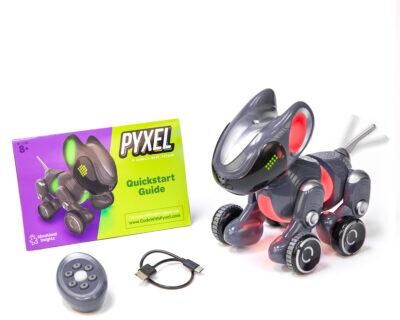
Learning Resources Pyxel The Coding PetKids use a computer or tablet to program this four-legged friend, then send their commands to the included remote to make the pet move, “talk”, and change facial expressions. Includes Coding Pet, user interface, and remote-activator unit. Pyxel The...124,99 $*Shipping: 0,00 $Secure redirect to the provider
-
Coding for Beginners: Using Scratch by Rosie Dickins & Jonathan Melmoth - Non Fiction - Spiral-BoundTitle:. Coding for Beginners: Using Scratch Condition: BRAND NEW. Format: Spiral-bound. ISBN: 9781474975094 Overview:. Designed for curious minds in UK primary classrooms, Coding for Beginners: Using Scratch introduces children to the fundamentals of Scratch, one of the National Curriculum’s most popular coding platforms. This friendly, beginner-friendly guide breaks down core concepts—sequencing, loops, events, and simple conditionals—through engaging, hands-on projects that bring ideas to life. Step-by-step instructions guide learners as they create games, animations, and interactive stories, turning abstract thinking into tangible outcomes. Clear Scratch menu guides help young coders navigate the interface with confidence, while a kid-friendly glossary explains essential terms in accessible language. The book also includes links to websites for free downloads and practical tips to support independent practice at home or in school. Written with clarity and patience, it balances explanation with exploration, encouraging trial-and-error learning, creativity, and persistence. By the end, readers will have a toolbox of small programs they can remix, adapt, or expand, proving that coding is approachable and enjoyable. This spiral-bound edition is ideal for classroom use and home study, delivering a durable, hands-on resource that grows with young tech learners. What Makes This Book Stand Out:. What makes Coding for Beginners: Using Scratch stand out is its laser focus on practical, projects-based learning tailored to UK classrooms. The book marries a gentle, encouraging tone with precise, achievable tasks that build confidence from page one. Each project introduces a Scratch concept, then reinforces it with a real-world activity—think simple games, animated scenes, and interactive stories—that children can immediately see and share. The included Scratch menu guides and glossary demystify the software, while the risk-free, step-by-step approach invites children to experiment, test ideas, and learn through play. The addition of free-download links and helpful tips extends learning beyond the page, making it a reliable, long-term reference for budding coders and teachers alike. Who This Book Is Perfect For:. This book is ideal for KS2 students (approximately ages 7–11) who are taking their first steps into coding. It’s perfect for parents supporting home study, teachers planning introductory computing lessons, and after-school clubs looking for structured, approachable activities. Gift buyers seeking a tangible introduction to technology will find it particularly appealing for aspiring coders who enjoy hands-on, creative projects. If your child or student is curious about how games and animations are built, this guide offers a friendly, manageable pathway into computational thinking and digital literacy. Key Highlights:. Beginner-friendly Scratch guide aligned with UK primary education Step-by-step projects to create games, animations, and interactive...10,99 £*Shipping: 2,99 £Secure redirect to the provider
-
Computer Coding for Kids 3 Books Collection Set by Carol Vorderman - Non Fiction - PaperbackTitles in This Set:. Computer Coding for Kids. Computer Coding Projects For Kids. Computer Coding Games for Kids Condition: BRAND NEW. Format: Paperback. ISBN: 9789124024635 Overview:. Unlock the world of coding with a complete, hands-on trio from Carol Vorderman. This 3-book collection guides young readers from first steps in Scratch to creative, real‑world projects and engaging games, all in a friendly, approachable style. The cornerstone book, Computer Coding for Kids, introduces the fundamentals—loops, variables, strings, and Boolean logic—through beginners’ friendly challenges and longer, illustrated game-builds that readers can complete in minutes. The companion volumes expand on practical skills: Computer Coding Projects For Kids invites young coders to design a fireworks display, simulate snowfall, craft fractal art, and experiment with optical illusions—all while reinforcing essential computational thinking and problem‑solving. Finally, Computer Coding Games for Kids walks readers through building and customizing their own games, turning theory into play and encouraging experimentation. With this set, every step of the learning journey is covered in one premium, paperback collection. What Makes This Collection Special:. This collection is more than a trilogy of manuals—it’s a complete, kid‑friendly pathway into coding literacy. By starting with Scratch’s visual blocks and progressing to fully fledged projects and playable games, it mirrors how real-world skills are learned: practice, iteration, and creativity. Carol Vorderman’s clear explanations make complex concepts approachable for beginners of all ages, while the included projects and games offer rapid wins that build confidence and momentum. The three‑book format provides both structure and flexibility, so families can progress at their own pace or dip in for a weekend project. It’s a thoughtfully designed, all-in-one coding starter kit that transforms curiosity into capable, independent problem‑solvers. Books Included in This Collection:. Computer Coding for Kids. This opening volume introduces the core ideas behind programming using Scratch. Readers begin with simple, guided tasks and quickly move to longer, worked examples that demonstrate how loops, variables, and logical thinking drive interactive outcomes. The approachable tone and kid‑friendly pace help new coders experience small, repeatable successes, boosting confidence as they tackle more complex challenges. The book sets a practical foundation for the rest of the collection, pairing theory with hands‑on application to cement learning and enjoyment in equal measure. Computer Coding Projects For Kids. This middle volume shifts from concepts to construction. Readers tackle playful, tangible projects—creating a virtual firework display, simulating snowfall, and generating fractal art—each designed to reinforce core coding skills while inviting personal flair. The projects are easily adaptable, so children can personalise...21,99 £*Shipping: 2,99 £Secure redirect to the provider
-
How is color coding done in the control cabinet?
Color coding in a control cabinet is typically done by using colored wires, cables, or labels to differentiate between different components or circuits. For example, red wires may be used for power lines, black for ground, and other colors for specific signals or functions. This helps technicians easily identify and troubleshoot connections within the cabinet. Additionally, color-coded labels or markers can be used on components or terminals to further aid in organization and maintenance. **
-
Please provide the color coding of these motherboard cables.
The color coding of motherboard cables can vary depending on the manufacturer and model of the motherboard. However, some common color coding standards include red for power cables, black for ground cables, yellow for data cables, and blue for audio cables. It is important to consult the motherboard manual or manufacturer's website for the specific color coding of cables for your motherboard to ensure proper installation and connection. **
-
How is the color coding of old cables done?
The color coding of old cables is typically done using a standardized color scheme. For example, in the United States, the color coding for old cables is often as follows: black for hot/live wires, white for neutral wires, and green or bare copper for ground wires. These colors help electricians and technicians easily identify the function of each wire and ensure proper installation and maintenance of electrical systems. **
-
What is the color coding in the USB-C cable?
The color coding in a USB-C cable typically follows the USB standard, with the wires being color-coded as red for power, black or white for ground, green for data positive, and white for data negative. This color coding helps ensure that the correct wires are connected to the corresponding pins in the USB-C connector, allowing for proper power and data transfer. It is important to follow the color coding when working with USB-C cables to avoid any potential damage to devices or data transfer issues. **
Similar search terms for Color-coding
-
Heather Lyons and Elizabeth Tweedale Kids Get Coding 4 Books Collection Set - Non Fiction - PaperbackDescription:. Condition: BRAND NEW. Format: Paperback. Dimensions: 13 x 3.6 x 19.8 cm. Staying Safe Online (Kids Get Coding). Staying Safe Online Learn to Program Learn to Program covers a key component in the new KS1 computing curriculum. We look at the basics of programming - what is an algorithm, basic languages and building a simple program. We then look at how simple programs can be developed to include decision making and repeat activities, and then how they can be fixed using debugging techniques.. Learn to Program (Kids Get Coding). Learn to Program covers a key component in the new KS1 computing curriculum. We look at the basics of programming - what is an algorithm, basic languages and building a simple program. We then look at how simple programs can be developed to include decision making and repeat activities, and then how they can be fixed using debugging techniques.. Our Digital World (Kids Get Coding). What are the different parts of a computer, and how do they work together? How many bytes are there in a terabyte? How do pixels create photos and how do pictures create videos? Learn all this and more, then hop online to try out your new skills on the companion website. Let's get started!. Algorithms and Bugs (Kids Get Coding). Algorithms and Bugs are key components in the new computing curriculum. We look at how algorithms are used to give computers instructions, how they are set up, how they can be changed and adapted. We also look at how computers make decisions using IF statements and how we can predict outcomes.. 9781409597810 9780750297493 9780750297509 9780750297486. Title. Staying safe online. Learn to program. Our digital world. Algorithms and bugs. Delivery. Content. Reviews99,99 £*Shipping: 0,00 £Secure redirect to the provider
-
From the Archives: Black History and Culture Value PackThis brand-new series is rooted in a profound commitment to shedding light on some of the important -- and often lesser-known -- aspects of Black history. From the Archives features landmarks, events, people, and artistic endeavors that have played...27,99 $*Shipping: 0,00 $Secure redirect to the provider
-
DK Help Your Kids With Maths, Science & Computer Coding 3 Books Collection Set - Non Fiction - PaperbackTitles in This Set:. Help Your Kids With Maths. Help Your Kids With Science. Computer Coding for Kids: A unique step-by-step visual guide, from binary code to building games Condition: BRAND NEW. Format: Paperback. ISBN: 9780241293478 9780241293461 9780241317730 Overview:. Spark curiosity and confidence in young learners with this engaging 3-book collection: Help Your Kids With Maths, Help Your Kids With Science, and Computer Coding for Kids. Each volume is designed to demystify complex ideas through vivid visuals, bite-sized explanations, and practical activities that kids can try at home. This collection is perfect for parents and caregivers who want to support steady progress from early-number concepts through foundational science ideas and into the basics of code. The books use a friendly, accessible tone and clear step-by-step illustrations to turn challenging topics into approachable, hands-on learning experiences. Whether your child is tackling fractions, exploring the solar system, or building their first game, this set provides a cohesive, intuitive path to understanding. A thoughtful gift for curious minds, it’s ideal for home learning, school projects, and screen-free enrichment. What Makes This Collection Special:. What unites these three titles is a shared commitment to visual learning and practical application. The Maths and Science books guide readers through everyday connections—patterns, measurements, experiments, and problem-solving—while the Coding book turns abstract ideas into tangible projects, from binary to playable games. The trio collectively reinforces critical thinking, scientific literacy, and computational thinking in a friendly, non-intimidating format. Binge-worthy for curious readers and ideal for parents seeking a structured, progression-focused set, it’s a complete learning journey in one neat package, designed to appeal to reluctant readers and eager minds alike. Books Included in This Collection:. Help Your Kids With Maths. This volume breaks down key arithmetic concepts into visual steps, with real-world examples that make numbers relevant. It guides children from counting basics to more advanced ideas like fractions and percentages, using diagrams, quick activites, and checklists that support independent work and family learning. Readers build confidence as they see progress in approachable chapters, making maths feel doable rather than daunting. An excellent companion for daily practice, homework help, and maths-friendly family activities. Help Your Kids With Science. A friendly guide to the natural world, this book makes science accessible through clear explanations and vivid illustrations. Topics span biology, chemistry, physics, and earth science, each presented with everyday experiments and prompts for observation. The book emphasizes curiosity, questioning, and applying ideas to everyday life, helping kids see science as an exciting toolkit for understanding how the world works. It’s ideal for science...99,99 £*Shipping: 0,00 £Secure redirect to the provider
-
Jonathan Melmoth Coding For Beginners Using Scratch - Non Fiction - Step-by-step Guide For Kids EditionTitle:. Coding for Beginners Using Scratch Condition: BRAND NEW. Format: Spiral-bound Overview:. Welcome to Coding for Beginners Using Scratch, a friendly, hands-on introduction to the world of coding crafted for curious minds. This spiral-bound guide is designed for beginners, with clear, step-by-step lessons that let children see real, tangible results as they build games and animations. Starting from the Scratch interface and its sprites, the book guides young coders through practical projects—from racing cars zipping across the screen to virtual pets that respond to user actions—so learners experience the joy of bringing ideas to life. Concepts like sequencing, loops, and event-driven actions are explained in approachable language, with gentle debugging tips to help kids recognise and fix problems without frustration. The content sits within the context of the UK National Curriculum and the popularity of Scratch in primary schools, making it a reliable resource for teachers and a trusted companion for home learning. With Scratch’s visual, drag-and-drop approach at the core, children discover how to design, test, and iterate with confidence. The spiral binding keeps the book flat on a desk, perfect for desk-based coding sessions, clubs, and weekend challenges. What Makes This Book Stand Out:. What sets Coding for Beginners Using Scratch apart is its practical, results-focused structure. Each lesson is crafted to be completed in a single sitting, with clearly stated learning objectives and a quick-start challenge that reinforces progress. The author speaks directly to the beginner, translating essential coding ideas—such as sequences, conditions, loops, and event-driven actions—into tangible, visual outcomes that kids can see and cheer about. By centring Scratch’s intuitive drag-and-drop interface, readers learn by doing: editing sprite movements, adding sounds, and testing interactions until the project runs smoothly. The book normalises debugging as a natural step in creation, teaching young learners to interpret feedback and refine their designs. Its UK classroom relevance makes it a dependable school resource, while the home-use value shines through in easy, repeatable activities. The durable spiral binding means the book lays perfectly open for uninterrupted tinkering and experimentation, whether at a kitchen table or in a classroom station. Who This Book Is Perfect For:. This book is ideal for primary-aged children taking their first steps in coding, as well as parents and teachers seeking a friendly, project-based introduction to Scratch. It's a versatile resource for home-learning setups and classroom clubs, where hands-on projects like racing cars or virtual pets anchor learning in tangible outcomes. Beginners will appreciate the gentle, paced approach, while more confident young coders can extend the ideas beyond the examples. With Scratch’s approachable visuals and this guided learning path, readers develop practical skills in...99,99 £*Shipping: 0,00 £Secure redirect to the provider
-
Does color coding play a role in gender equality, and if so, what exactly?
Color coding can play a role in reinforcing gender stereotypes and perpetuating inequality. For example, assigning specific colors to genders, such as pink for girls and blue for boys, can limit children's choices and reinforce traditional gender roles. This can lead to the marginalization of individuals who do not conform to these stereotypes and restrict their opportunities for self-expression and personal development. By challenging these color-coded norms and promoting gender-neutral options, we can help create a more inclusive and equal society. **
-
How do I connect a lamp with 2 cables and a strange color coding?
To connect a lamp with 2 cables and a strange color coding, you will first need to identify the purpose of each cable. You can use a multimeter to test for continuity and determine which cable is the live wire and which is the neutral wire. Once you have identified the cables, you can connect the live wire to the brass or brown terminal on the lamp and the neutral wire to the silver or blue terminal. Make sure to follow proper safety precautions and consult a professional if you are unsure about the wiring. **
-
What is the difference between the coding and non-coding strand?
The coding strand, also known as the sense strand, is the DNA strand that has the same sequence as the mRNA that is transcribed from it. This means that the coding strand has the same sequence as the resulting protein. On the other hand, the non-coding strand, also known as the template strand, is the DNA strand that is used as a template for the synthesis of mRNA during transcription. It has a complementary sequence to the mRNA and does not directly code for the protein. **
-
What is Huffman coding?
Huffman coding is a method used for lossless data compression, where variable-length codes are assigned to different characters based on their frequencies in the input data. This technique ensures that more frequent characters are assigned shorter codes, while less frequent characters are assigned longer codes, resulting in overall compression of the data. Huffman coding is widely used in various applications, such as file compression algorithms and data transmission protocols, to reduce the size of data without losing any information. **
* All prices are inclusive of VAT and, if applicable, plus shipping costs. The offer information is based on the details provided by the respective shop and is updated through automated processes. Real-time updates do not occur, so deviations can occur in individual cases. ** Note: Parts of this content were created by AI.